Paquette Myriam, Bieuzen François, Billaut François
Département de kinésiologie, Université Laval, Québec, QC, Canada.
Institut National du Sport du Québec, Montréal, QC, Canada.
Front Sports Act Living. 2020 Apr 28;2:47. doi: 10.3389/fspor.2020.00047. eCollection 2020.
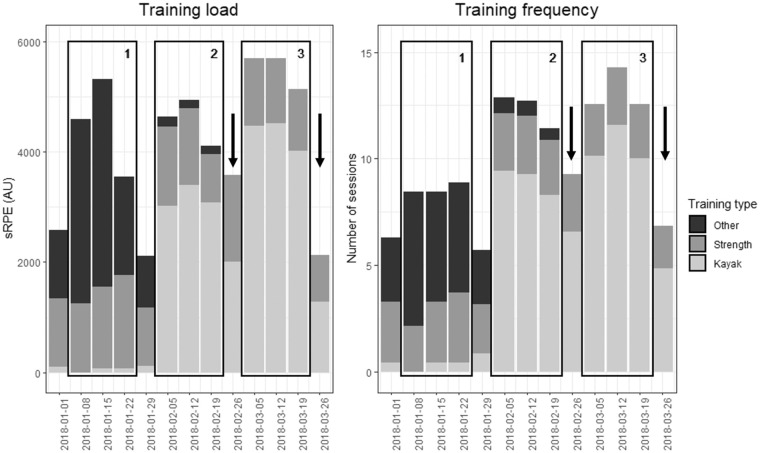
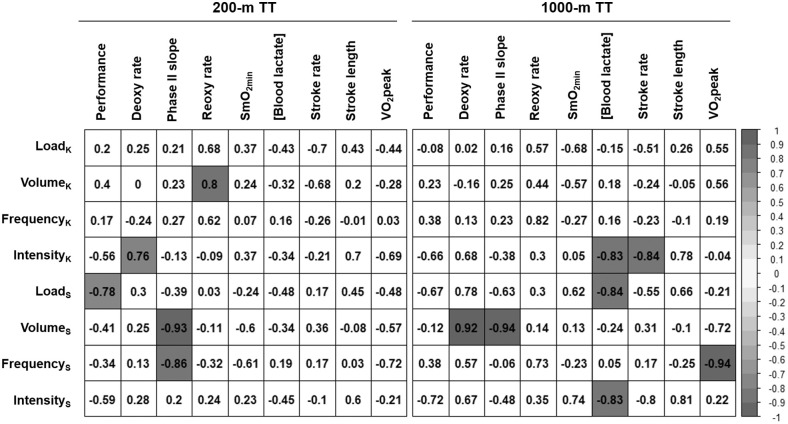
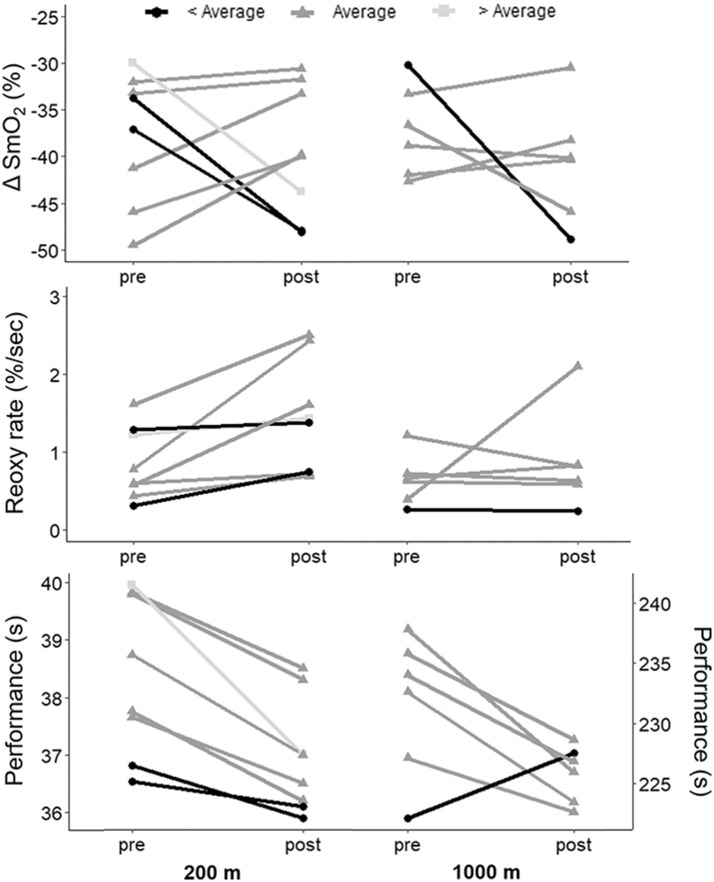
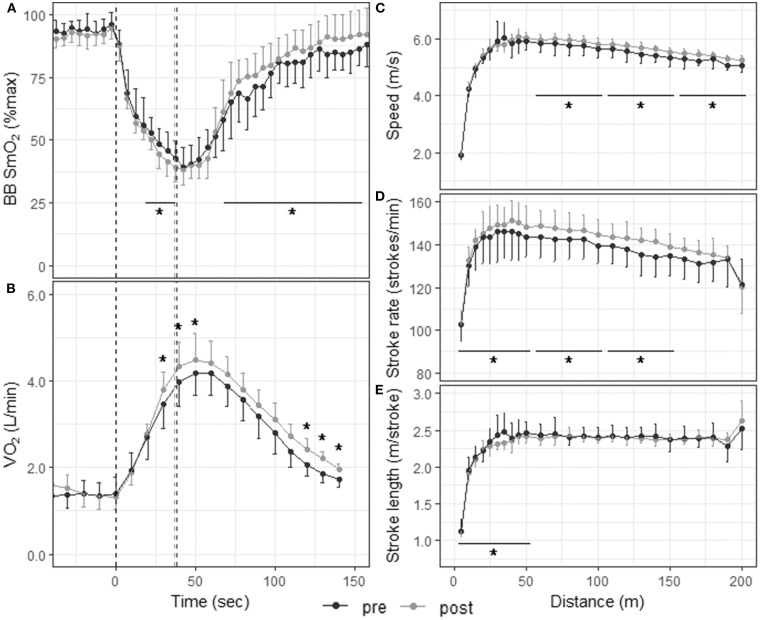
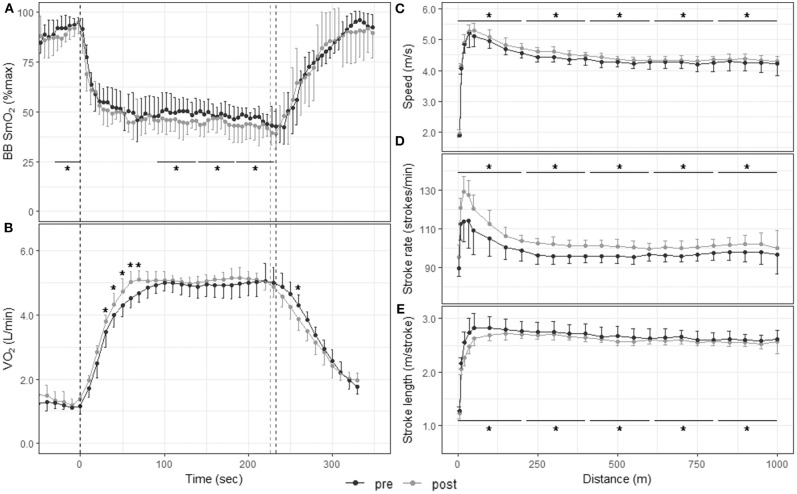
Peripheral adaptations, as assessed via near-infrared spectroscopy (NIRS) derived changes in muscle oxygenation (SmO), are good predictors of sprint kayak performance. Therefore, the goal of the present study was to assess changes in SmO and O following a training camp in elite sprint kayakers to evaluate if the training prescribed elicits peripheral adaptations, and to assess associations between training-induced changes in physiological responses and performance. Eight male elite sprint kayakers, members of the Canadian National Team, performed a 200-m and 1,000-m on-water time trial (TT) before and after a 3-weeks winter training camp. Change in performance, O and SmO of the were assessed in relation to training load. Training load and intensity were increased by ~20% over the course of the training camp, which resulted in a 3.7 ± 1.7% (ES 1.2) and 2.8 ± 2.4% (ES 1.3) improvement in 200-m and 1,000-m performance, respectively. Performance improvement in the 200-m was concomitant to a reduced SmO, an increased O peak and an increased reoxygenation rate after the TT. The 1,000-m TT performance improvement was concurrent with a reduced SmO in the last half of the TT and an increased O in the first minute of the TT. Our results strongly suggest that peripheral skeletal muscle adaptations occurred in these athletes with the proposed training plan. This further attests the benefit of using portable NIRS as a monitoring tool to track training-induced adaptations in muscle oxygen extraction in elite athletes.
通过近红外光谱(NIRS)得出的肌肉氧合(SmO)变化来评估的外周适应性,是短距离皮划艇冲刺成绩的良好预测指标。因此,本研究的目的是评估精英短距离皮划艇运动员在训练营后的SmO和O变化,以评估所规定的训练是否能引发外周适应性,并评估训练引起的生理反应变化与成绩之间的关联。八名加拿大国家队的男性精英短距离皮划艇运动员在为期3周的冬季训练营前后进行了200米和1000米水上计时赛(TT)。评估了与训练负荷相关的成绩、O和SmO的变化。在训练营期间,训练负荷和强度增加了约20%,这分别导致200米和1000米成绩提高了3.7±1.7%(效应量1.2)和2.8±2.4%(效应量1.3)。200米成绩的提高伴随着TT后SmO的降低、O峰值的增加和再氧合率的增加。1000米TT成绩的提高与TT后半段SmO的降低和TT第一分钟O的增加同时发生。我们的结果强烈表明,采用所提议的训练计划使这些运动员发生了外周骨骼肌适应性变化。这进一步证明了使用便携式NIRS作为监测工具来追踪精英运动员训练引起的肌肉氧摄取适应性变化的益处。