Medical College, Ningbo University, Ningbo, Zhejiang, 315000, China.
Department of Cardiovascular, Lihuili Hospital Affiliated to Ningbo University, Ningbo, Zhejiang, 315211, China.
Eur J Pharmacol. 2021 Feb 15;893:173813. doi: 10.1016/j.ejphar.2020.173813. Epub 2020 Dec 18.
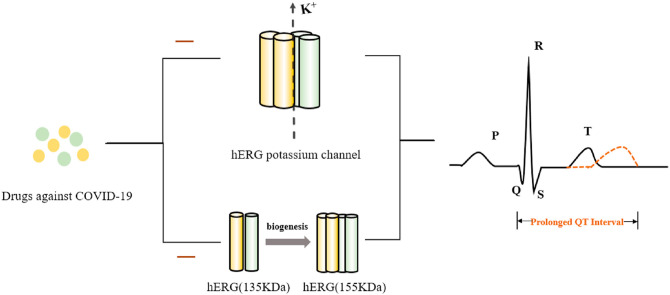
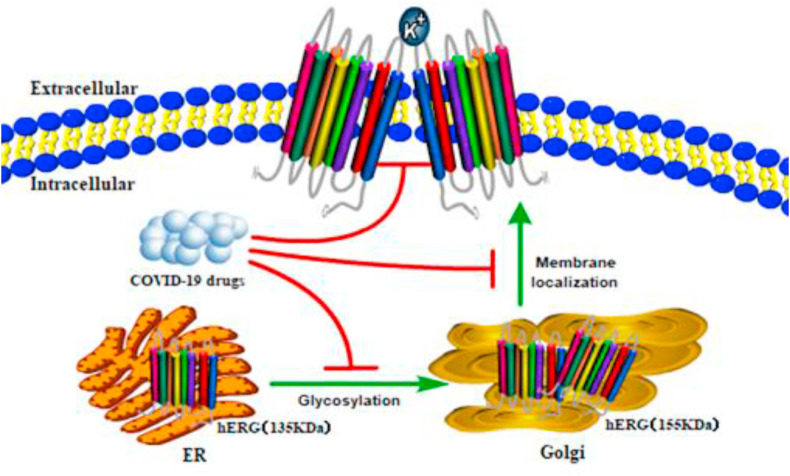
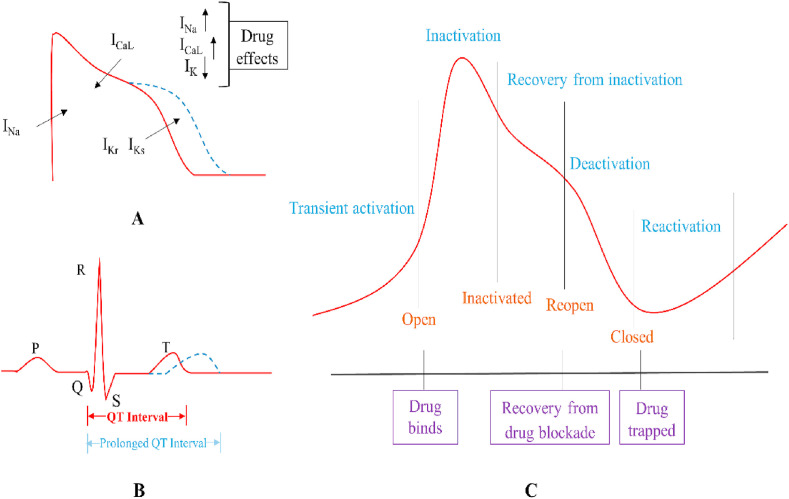
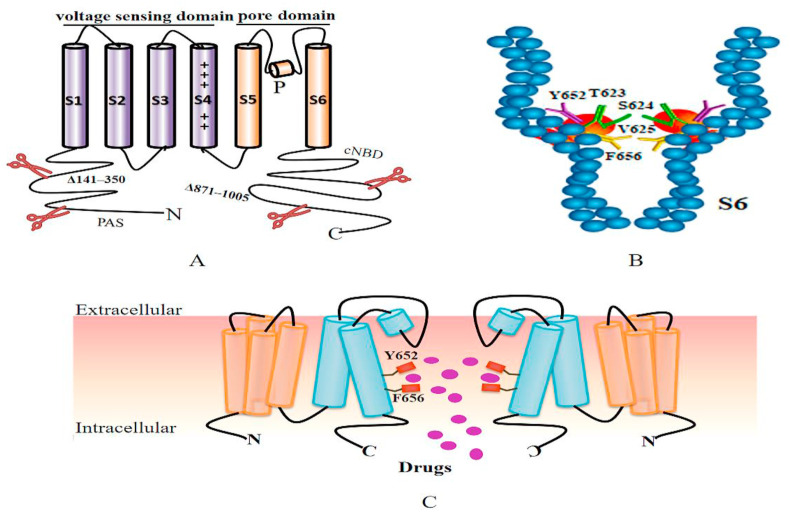
Coronavirus disease-2019 (COVID-19), caused by severe acute respiratory syndrome coronavirus 2 (SARS-CoV-2), poses an enormous challenge to the medical system, especially the lack of safe and effective COVID-19 treatment methods, forcing people to look for drugs that may have therapeutic effects as soon as possible. Some old drugs have shown clinical benefits after a few small clinical trials that attracted great attention. Clinically, however, many drugs, including those currently used in COVID-19, such as chloroquine, hydroxychloroquine, azithromycin, and lopinavir/ritonavir, may cause cardiotoxicity by acting on cardiac potassium channels, especially hERG channel through their off-target effects. The blocking of the hERG channel prolongs QT intervals on electrocardiograms; thus, it might induce severe ventricular arrhythmias and even sudden cardiac death. Therefore, while focusing on the efficacy of COVID-19 drugs, the fact that they block hERG channels to cause arrhythmias cannot be ignored. To develop safer and more effective drugs, it is necessary to understand the interactions between drugs and the hERG channel and the molecular mechanism behind this high affinity. In this review, we focus on the biochemical and molecular mechanistic aspects of drug-related blockade of the hERG channel to provide insights into QT prolongation caused by off-label use of related drugs in COVID-19, and hope to weigh the risks and benefits when using these drugs.
新型冠状病毒病(COVID-19)由严重急性呼吸系统综合征冠状病毒 2 型(SARS-CoV-2)引起,对医疗系统构成巨大挑战,尤其是缺乏安全有效的 COVID-19 治疗方法,迫使人们尽快寻找可能具有治疗效果的药物。少数小型临床试验表明一些旧药物具有临床益处,引起了广泛关注。然而,在临床上,包括氯喹、羟氯喹、阿奇霉素和洛匹那韦/利托那韦等目前用于 COVID-19 的许多药物,由于其非靶向作用,可能通过作用于心脏钾通道,特别是 hERG 通道而导致心脏毒性。hERG 通道的阻断会延长心电图上的 QT 间隔;因此,可能会引发严重的室性心律失常,甚至心源性猝死。因此,在关注 COVID-19 药物疗效的同时,也不能忽视它们通过阻断 hERG 通道引起心律失常的事实。为了开发更安全、更有效的药物,有必要了解药物与 hERG 通道的相互作用及其高亲和力背后的分子机制。在这篇综述中,我们重点关注药物相关阻断 hERG 通道的生化和分子机制方面,以深入了解非适应证使用相关药物引起的 QT 间期延长,并在使用这些药物时权衡利弊。