The Pirbright Institute, Woking, Surrey, United Kingdom.
Department of Microbial Sciences, Faculty of Health and Medical Sciences, University of Surrey, Guildford, United Kingdom.
PLoS Biol. 2020 Dec 21;18(12):e3001016. doi: 10.1371/journal.pbio.3001016. eCollection 2020 Dec.
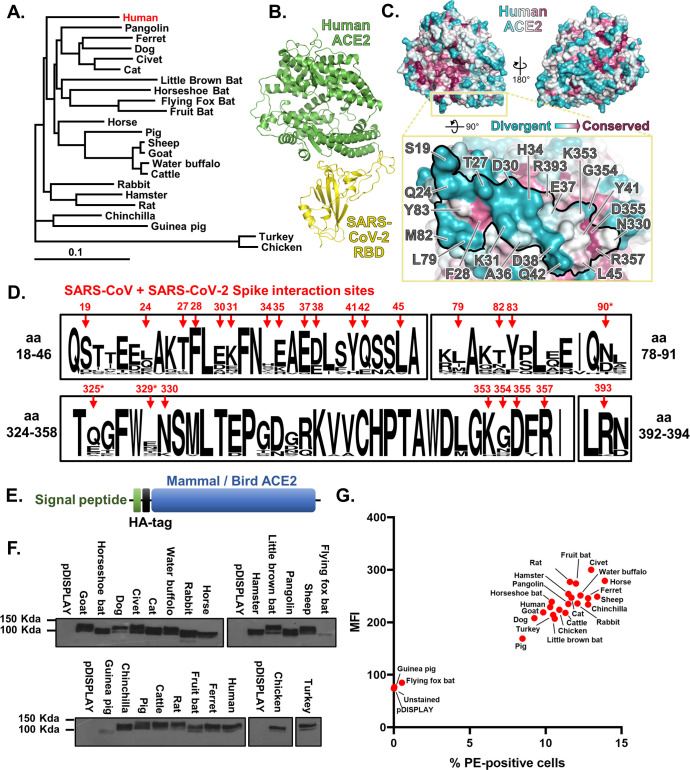
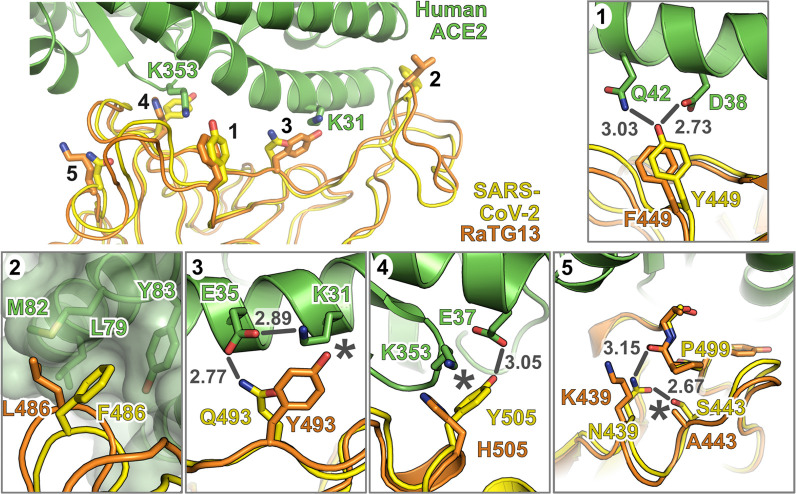
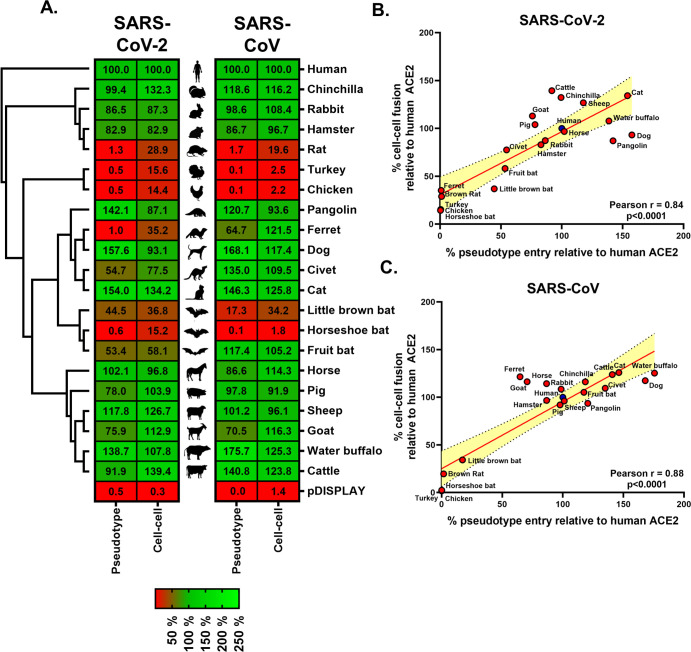
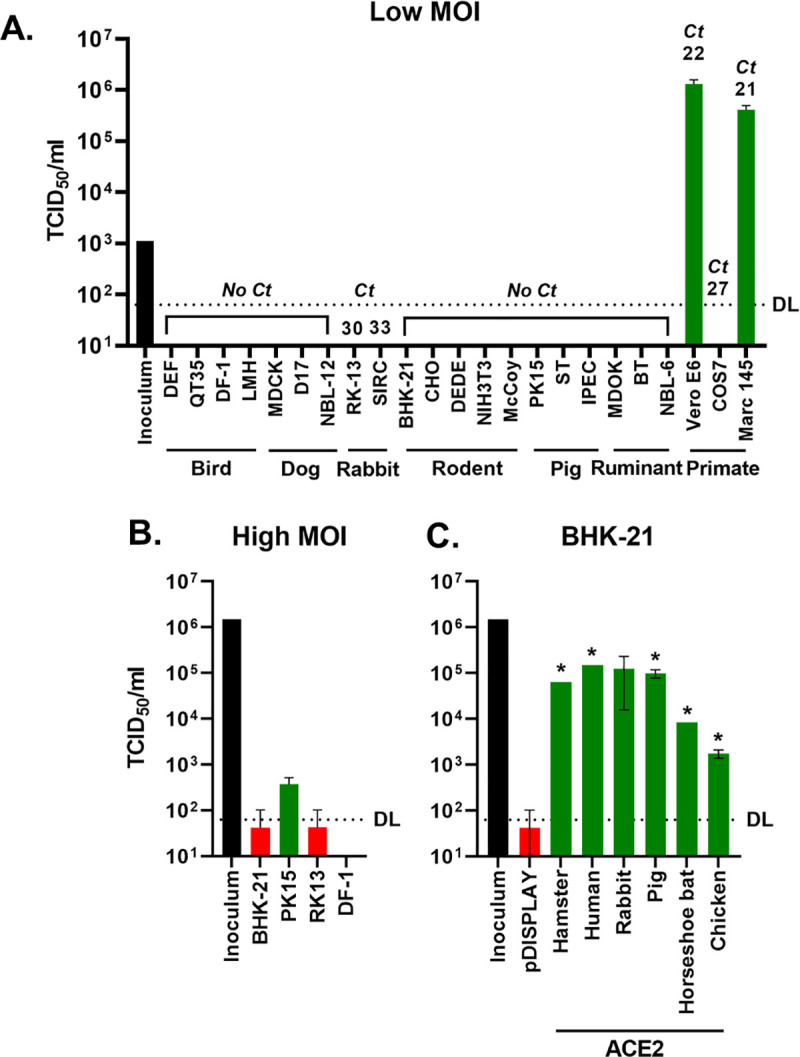
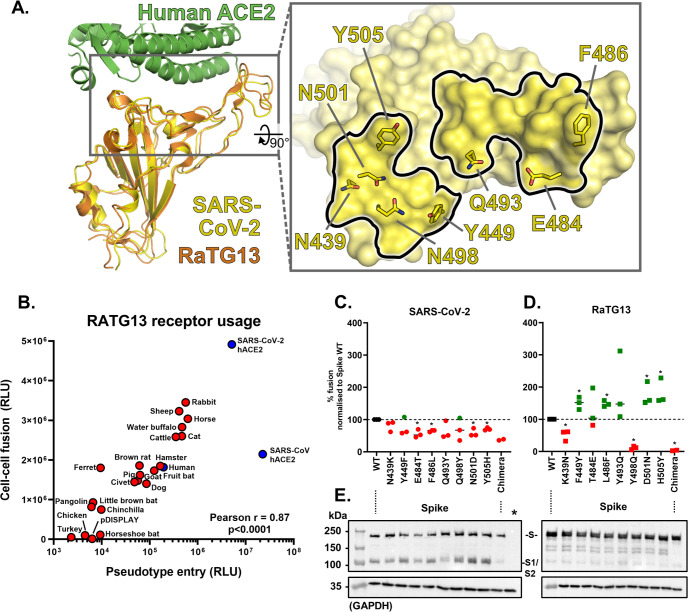
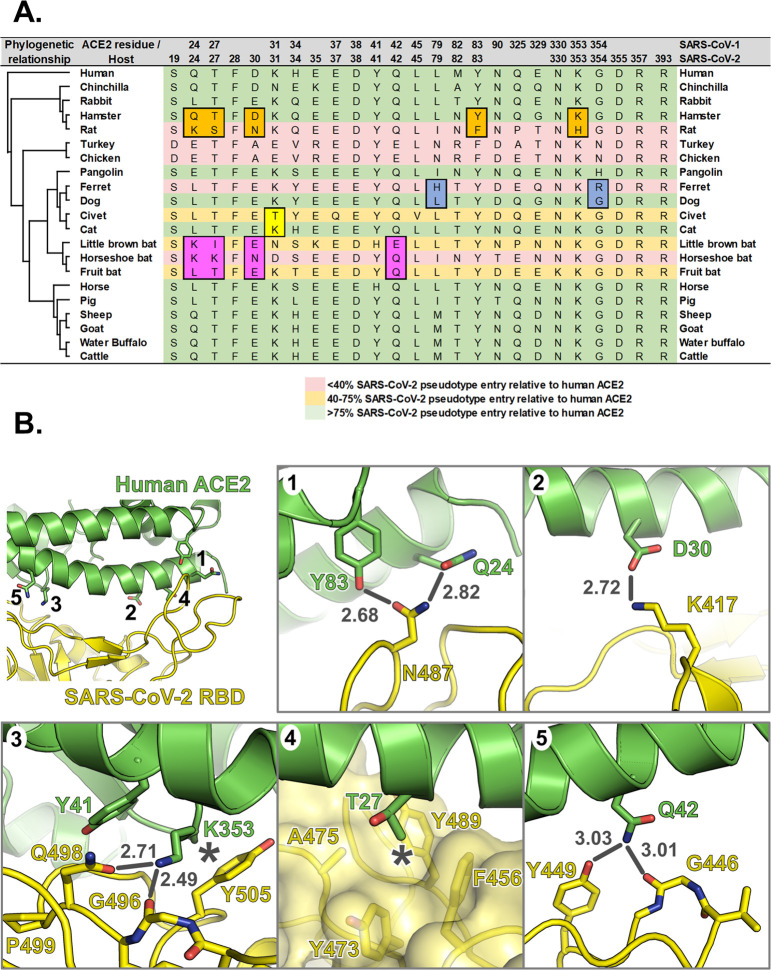
SARS Coronavirus 2 (SARS-CoV-2) emerged in late 2019, leading to the Coronavirus Disease 2019 (COVID-19) pandemic that continues to cause significant global mortality in human populations. Given its sequence similarity to SARS-CoV, as well as related coronaviruses circulating in bats, SARS-CoV-2 is thought to have originated in Chiroptera species in China. However, whether the virus spread directly to humans or through an intermediate host is currently unclear, as is the potential for this virus to infect companion animals, livestock, and wildlife that could act as viral reservoirs. Using a combination of surrogate entry assays and live virus, we demonstrate that, in addition to human angiotensin-converting enzyme 2 (ACE2), the Spike glycoprotein of SARS-CoV-2 has a broad host tropism for mammalian ACE2 receptors, despite divergence in the amino acids at the Spike receptor binding site on these proteins. Of the 22 different hosts we investigated, ACE2 proteins from dog, cat, and cattle were the most permissive to SARS-CoV-2, while bat and bird ACE2 proteins were the least efficiently used receptors. The absence of a significant tropism for any of the 3 genetically distinct bat ACE2 proteins we examined indicates that SARS-CoV-2 receptor usage likely shifted during zoonotic transmission from bats into people, possibly in an intermediate reservoir. Comparison of SARS-CoV-2 receptor usage to the related coronaviruses SARS-CoV and RaTG13 identified distinct tropisms, with the 2 human viruses being more closely aligned. Finally, using bioinformatics, structural data, and targeted mutagenesis, we identified amino acid residues within the Spike-ACE2 interface, which may have played a pivotal role in the emergence of SARS-CoV-2 in humans. The apparently broad tropism of SARS-CoV-2 at the point of viral entry confirms the potential risk of infection to a wide range of companion animals, livestock, and wildlife.
严重急性呼吸系统综合征冠状病毒 2 型(SARS-CoV-2)于 2019 年末出现,引发了持续给人类人口造成重大全球死亡率的 2019 年冠状病毒病(COVID-19)大流行。鉴于其与 SARS-CoV 的序列相似性,以及在蝙蝠中循环的相关冠状病毒,SARS-CoV-2 被认为起源于中国的 Chiroptera 物种。然而,病毒是直接传播给人类还是通过中间宿主传播目前尚不清楚,也不清楚这种病毒是否有能力感染伴侣动物、牲畜和野生动物,这些动物可能充当病毒的储存库。我们使用替代进入测定法和活病毒的组合,证明除了人类血管紧张素转换酶 2(ACE2)之外,SARS-CoV-2 的 Spike 糖蛋白对哺乳动物 ACE2 受体具有广泛的宿主嗜性,尽管这些蛋白质上 Spike 受体结合位点的氨基酸存在差异。在我们研究的 22 种不同宿主中,狗、猫和牛的 ACE2 蛋白对 SARS-CoV-2 的允许性最高,而蝙蝠和鸟类的 ACE2 蛋白则是最不容易被利用的受体。我们研究的 3 种遗传上不同的蝙蝠 ACE2 蛋白均没有明显的嗜性,表明 SARS-CoV-2 的受体利用可能在从蝙蝠到人类的人畜共患病传播过程中发生了转变,可能是在中间宿主中发生了转变。将 SARS-CoV-2 的受体利用与相关冠状病毒 SARS-CoV 和 RaTG13 进行比较,确定了不同的嗜性,这两种人类病毒更为相似。最后,我们使用生物信息学、结构数据和靶向突变,确定了 Spike-ACE2 界面内可能在 SARS-CoV-2 在人类中出现时起关键作用的氨基酸残基。SARS-CoV-2 在病毒进入时的明显广泛嗜性证实了感染广泛的伴侣动物、牲畜和野生动物的潜在风险。