Key Laboratory of Molecular Biophysics of Ministry of Education, College of Life Science and Technology and the Collaborative Innovation Center for Brain Science, Huazhong University of Science and Technology, Wuhan 430074, PR China; Drug Discovery and Design Center, State Key Laboratory of Drug Research, Shanghai Institute of Materia Medica, Chinese Academy of Sciences, Shanghai 201203, PR China; National Center for Magnetic Resonance in Wuhan, Key Laboratory of Magnetic Resonance in Biological Systems, State Key Laboratory of Magnetic Resonance and Atomic and Molecular Physics, Wuhan Institute of Physics and Mathematics, Innovation Academy for Precision Measurement Science and Technology, Chinese Academy of Sciences, Wuhan 430071, PR China.
Drug Discovery and Design Center, State Key Laboratory of Drug Research, Shanghai Institute of Materia Medica, Chinese Academy of Sciences, Shanghai 201203, PR China; Shanghai Institute for Advanced Immunochemical Studies, And School of Life Science and Technology, Shanghai Tech University, Shanghai 200031, China; University of Chinese Academy of Sciences, Beijing 100049, PR China.
Biochimie. 2021 Aug;187:1-13. doi: 10.1016/j.biochi.2021.05.001. Epub 2021 May 11.
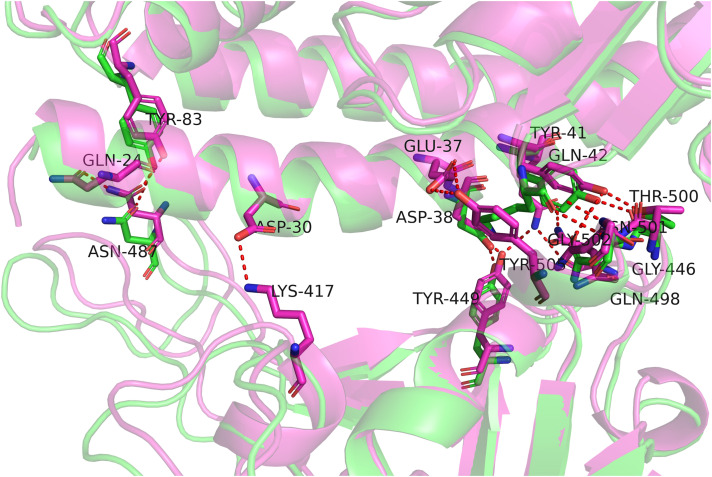
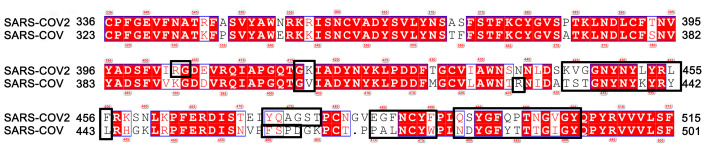
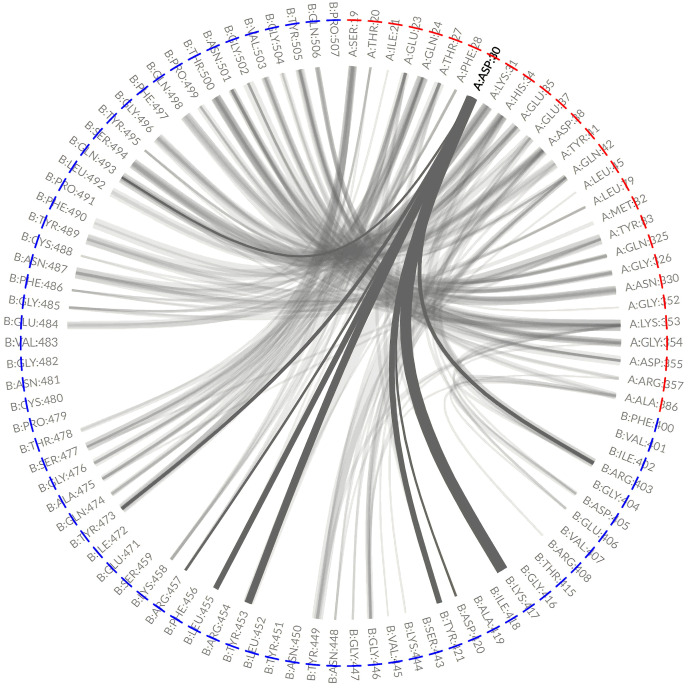
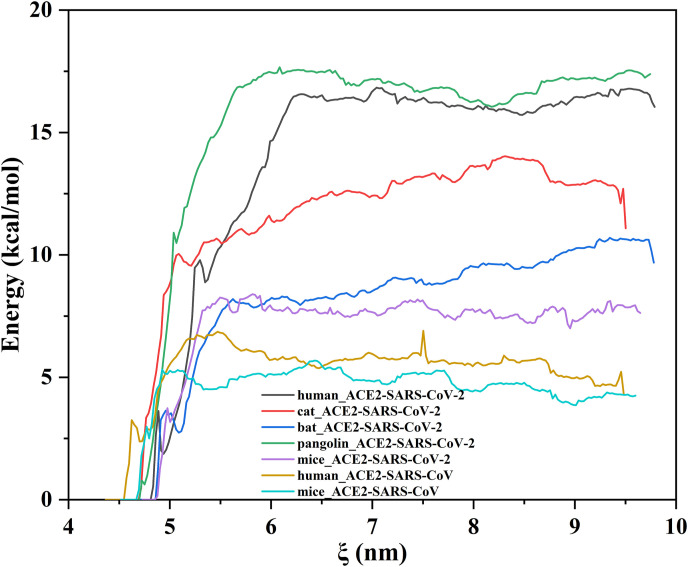
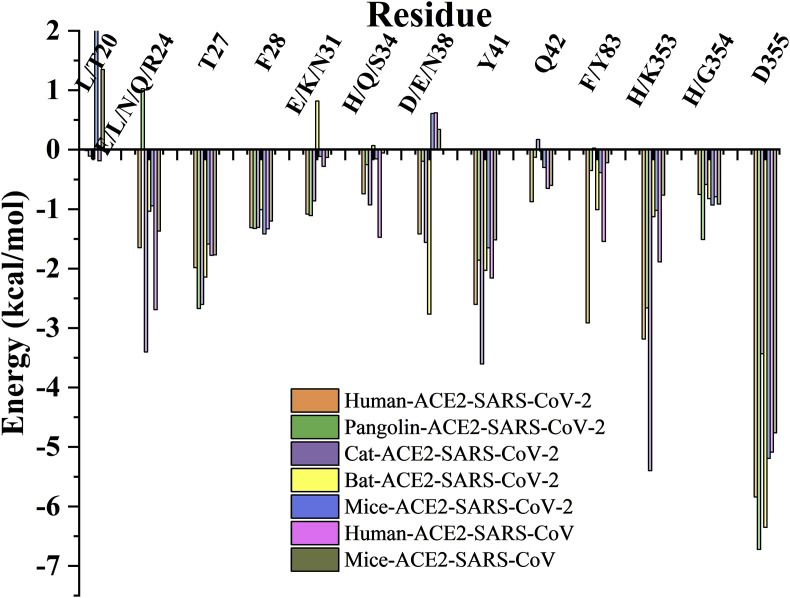
The recent outbreak of SARS-CoV-2 has had a profound effect on the world. Similar to that in SARS-CoV, the entry receptor of SARS-CoV-2 is ACE2. The binding of SARS-CoV-2 spike protein to ACE2 is the critical to the virus infection. Recently multiple species (human, Chinese chrysanthemum, Malay pangolin and cat) have been reported to be susceptible to the virus infection. However, the binding capacity and the detailed binding mechanism of SARS-CoV-2 spike protein to ACE2 of these species remains unexplored. Herein free energy calculations with MM-GBSA and Potential of Mean Forces together reveal that the Human-SARS-CoV-2 has a higher stability tendency than Human-SARS-CoV. Meanwhile, we uncover that SARS-CoV-2 has an enhanced ability to bind with the ACE2 in humans, pangolins and cats compared to that in bats. Analysis of key residues with energy decomposition and residue contact maps reveal several important consensus sites in ACE2s among the studied species, and determined the more favorable specified residues among the different types of amino acids. These results provide important implications for understanding SARS-CoV-2 host range which will make it possible to control the spread of the virus and use of animal models, targeted drug screening and vaccine candidates against SARS-CoV-2.
新型冠状病毒(SARS-CoV-2)的爆发对世界产生了深远的影响。与 SARS-CoV 类似,SARS-CoV-2 的进入受体也是 ACE2。SARS-CoV-2 刺突蛋白与 ACE2 的结合是病毒感染的关键。最近有多种物种(人类、菊花、马来穿山甲和猫)被报道易感染该病毒。然而,SARS-CoV-2 刺突蛋白与这些物种 ACE2 的结合能力和详细结合机制仍未被探索。在此,我们通过 MM-GBSA 和平均力势能联合进行了自由能计算,揭示了人类- SARS-CoV-2 比人类- SARS-CoV 具有更高的稳定性趋势。同时,我们发现与蝙蝠相比,SARS-CoV-2 与人类、穿山甲和猫的 ACE2 结合能力增强。通过能量分解和残基接触图谱分析关键残基,揭示了研究物种中 ACE2 中的几个重要共识位点,并确定了不同类型氨基酸中更有利的指定残基。这些结果为理解 SARS-CoV-2 的宿主范围提供了重要的启示,这将使控制病毒的传播、利用动物模型、针对 SARS-CoV-2 的靶向药物筛选和疫苗候选物成为可能。