Department of Pharmacy and Biotechnology, Alma Mater Studiorum University of Bologna, 40126 Bologna, Italy.
Department of Translational Medicine, Section of Legal Medicine and LTTA Center, University of Ferrara, 44121 Ferrara, Italy.
Int J Mol Sci. 2020 Dec 17;21(24):9616. doi: 10.3390/ijms21249616.
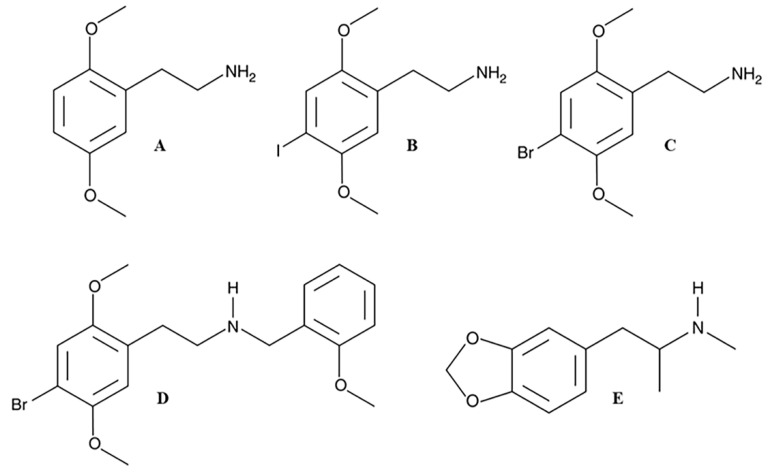
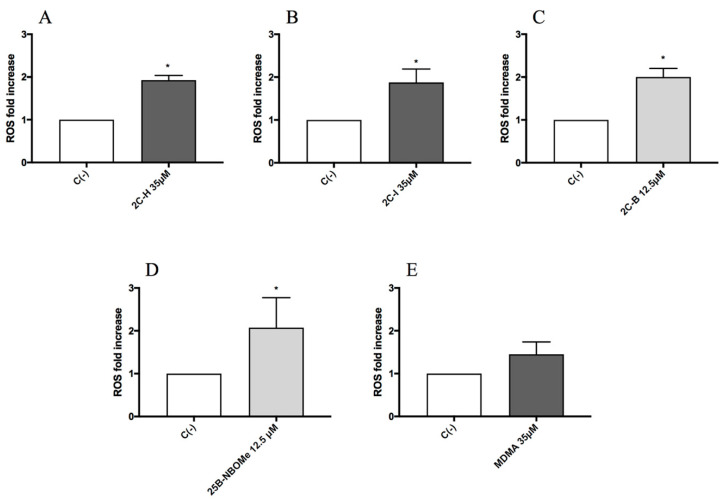
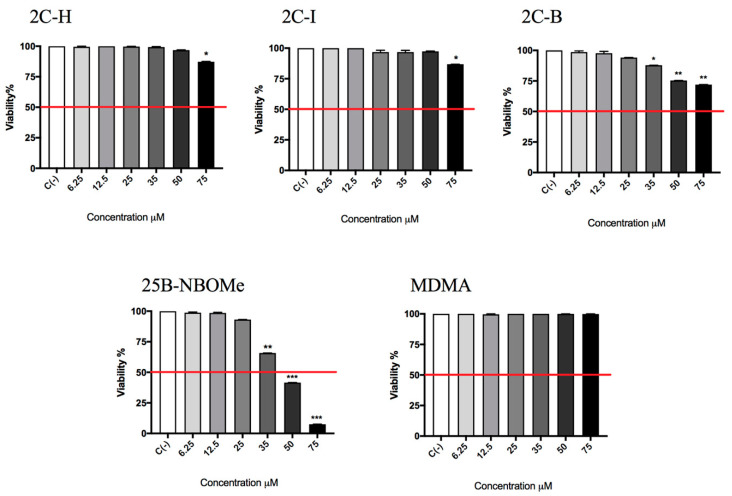
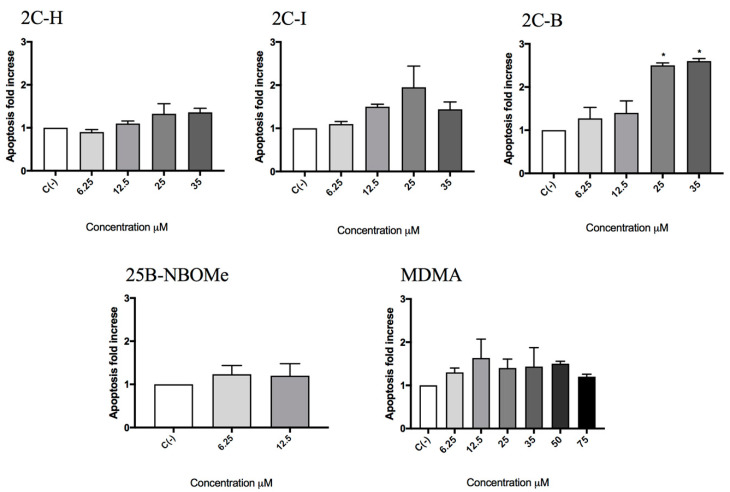
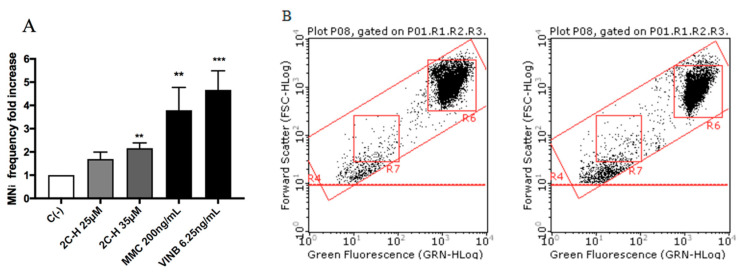
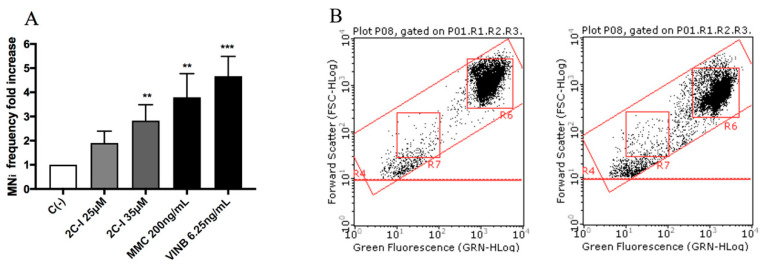
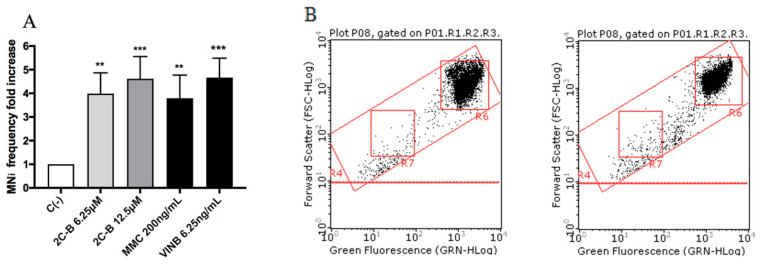
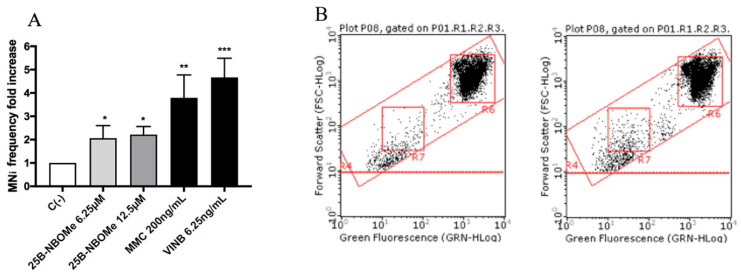
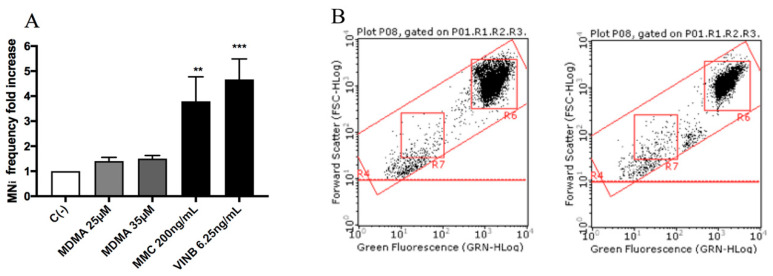
Psychedelic and stimulating phenethylamines belong to the family of new psychoactive substances (NPS). The acute toxicity framework has begun to be investigated, while studies showing genotoxic potential are very limited or not available. Therefore, in order to fill this gap, the aim of the present work was to evaluate the genotoxicity by treating TK6 cells with 2C-H, 2C-I, 2C-B, 25B-NBOMe, and the popular 3,4-Methylenedioxymethylamphetamine (MDMA). On the basis of cytotoxicity and cytostasis results, we selected the concentrations (6.25-35 µM) to be used in genotoxicity analysis. We used the micronucleus (MN) as indicator of genetic damage and analyzed the MNi frequency fold increase by an automated flow cytometric protocol. All substances, except MDMA, resulted genotoxic; therefore, we evaluated reactive oxygen species (ROS) induction as a possible mechanism at the basis of the demonstrated genotoxicity. The obtained results showed a statistically significant increase in ROS levels for all genotoxic phenethylamines confirming this hypothesis. Our results highlight the importance of genotoxicity evaluation for a complete assessment of the risk associated also with NPS exposure. Indeed, the subjects who do not have hazardous behaviors or require hospitalization by using active but still "safe" doses could run into genotoxicity and in the well-known long-term effects associated.
致幻和刺激的苯乙胺类物质属于新型精神活性物质 (NPS) 家族。急性毒性框架已开始被研究,而显示遗传毒性潜力的研究非常有限或不可用。因此,为了填补这一空白,本工作的目的是用 2C-H、2C-I、2C-B、25B-NBOMe 和流行的 3,4-亚甲二氧基甲基苯丙胺 (MDMA) 处理 TK6 细胞来评估遗传毒性。基于细胞毒性和细胞抑制结果,我们选择了浓度(6.25-35 μM)用于遗传毒性分析。我们使用微核(MN)作为遗传损伤的指标,并通过自动流式细胞术协议分析 MNi 频率的增加倍数。除 MDMA 外,所有物质均具有遗传毒性;因此,我们评估了活性氧 (ROS) 诱导作为所证明的遗传毒性的基础上的可能机制。获得的结果表明,所有具有遗传毒性的苯乙胺类物质的 ROS 水平均呈统计学显著增加,证实了这一假设。我们的结果强调了对遗传毒性进行评估的重要性,以全面评估与 NPS 暴露相关的风险。事实上,那些没有危险行为或需要通过使用活性但仍然“安全”剂量住院治疗的人可能会遇到遗传毒性和众所周知的长期影响。