Department of Medical and Surgical Specialties, Faculty of Medicine, Transilvania University of Brasov, 500019 Brasov, Romania.
Department of Fundamental, Prophylactic and Clinical Sciences, Faculty of Medicine, University Transilvania Brasov, 500019 Brasov, Romania.
Mar Drugs. 2020 Dec 17;18(12):651. doi: 10.3390/md18120651.
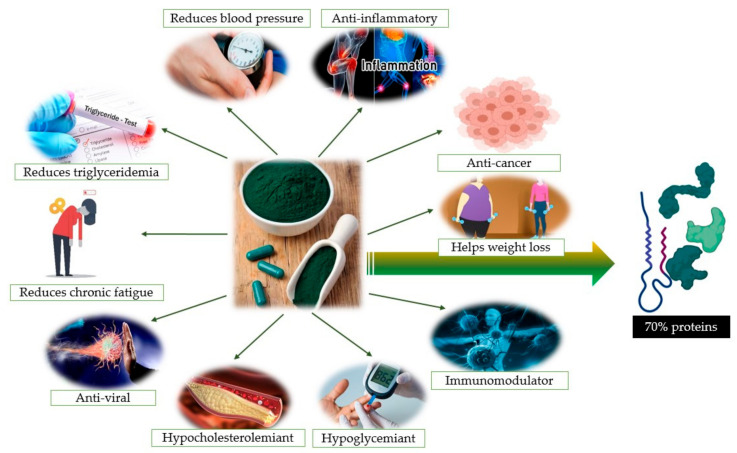
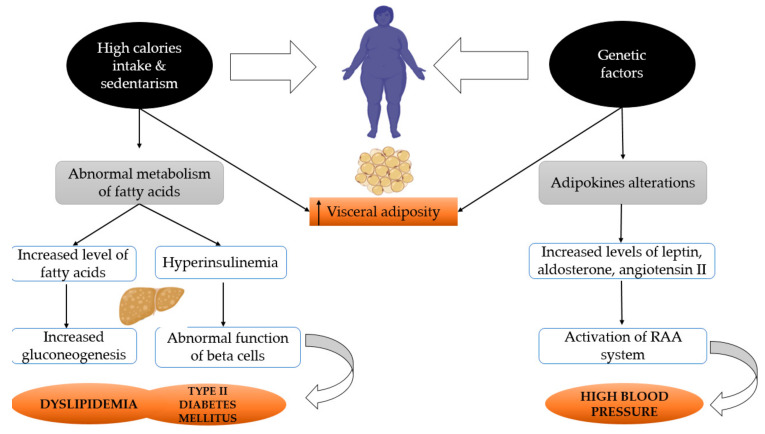
is a phytosynthetic filamentous cyanobacterium with microscopic dimensions, which naturally grows in the highly-salted alkaline lakes of Africa, Mexico, America, and Asia. Several bioactive peptides extracted from were demonstrated to possess antimicrobial, antiviral, antitumor, immunomodulatory, antiallergic and antihypertensive properties. It has been reported that the consumption of could prevent or manage metabolic syndrome components. In women, metabolic disorders are more prevalent during menopause. Postmenopausal women present higher waist circumference, increased blood pressure, hypertriglyceridemia, hyperglycemia, and decreased HDL-cholesterol values, leading to an increased risk of cardiovascular events. Therefore, in order to prevent cardiovascular diseases, it is essential to manage the components of the metabolic syndrome during the postmenopausal period. As recent reports indicated the efficiency of supplementation in the management of the metabolic syndrome components, our study aims to review all the clinical trials conducted on this topic. Our main objective is to have a better understanding of whether and how this cyanobacterium could manage the abnormalities included in the metabolic syndrome and if it could be used as a therapeutic approach in postmenopausal women with this condition. We selected relevant articles from PubMed, Google Scholar and CrossRef databases, and a total number of 20 studies met our criteria. All included clinical trials indicated that has positive effects in managing metabolic syndrome components. is a valuable cyanobacterium that can be used as a food supplement for the management of metabolic syndrome, and it is able to reduce the risk of cardiovascular events. The optimal dose and period of administration remain a debated subject, and future investigations are required. Considering the beneficial effects reported against each component of the metabolic syndrome, could also be effective in the postmenopausal period, when this syndrome is the most prevalent, but there is a strong need for human clinical trials in order to sustain this observation.
螺旋藻是一种具有微观尺寸的光合丝状蓝藻,自然生长在非洲、墨西哥、美国和亚洲的高盐碱性湖泊中。从螺旋藻中提取的几种生物活性肽被证明具有抗菌、抗病毒、抗肿瘤、免疫调节、抗过敏和降血压的特性。据报道,食用螺旋藻可以预防或控制代谢综合征的组成部分。在女性中,更年期更容易出现代谢紊乱。绝经后女性腰围增大、血压升高、甘油三酯升高、血糖升高、高密度脂蛋白胆固醇降低,导致心血管事件风险增加。因此,为了预防心血管疾病,必须在绝经期间管理代谢综合征的组成部分。由于最近的报告表明螺旋藻补充剂在管理代谢综合征组成部分方面的效率,我们的研究旨在回顾所有关于这个主题的临床试验。我们的主要目的是更好地了解这种蓝藻是否以及如何管理代谢综合征中的异常情况,以及它是否可以作为患有这种疾病的绝经后妇女的治疗方法。我们从 PubMed、Google Scholar 和 CrossRef 数据库中选择了相关文章,共有 20 项研究符合我们的标准。所有纳入的临床试验都表明,螺旋藻对管理代谢综合征组成部分有积极影响。螺旋藻是一种有价值的蓝藻,可以用作管理代谢综合征的食品补充剂,能够降低心血管事件的风险。最佳剂量和给药期限仍然是一个有争议的话题,需要进一步研究。考虑到对代谢综合征每个组成部分的有益作用,螺旋藻在绝经后也可能有效,因为在这个时期,这种综合征最为普遍,但需要进行人类临床试验以证实这一观察结果。