College of Life Sciences, Institute of Reproductive Sciences, Qingdao Agricultural University, Qingdao, China.
Key Laboratory of Animal Genetics, Breeding and Reproduction of Shaanxi Province, College of Animal Science and Technology, Northwest A&F University, Yangling, China.
PLoS Biol. 2020 Dec 22;18(12):e3001025. doi: 10.1371/journal.pbio.3001025. eCollection 2020 Dec.
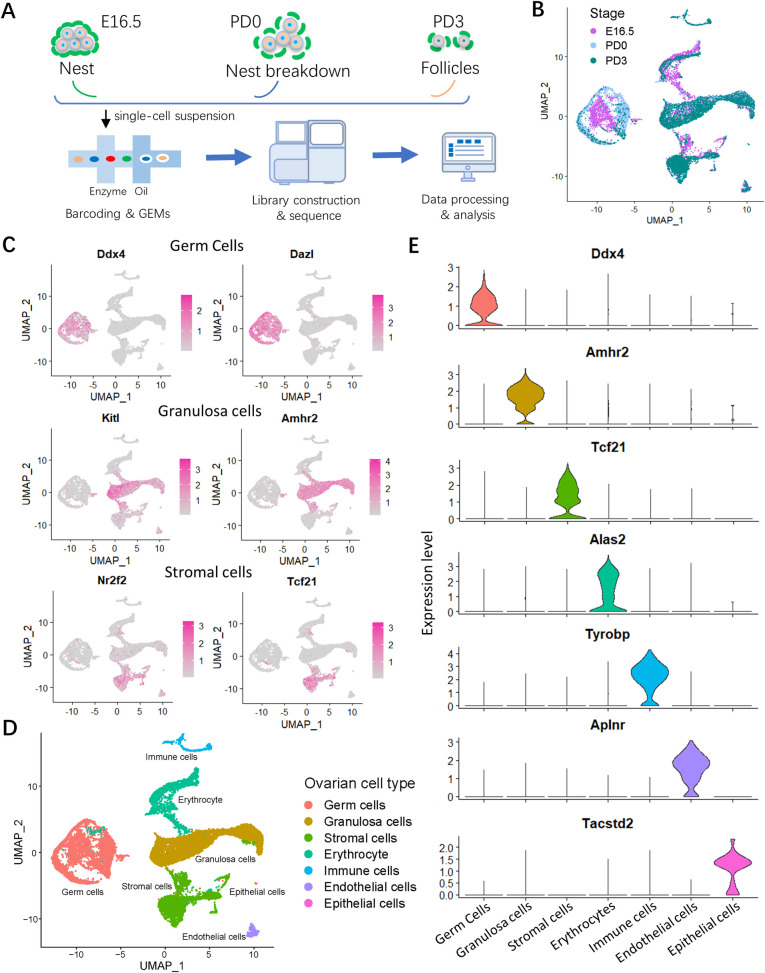
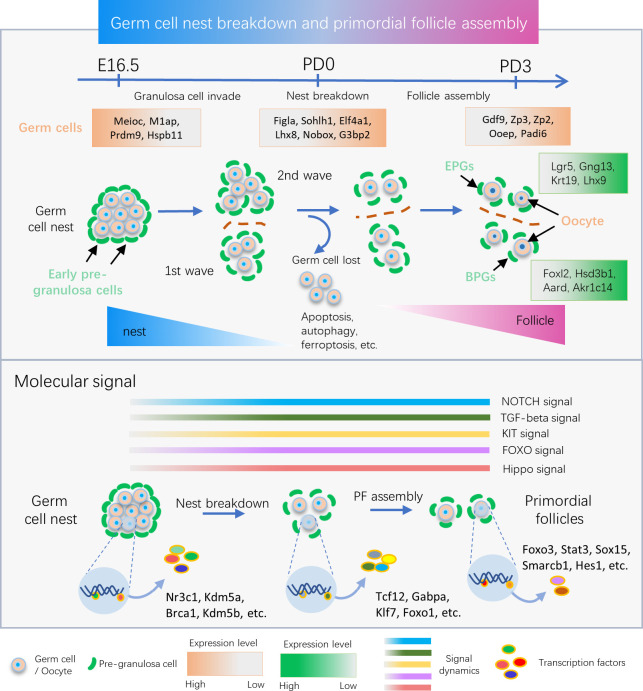
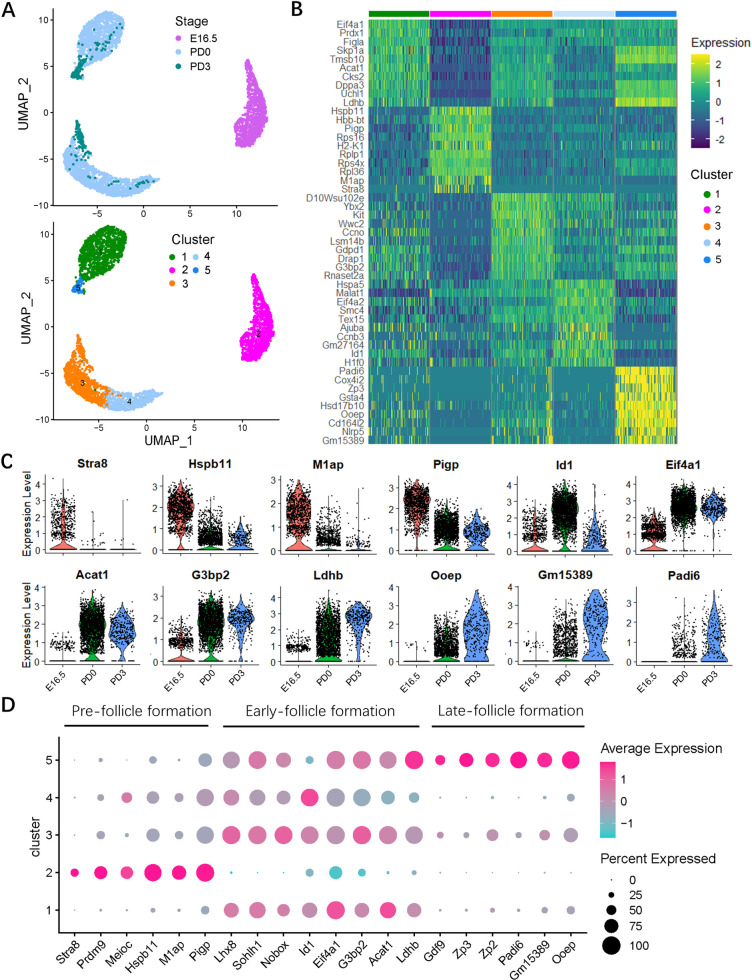
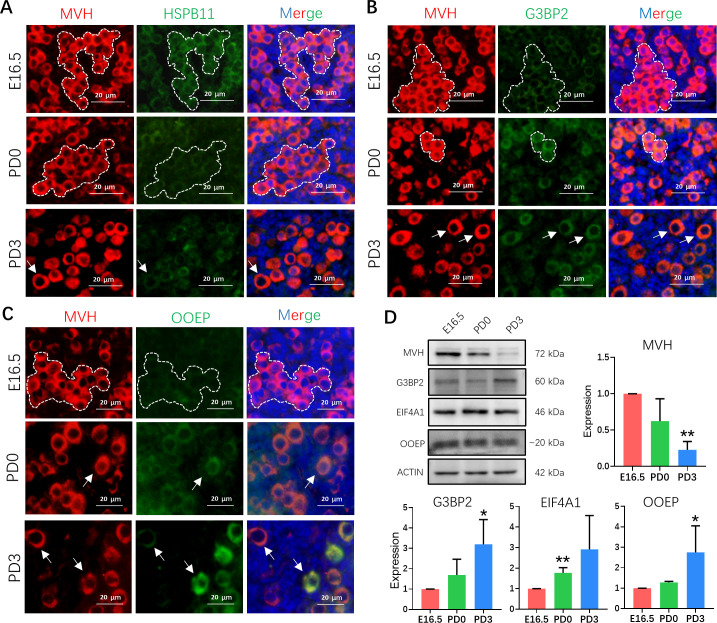
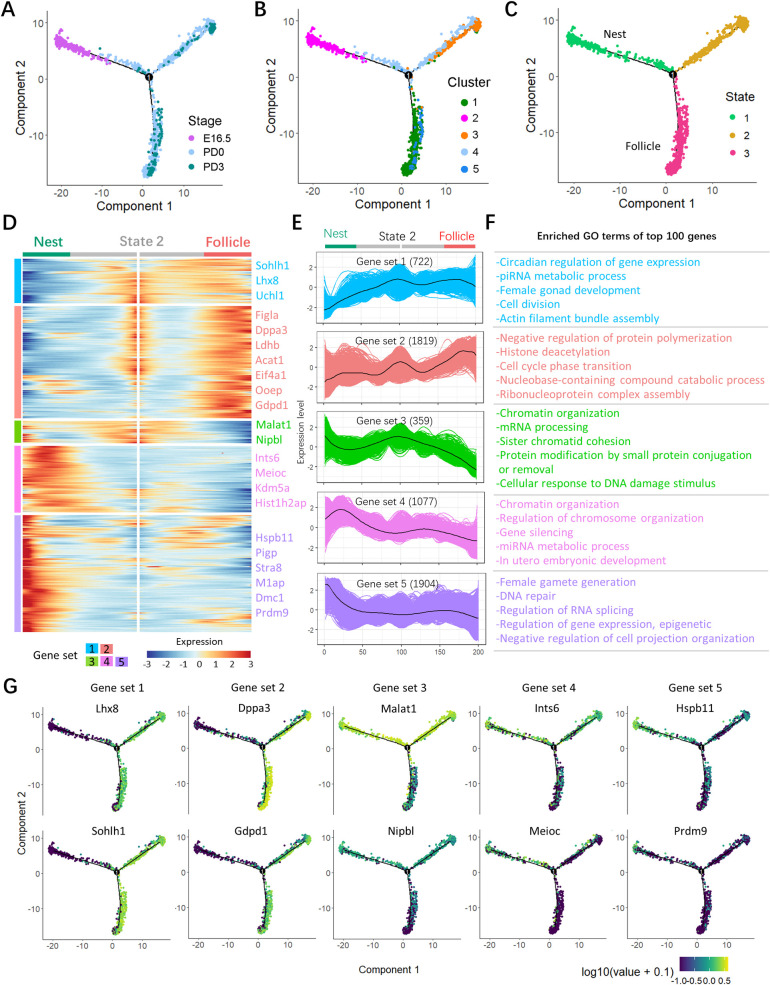
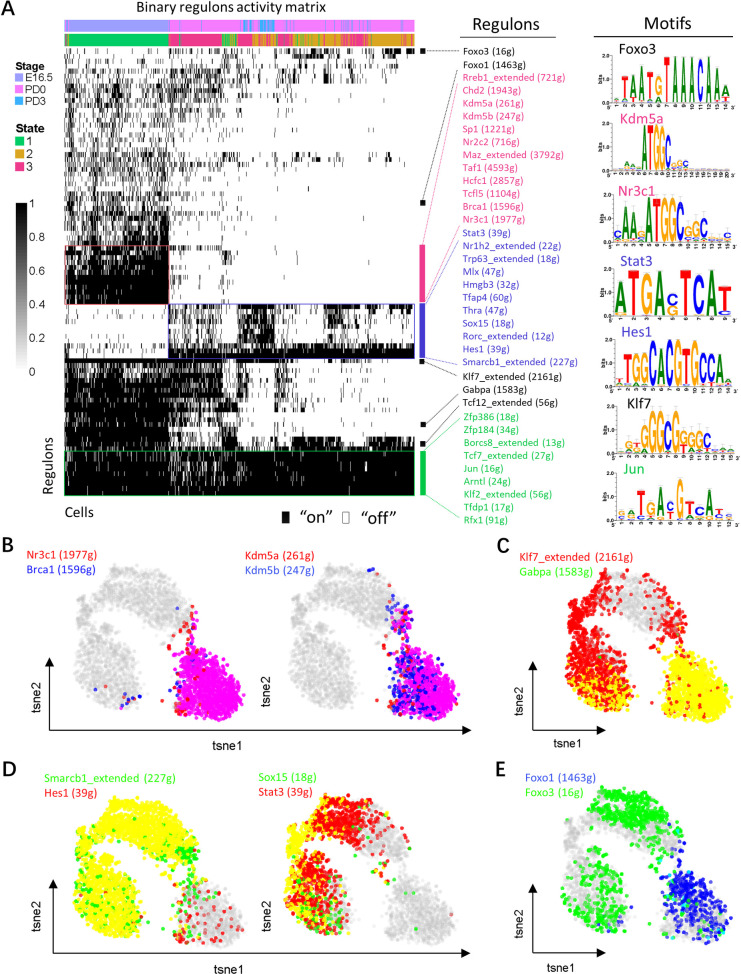
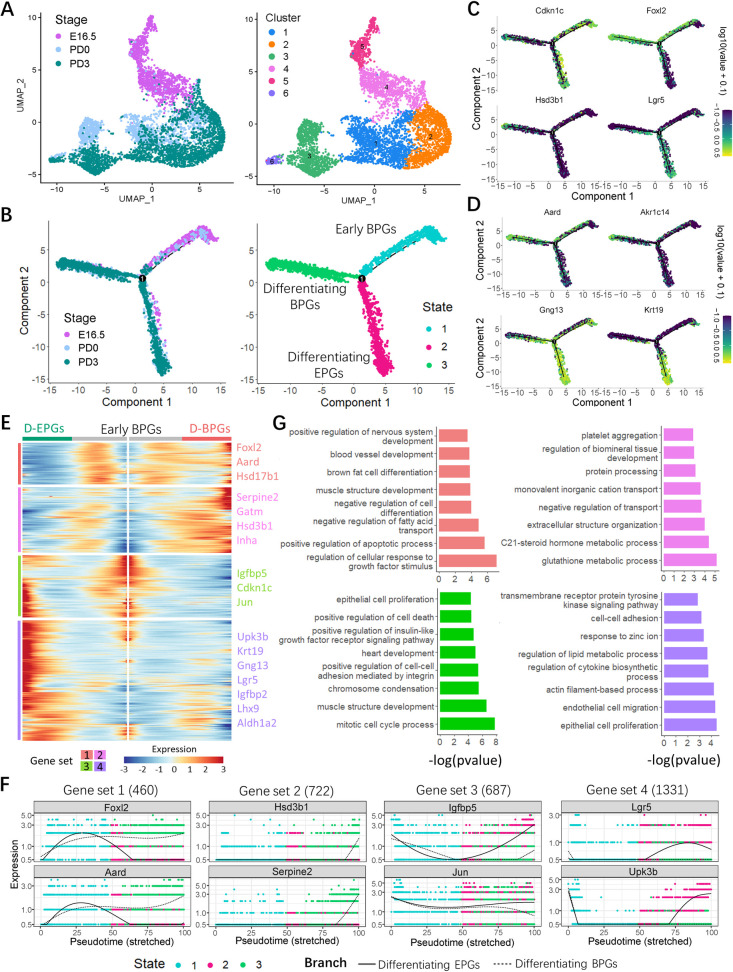
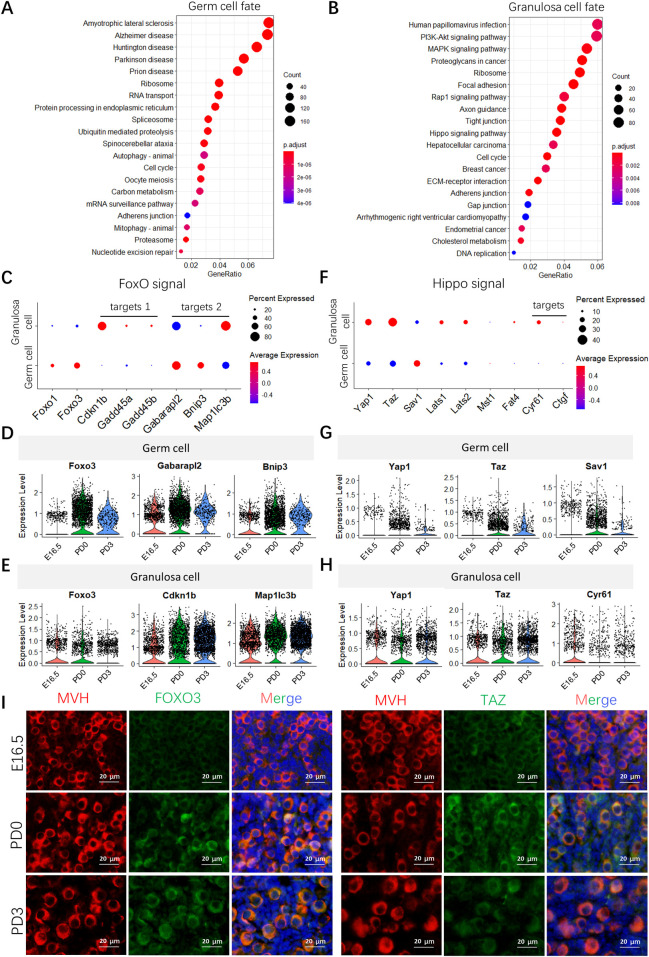
Primordial follicle assembly in the mouse occurs during perinatal ages and largely determines the ovarian reserve that will be available to support the reproductive life span. The development of primordial follicles is controlled by a complex network of interactions between oocytes and ovarian somatic cells that remain poorly understood. In the present research, using single-cell RNA sequencing performed over a time series on murine ovaries, coupled with several bioinformatics analyses, the complete dynamic genetic programs of germ and granulosa cells from E16.5 to postnatal day (PD) 3 were reported. Along with confirming the previously reported expression of genes by germ cells and granulosa cells, our analyses identified 5 distinct cell clusters associated with germ cells and 6 with granulosa cells. Consequently, several new genes expressed at significant levels at each investigated stage were assigned. By building single-cell pseudotemporal trajectories, 3 states and 1 branch point of fate transition for the germ cells were revealed, as well as for the granulosa cells. Moreover, Gene Ontology (GO) term enrichment enabled identification of the biological process most represented in germ cells and granulosa cells or common to both cell types at each specific stage, and the interactions of germ cells and granulosa cells basing on known and novel pathway were presented. Finally, by using single-cell regulatory network inference and clustering (SCENIC) algorithm, we were able to establish a network of regulons that can be postulated as likely candidates for sustaining germ cell-specific transcription programs throughout the period of investigation. Above all, this study provides the whole transcriptome landscape of ovarian cells and unearths new insights during primordial follicle assembly in mice.
原始卵泡在围产期形成,这在很大程度上决定了卵巢储备,而卵巢储备将决定女性的生殖寿命。原始卵泡的发育是由卵母细胞和卵巢体细胞之间的复杂相互作用网络控制的,但这一过程仍知之甚少。在本研究中,通过对小鼠卵巢进行的时间序列单细胞 RNA 测序,结合几种生物信息学分析,报告了 E16.5 至出生后第 3 天(PD3)的生殖细胞和颗粒细胞的完整动态遗传程序。除了证实以前报道的生殖细胞和颗粒细胞中基因的表达外,我们的分析还确定了与生殖细胞相关的 5 个不同细胞簇和与颗粒细胞相关的 6 个细胞簇。因此,鉴定了在每个研究阶段都以显著水平表达的几个新基因。通过构建单细胞拟时轨迹,揭示了生殖细胞和颗粒细胞的 3 个状态和 1 个命运转变分支点,同时也揭示了颗粒细胞的状态和命运转变分支点。此外,通过基因本体论(GO)术语富集,确定了在每个特定阶段生殖细胞和颗粒细胞中最具代表性的生物学过程,或两者共有的生物学过程,并展示了基于已知和新途径的生殖细胞和颗粒细胞之间的相互作用。最后,通过使用单细胞调控网络推断和聚类(SCENIC)算法,我们能够建立一个调控网络,该网络可以被假定为维持整个研究期间生殖细胞特异性转录程序的候选基因。总之,这项研究提供了卵巢细胞的全转录组图谱,并揭示了小鼠原始卵泡形成过程中的新见解。