Am J Trop Med Hyg. 2020 Dec 22;104(2):441-445. doi: 10.4269/ajtmh.20-1416.
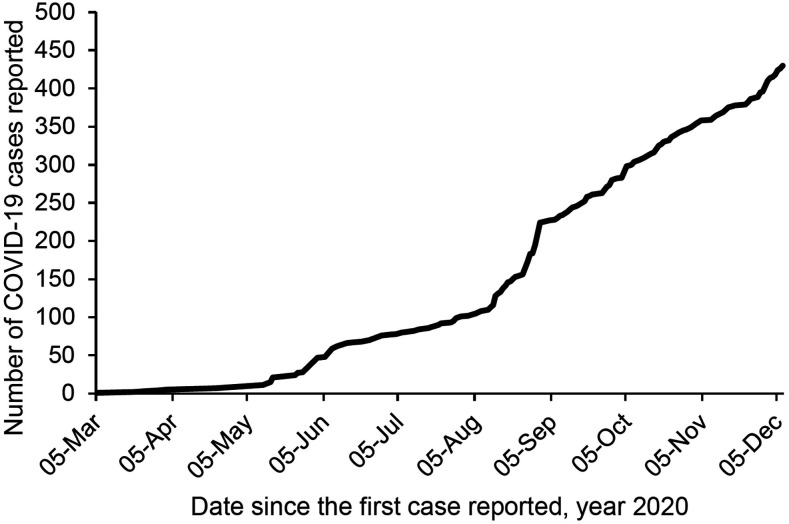
Bhutan is a lower-middle-income country with limited tertiary-care health infrastructure and shortage of human resources. The country's response to the COVID-19 pandemic is guided by the principle of Gross National Happiness (GNH), which prioritizes the well-being and happiness of people over conventional socioeconomic indicators. The king's leadership and government's decisions based on public health science helped in the control of the pandemic and reduce economic losses. The government implemented some unique and unconventional public health measures such as facility quarantine for those with high-risk exposure, an increase in quarantine period to 21 days, free testing and treatment, and population-based screening tests. Early and extensive contact tracing, extensive testing, effective communications, zoned travel restrictions, and adoption of physical distancing and hygiene measures limited COVID-19 transmissions within the country. Community participation from voluntary groups and civil society organizations helped deliver non-health services while hospitals provided uninterrupted routine health services through its primary healthcare network. All COVID-19 cases were treated in hospitals, and the country has had zero reported COVID-19 deaths. This article describes how the concept of GNH provided the framework for the government to respond to this pandemic.
不丹是一个中低收入国家,拥有有限的三级保健基础设施和人力资源短缺。该国对 COVID-19 大流行的应对措施遵循国民幸福总值(GNH)原则,该原则优先考虑人民的福祉和幸福,而不是传统的社会经济指标。国王的领导和政府基于公共卫生科学的决策有助于控制大流行并减少经济损失。政府实施了一些独特和非常规的公共卫生措施,如对高风险接触者进行设施隔离、将隔离期延长至 21 天、免费检测和治疗以及基于人群的筛查测试。早期和广泛的接触者追踪、广泛的检测、有效的沟通、分区旅行限制以及采取身体距离和卫生措施限制了 COVID-19 在国内的传播。自愿团体和民间社会组织的社区参与有助于提供非卫生服务,而医院通过其初级保健网络提供不间断的常规卫生服务。所有 COVID-19 病例都在医院接受治疗,该国没有报告 COVID-19 死亡病例。本文介绍了 GNH 概念如何为政府应对这一大流行提供了框架。