Yin Wen, Xu Siyang, Wang Yiting, Zhang Yuling, Chou Shan-Ho, Galperin Michael Y, He Jin
State Key Laboratory of Agricultural Microbiology, College of Life Science and Technology, Huazhong Agricultural University, Wuhan, PR China.
National Center for Biotechnology Information, National Library of Medicine, National Institutes of Health, Bethesda, MD, USA.
Crit Rev Microbiol. 2021 Feb;47(1):57-78. doi: 10.1080/1040841X.2020.1842325. Epub 2020 Dec 28.
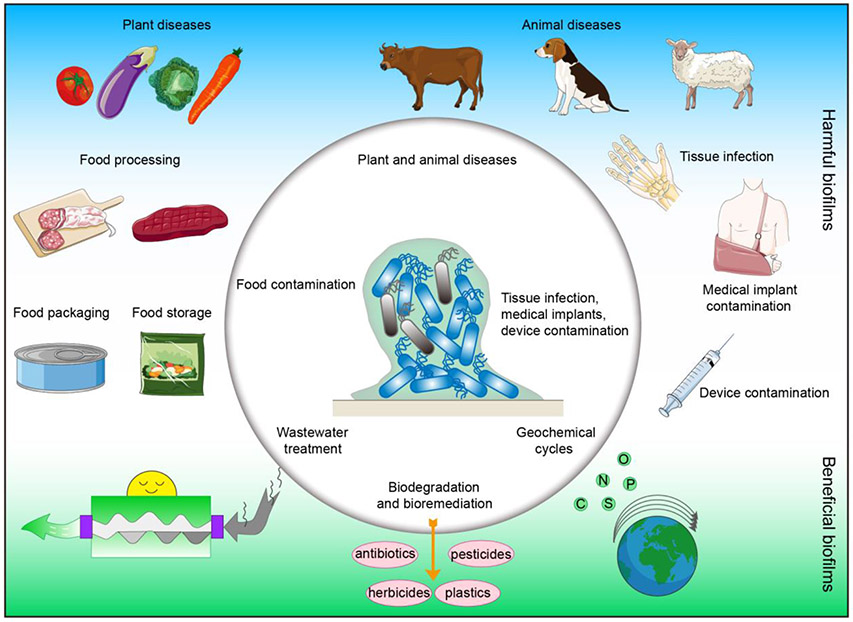
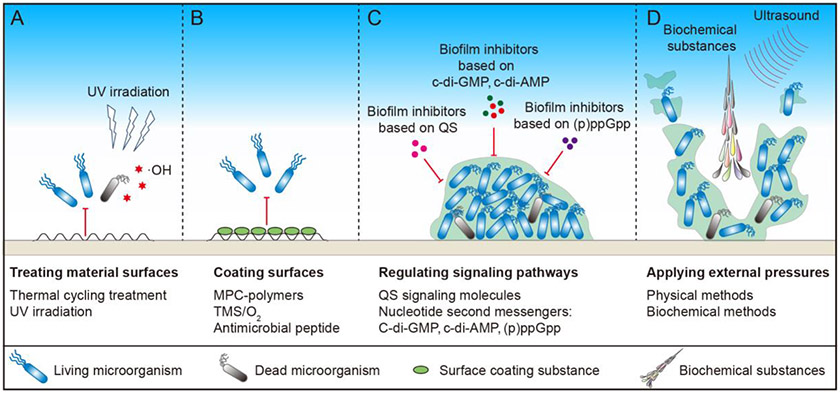
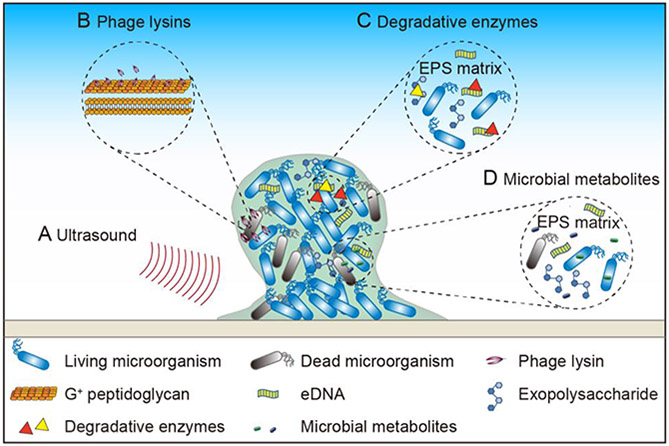
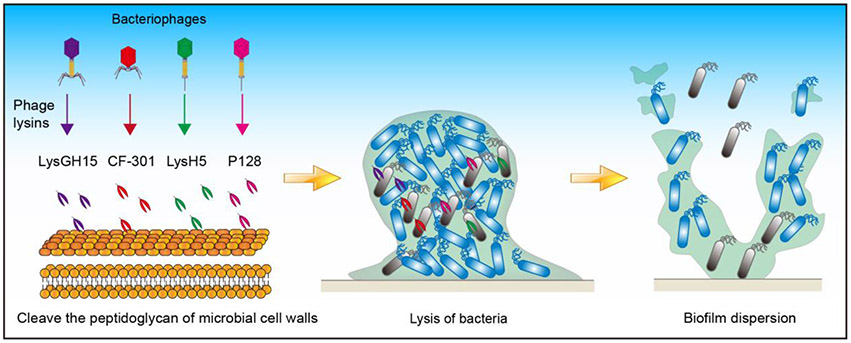
Biofilms are complex microbial architectures that encase microbial cells in a matrix comprising self-produced extracellular polymeric substances. Microorganisms living in biofilms are much more resistant to hostile environments than their planktonic counterparts and exhibit enhanced resistance against the microbicides. From the human perspective, biofilms can be classified into beneficial, neutral, and harmful. Harmful biofilms impact food safety, cause plant and animal diseases, and threaten medical fields, making it urgent to develop effective and robust strategies to control harmful biofilms. In this review, we discuss various strategies to control biofilm formation on infected tissues, implants, and medical devices. We classify the current strategies into three main categories: (i) changing the properties of susceptible surfaces to prevent biofilm formation; (ii) regulating signalling pathways to inhibit biofilm formation; (iii) applying external forces to eradicate the biofilm. We hope this review would motivate the development of innovative and effective strategies for controlling harmful biofilms.
生物膜是复杂的微生物结构,它将微生物细胞包裹在由自身产生的细胞外聚合物组成的基质中。生活在生物膜中的微生物比浮游微生物对恶劣环境的抵抗力要强得多,并且对杀菌剂表现出更强的抗性。从人类的角度来看,生物膜可分为有益的、中性的和有害的。有害生物膜影响食品安全,引发动植物疾病,并威胁医学领域,因此迫切需要制定有效且强大的策略来控制有害生物膜。在这篇综述中,我们讨论了控制感染组织、植入物和医疗设备上生物膜形成的各种策略。我们将当前的策略分为三大类:(i)改变易感表面的性质以防止生物膜形成;(ii)调节信号通路以抑制生物膜形成;(iii)施加外力以根除生物膜。我们希望这篇综述能推动开发创新且有效的控制有害生物膜的策略。