Molecular, Cellular & Integrative Physiology Program, University of California, Los Angeles, CA, United States of America; Department of Integrative Biology and Physiology, University of California, Los Angeles, CA, United States of America; Department of Pathology and Laboratory Medicine, David Geffen School of Medicine at UCLA, University of California, Los Angeles, CA, United States of America.
Molecular, Cellular & Integrative Physiology Program, University of California, Los Angeles, CA, United States of America.
Exp Gerontol. 2021 Mar;145:111200. doi: 10.1016/j.exger.2020.111200. Epub 2020 Dec 24.
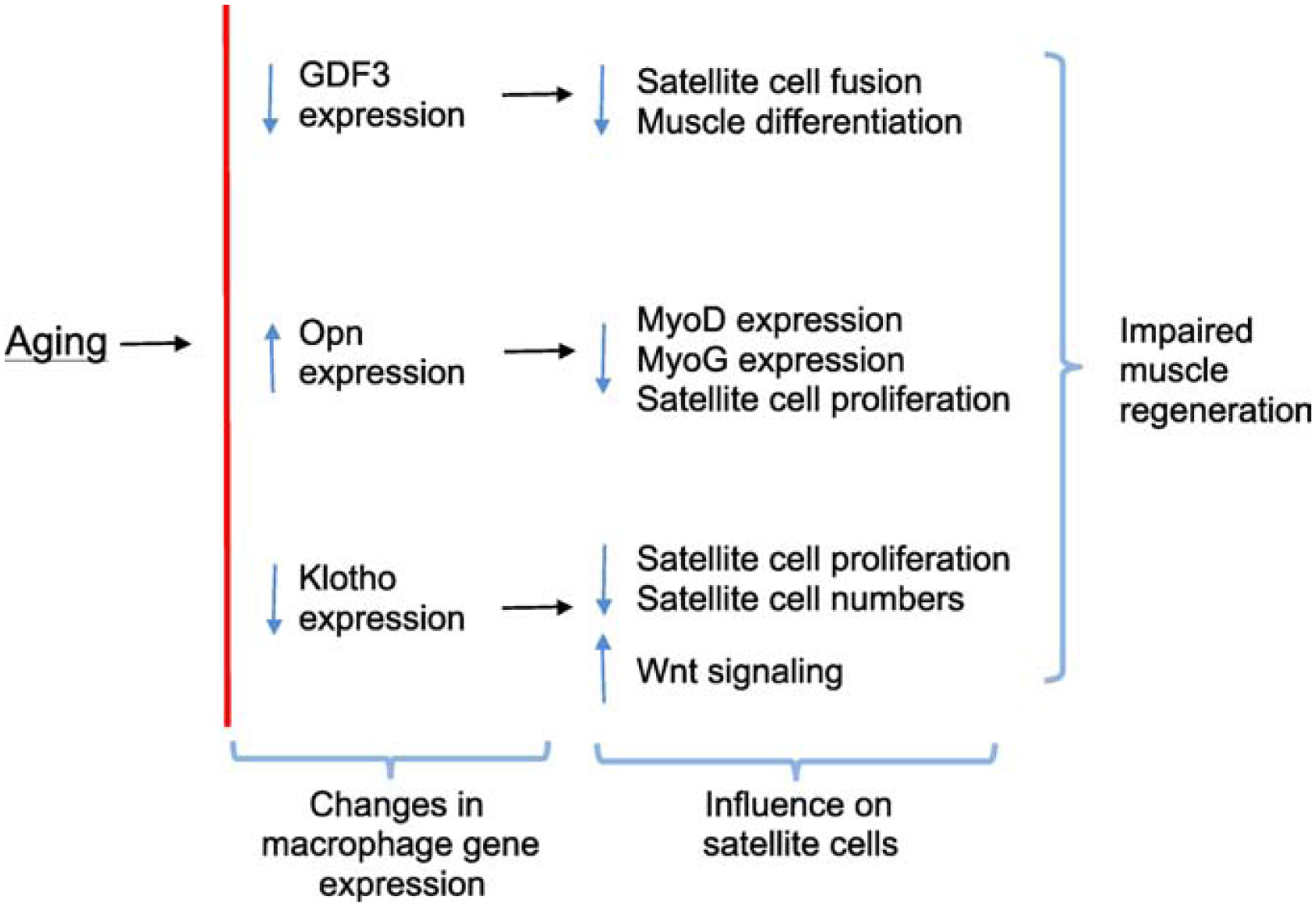
Skeletal muscle regeneration that follows acute injury is strongly influenced by interactions with immune cells that invade and proliferate in the damaged tissue. Discoveries over the past 20 years have identified many of the key mechanisms through which myeloid cells, especially macrophages, regulate muscle regeneration. In addition, lymphoid cells that include CD8+ T-cells and regulatory T-cells also significantly affect the course of muscle regeneration. During aging, the regenerative capacity of skeletal muscle declines, which can contribute to progressive loss of muscle mass and function. Those age-related reductions in muscle regeneration are accompanied by systemic, age-related changes in the immune system, that affect many of the myeloid and lymphoid cell populations that can influence muscle regeneration. In this review, we present recent discoveries that indicate that aging of the immune system contributes to the diminished regenerative capacity of aging muscle. Intrinsic, age-related changes in immune cells modify their expression of factors that affect the function of a population of muscle stem cells, called satellite cells, that are necessary for normal muscle regeneration. For example, age-related reductions in the expression of growth differentiation factor-3 (GDF3) or CXCL10 by macrophages negatively affect adult myogenesis, by disrupting regulatory interactions between macrophages and satellite cells. Those changes contribute to a reduction in the numbers and myogenic capacity of satellite cells in old muscle, which reduces their ability to restore damaged muscle. In addition, aging produces changes in the expression of molecules that regulate the inflammatory response to injured muscle, which also contributes to age-related defects in muscle regeneration. For example, age-related increases in the production of osteopontin by macrophages disrupts the normal inflammatory response to muscle injury, resulting in regenerative defects. These nascent findings represent the beginning of a newly-developing field of investigation into mechanisms through which aging of the immune system affects muscle regeneration.
急性损伤后骨骼肌的再生强烈受到与浸润和增殖于受损组织中的免疫细胞相互作用的影响。在过去的 20 年中,研究发现了许多关键机制,这些机制说明了髓系细胞(尤其是巨噬细胞)如何调节肌肉再生。此外,包括 CD8+T 细胞和调节性 T 细胞在内的淋巴细胞也显著影响肌肉再生的过程。随着年龄的增长,骨骼肌的再生能力下降,这可能导致肌肉质量和功能的逐渐丧失。与年龄相关的肌肉再生减少伴随着免疫系统的全身性、年龄相关变化,影响许多可以影响肌肉再生的髓系和淋巴系细胞群体。在这篇综述中,我们提出了最近的发现,表明免疫系统的衰老导致衰老肌肉再生能力的降低。免疫细胞的内在、与年龄相关的变化改变了它们表达的影响称为卫星细胞的肌肉干细胞功能的因子,这些因子对于正常的肌肉再生是必需的。例如,巨噬细胞中生长分化因子-3 (GDF3)或 CXCL10 的表达减少会通过破坏巨噬细胞和卫星细胞之间的调节相互作用,对成体肌发生产生负面影响,从而影响老年肌肉中的卫星细胞数量和成肌能力,降低其修复受损肌肉的能力。此外,衰老会导致调节受损肌肉炎症反应的分子表达发生变化,这也会导致与年龄相关的肌肉再生缺陷。例如,巨噬细胞中骨桥蛋白的产生增加会破坏肌肉损伤的正常炎症反应,导致再生缺陷。这些新发现代表了一个新兴研究领域的开始,该领域旨在研究免疫系统衰老如何影响肌肉再生的机制。