Meng Qinghai, Li Yu, Ji Tingting, Chao Ying, Li Jun, Fu Yu, Wang Suyun, Chen Qi, Chen Wen, Huang Fuhua, Wang Youran, Zhang Qichun, Wang Xiaoliang, Bian Huimin
School of Pharmacy, Nanjing University of Chinese Medicine, Nanjing 210023, China.
School of Medicine & Holistic Integrative Medicine, Nanjing University of Chinese Medicine, Nanjing 210023, China.
J Adv Res. 2020 Aug 24;28:149-164. doi: 10.1016/j.jare.2020.08.010. eCollection 2021 Feb.
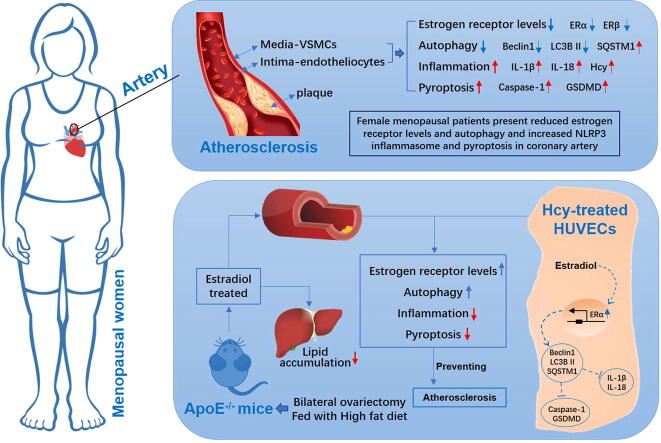
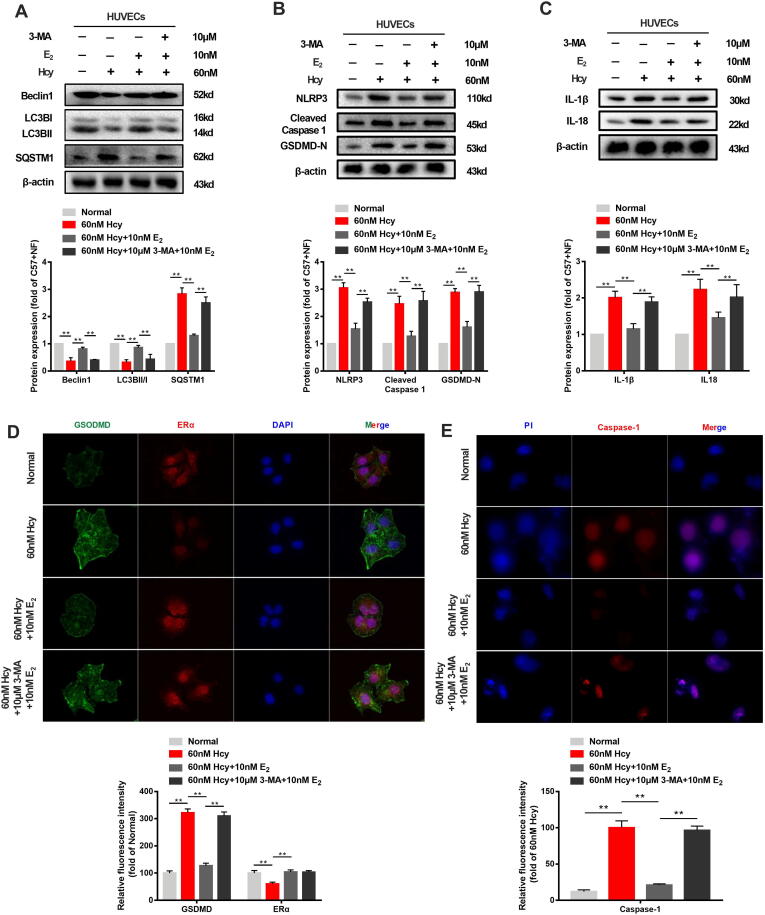
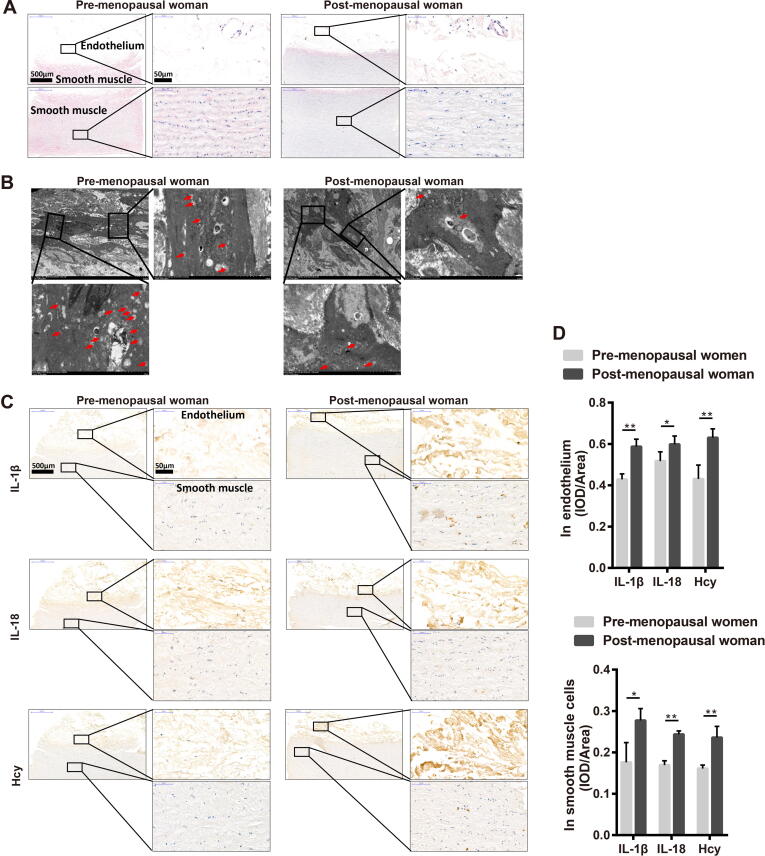
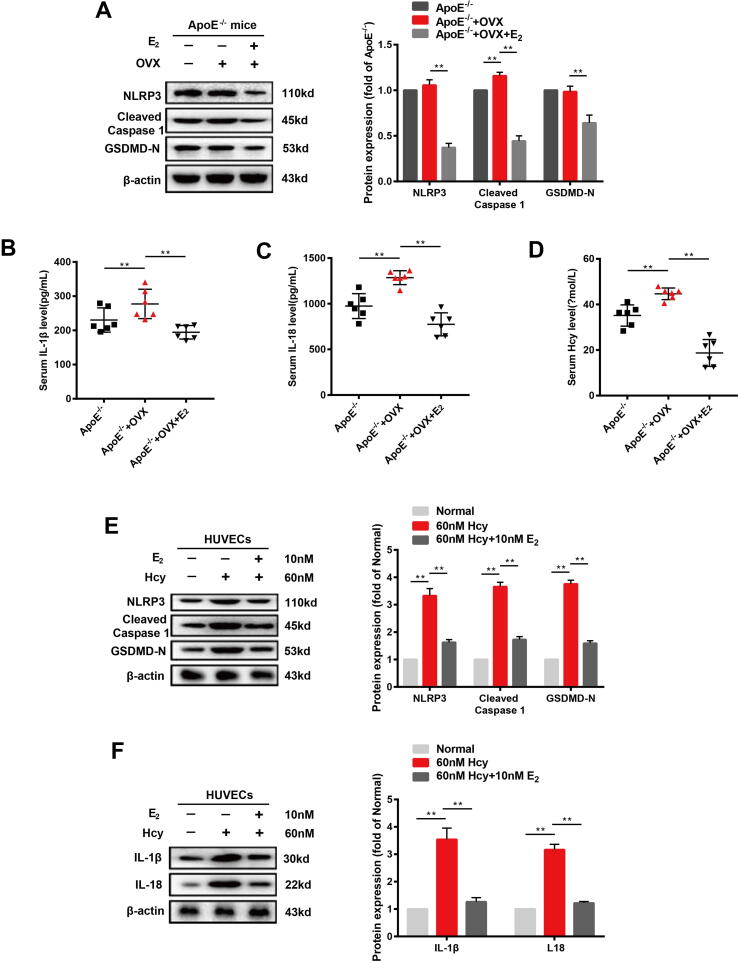
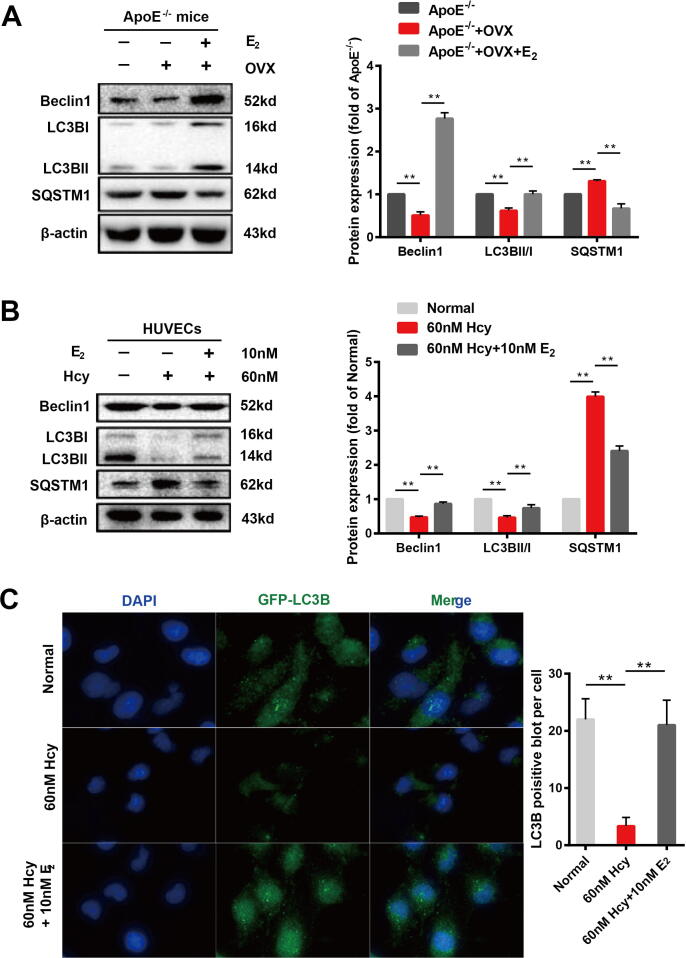
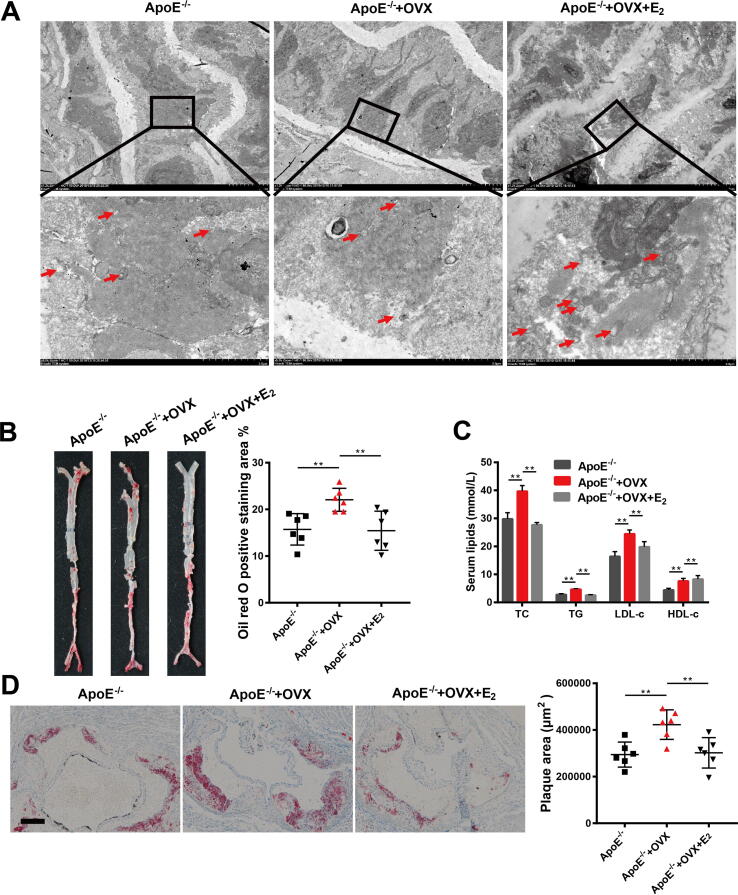
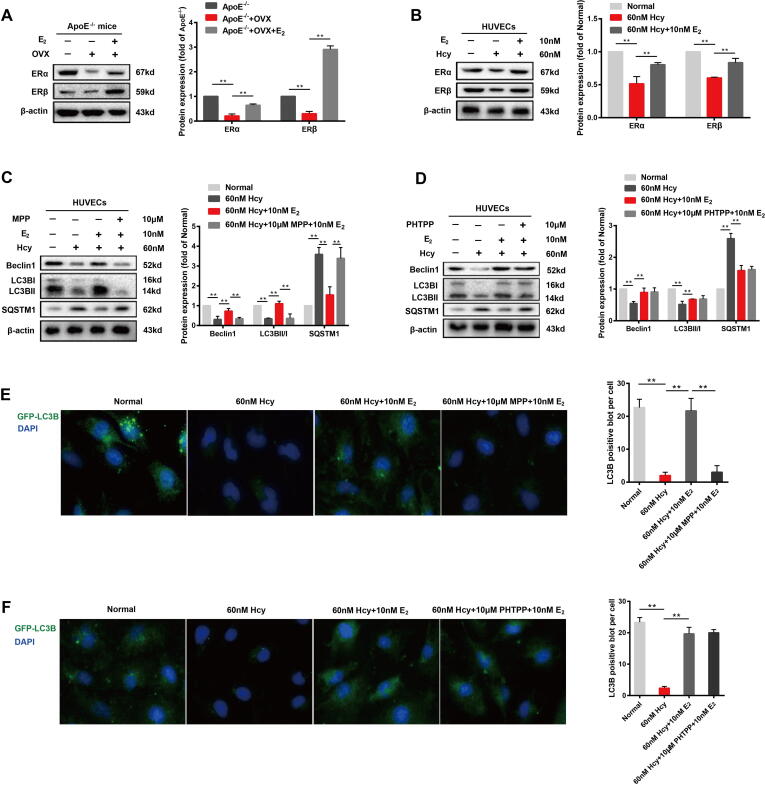
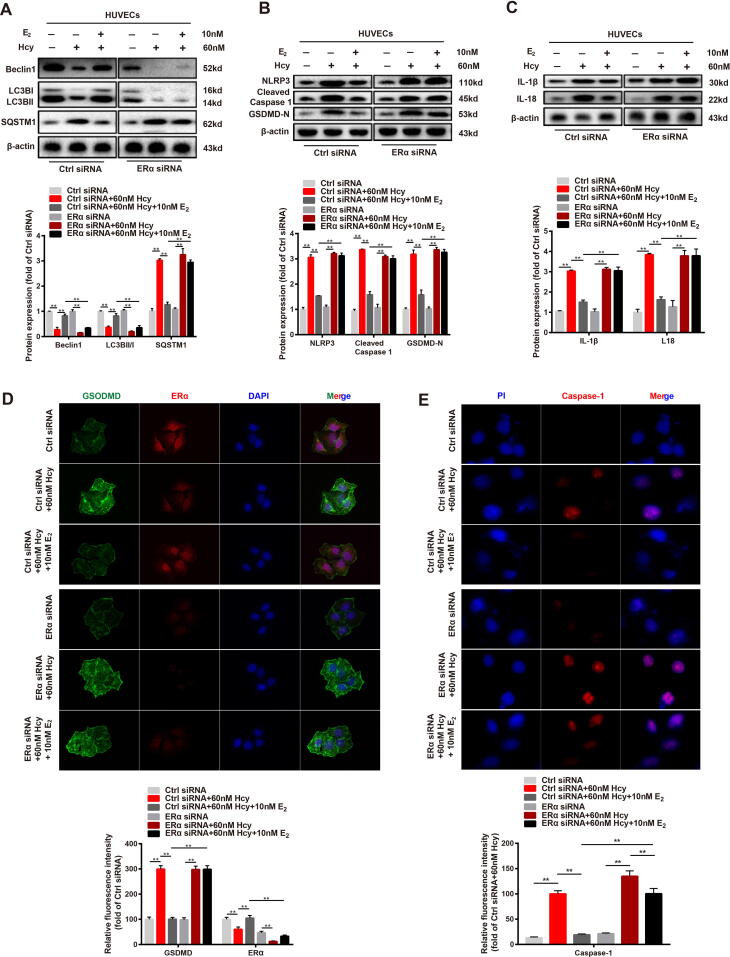
Excessive inflammation and the pyroptosis of vascular endothelial cells caused by estrogen deficiency is one cause of atherosclerosis in post-menopausal women. Because autophagy is highly regulated by estrogen, we hypothesized that estrogen can reduce vascular endothelial cell pyroptosis through estrogen receptor alpha (ERα)-mediated activation of autophagy to improve atherosclerosis in post-menopausal stage. Aortic samples from pro-menopausal and post-menopausal women with ascending aortic arteriosclerosis were analyzed, and bilateral ovariectomized (OVX) female ApoE-/- mice and homocysteine (Hcy)-treated HUVECs were used to analyze the effect of estrogen supplementation therapy. The aortic endothelium showed a decrease in ERα expression and autophagy, but presented an increase in inflammation and pyroptosis in female post-menopausal patients. Estrogen treatment accelerated autophagy and ameliorated cell pyroptosis in the cardiac aortas of OVX ApoE-/- mice and Hcy-treated HUVECs. Estrogen had therapeutic effect on atherosclerosis and improved the symptoms associated with lipid metabolism disorders in OVX ApoE-/- mice. Inhibition and silencing of ERα led to a reduction in the autophagy promoting ability of estrogen and aggravated pyroptosis. Moreover, the inhibition of autophagy promoted pyroptosis and abolished the protective effect of estrogen, but had no influence on ERα expression. Thus, the results of the present study demonstrated that post-menopausal women present decreased autophagy and ERα expression and excessive damage to the ascending aorta. In addition, and assay results demonstrated that estrogen prevents atherosclerosis by upregulating ERα expression and subsequently induces autophagy to reduce inflammation and pyroptosis.
雌激素缺乏引起的过度炎症反应和血管内皮细胞焦亡是绝经后女性动脉粥样硬化的一个原因。由于自噬受雌激素高度调控,我们推测雌激素可通过雌激素受体α(ERα)介导的自噬激活来减少血管内皮细胞焦亡,从而改善绝经后阶段的动脉粥样硬化。分析了患有升主动脉硬化的绝经前和绝经后女性的主动脉样本,并使用双侧卵巢切除(OVX)的雌性ApoE-/-小鼠和经同型半胱氨酸(Hcy)处理的人脐静脉内皮细胞(HUVECs)来分析雌激素补充疗法的效果。绝经后女性患者的主动脉内皮显示ERα表达和自噬减少,但炎症和焦亡增加。雌激素治疗可加速OVX ApoE-/-小鼠心脏主动脉和经Hcy处理的HUVECs中的自噬,并改善细胞焦亡。雌激素对动脉粥样硬化具有治疗作用,并改善了OVX ApoE-/-小鼠中与脂质代谢紊乱相关的症状。ERα的抑制和沉默导致雌激素促进自噬的能力降低,并加重焦亡。此外,自噬的抑制促进了焦亡并消除了雌激素的保护作用,但对ERα表达没有影响。因此,本研究结果表明,绝经后女性存在自噬和ERα表达降低以及升主动脉过度损伤。此外,实验结果表明,雌激素通过上调ERα表达来预防动脉粥样硬化,随后诱导自噬以减少炎症和焦亡。