Shlosberg Yaniv, Eichenbaum Benjamin, Tóth Tünde N, Levin Guy, Liveanu Varda, Schuster Gadi, Adir Noam
Grand Technion Energy Program, Technion, Haifa 32000, Israel.
Schulich Faculty of Chemistry, Technion, Haifa 32000, Israel.
iScience. 2020 Dec 4;24(1):101892. doi: 10.1016/j.isci.2020.101892. eCollection 2021 Jan 22.
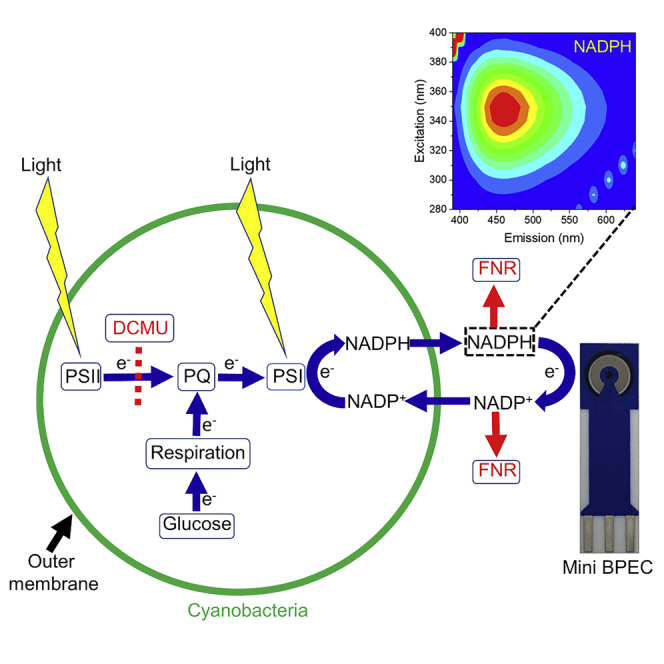
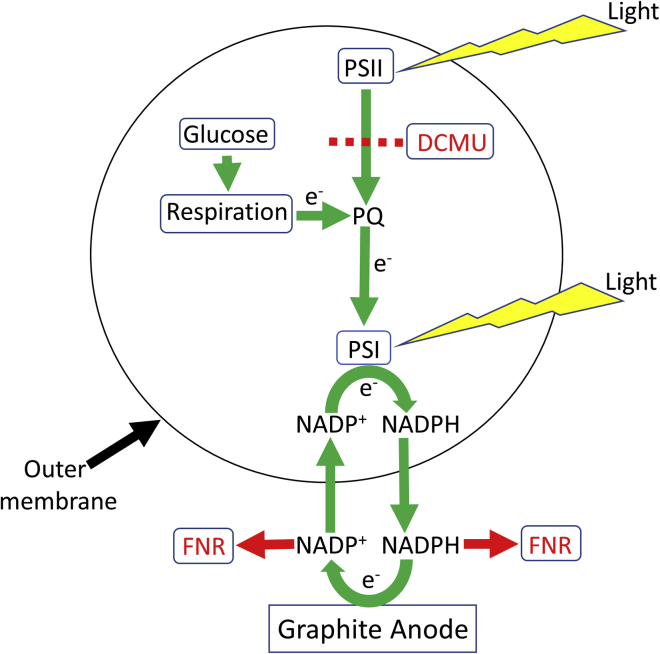
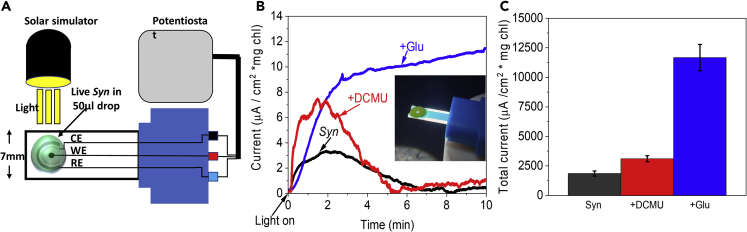
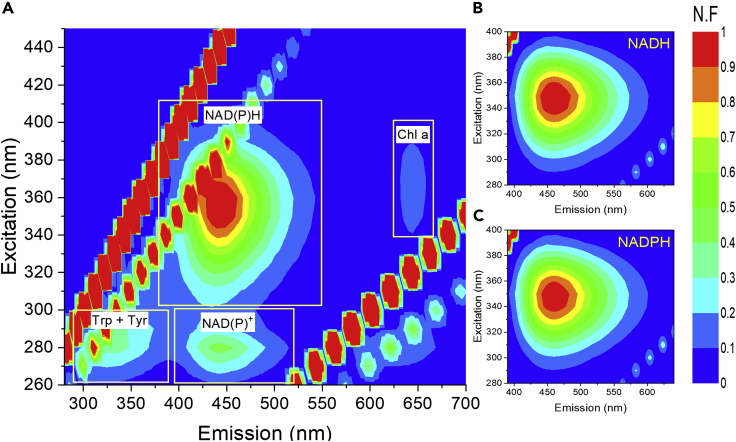
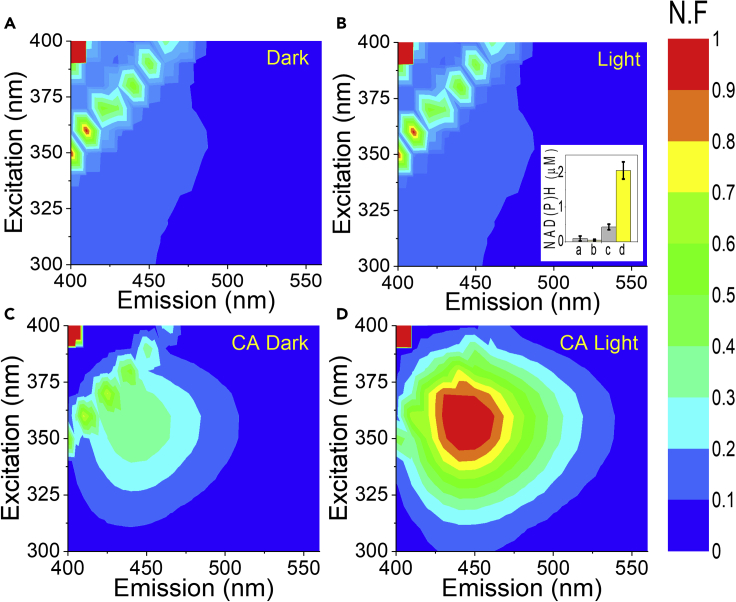
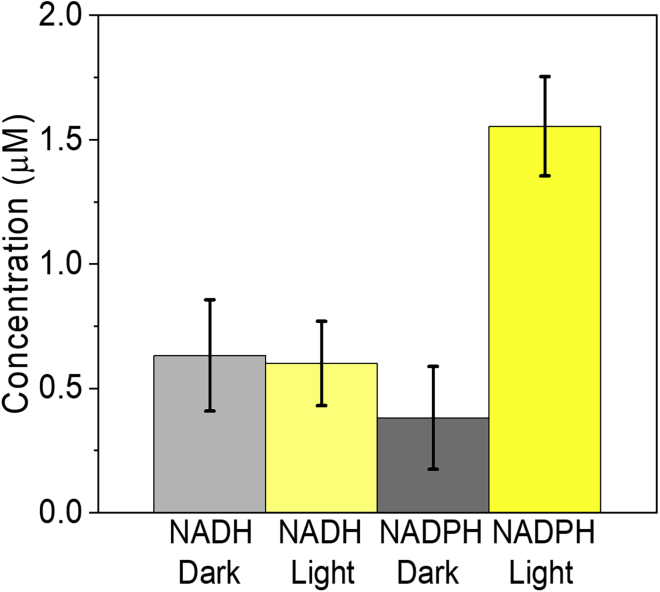
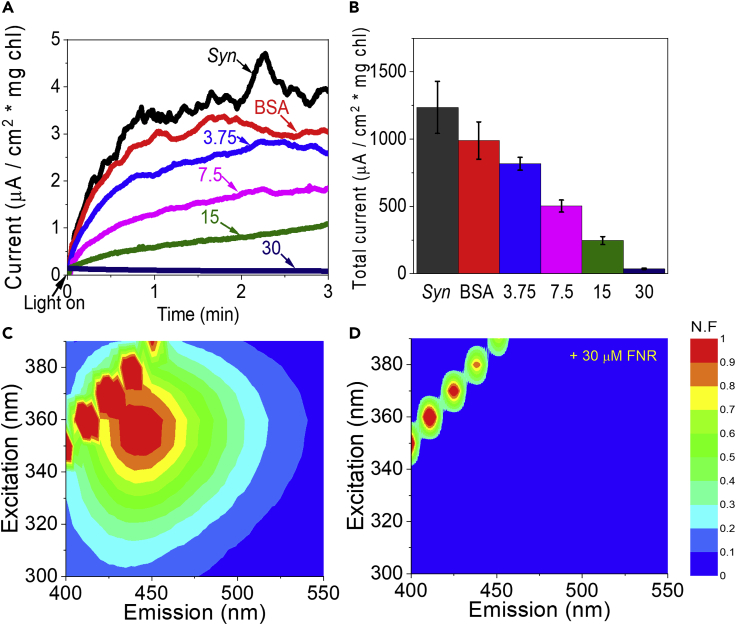
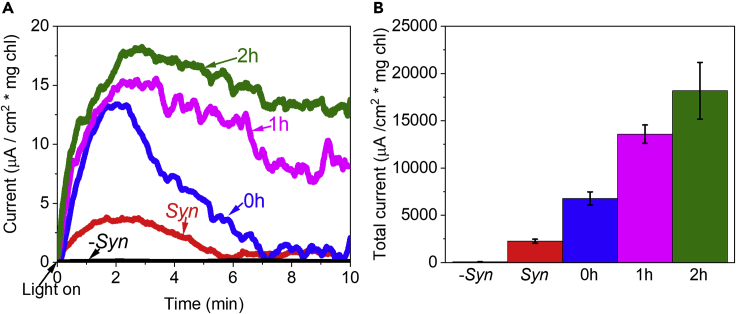
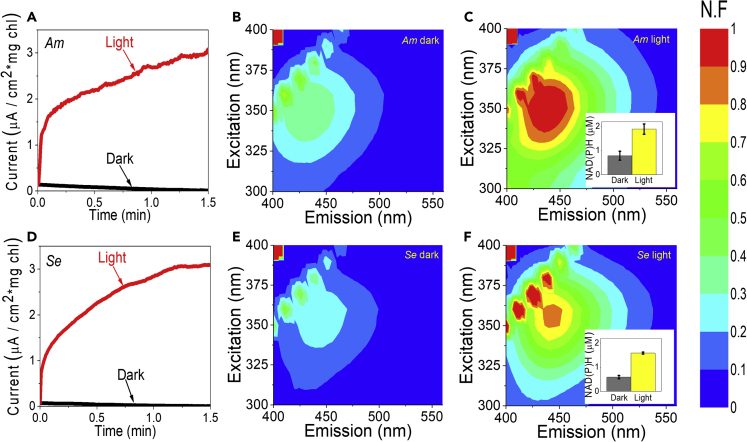
Previous studies have shown that live cyanobacteria can produce photocurrent in bio-photoelectrochemical cells (BPECs) that can be exploited for clean renewable energy production. Electron transfer from cyanobacteria to the electrochemical cell was proposed to be facilitated by small molecule(s) mediator(s) whose identity (or identities) remain unknown. Here, we elucidate the mechanism of electron transfer in the BPEC by identifying the major electron mediator as NADPH in three cyanobacterial species. We show that an increase in the concentration of NADPH secreted into the external cell medium (ECM) is obtained by both illumination and activation of the BPEC. Elimination of NADPH in the ECM abrogates the photocurrent while addition of exogenous NADP significantly increases and prolongs the photocurrent production. NADP is thus the first non-toxic, water soluble electron mediator that can functionally link photosynthetic cells to an energy conversion system and may serve to improve the performance of future BPECs.
先前的研究表明,活的蓝细菌能够在生物光电化学电池(BPEC)中产生光电流,可用于清洁可再生能源生产。据推测,从蓝细菌到电化学电池的电子转移是由小分子介质促进的,但其身份仍不明确。在此,我们通过确定三种蓝细菌物种中的主要电子介质为NADPH,阐明了BPEC中的电子转移机制。我们表明,通过光照和激活BPEC,分泌到细胞外介质(ECM)中的NADPH浓度会增加。消除ECM中的NADPH会消除光电流,而添加外源NADP会显著增加并延长光电流的产生。因此,NADP是第一种无毒、水溶性的电子介质,它可以在功能上将光合细胞与能量转换系统联系起来,并可能有助于提高未来BPEC的性能。