Department of Biomedical Engineering, School of Medicine and School of Engineering, University of Alabama at Birmingham, Birmingham, AL 35294, USA.
Department of Cardiothoracic Surgery, The Second Affiliated Hospital of Soochow University, Suzhou 215006, People's Republic of China.
Int J Nanomedicine. 2020 Dec 16;15:10257-10269. doi: 10.2147/IJN.S277046. eCollection 2020.
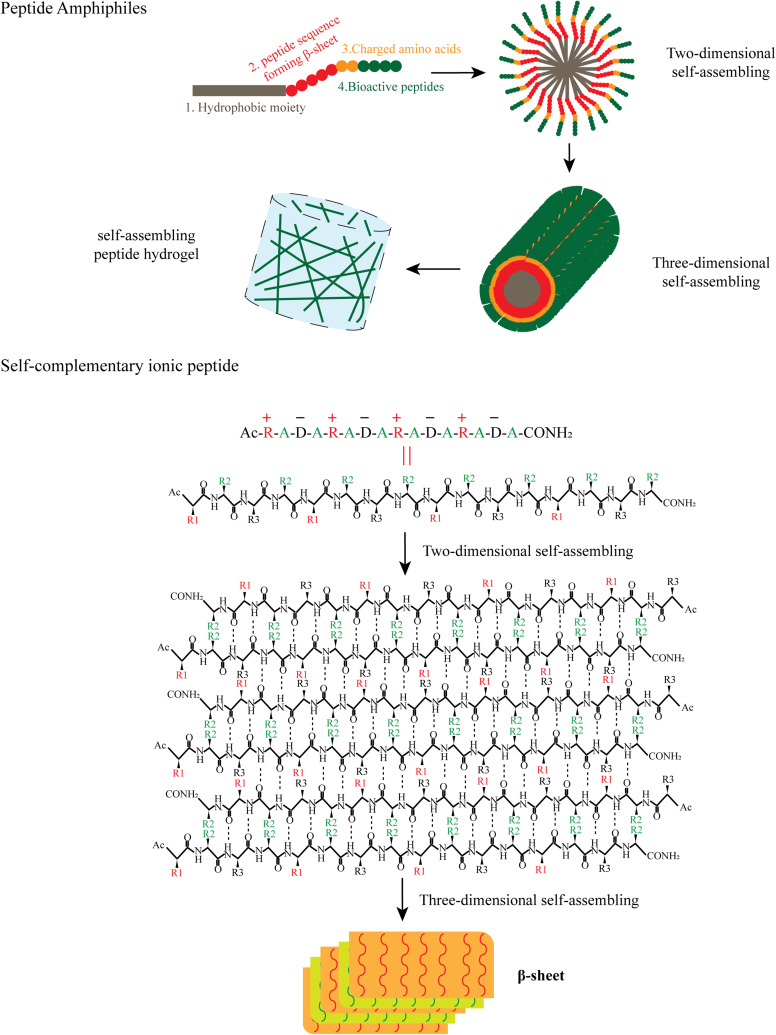
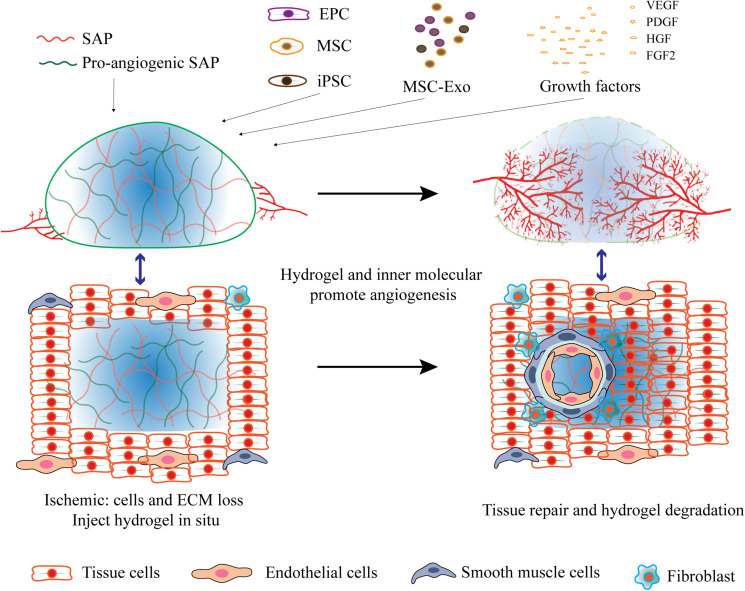
Ischemic diseases, especially in the heart and the brain, have become a serious threat to human health. Growth factor and cell therapy are emerging as promising therapeutic strategies; however, their retention and sustainable functions in the injured tissue are limited. Self-assembling peptide (SAP)-based hydrogels, mimicking the extracellular matrix, are therefore introduced to encapsulate and controllably release cells, cell-derived exosomes or growth factors, thus promoting angiogenesis and tissue recovery after ischemia. We will summarize the classification, composition and structure of SAPs, and the influencing factors for SAP gelation. Moreover, we will describe the functionalized SAPs, and the combinatorial therapy of cells, exosomes or growth factors with functionalized SAPs for angiogenic process as well as its advantage in immunogenicity and injectability. Finally, an outlook on future directions and challenges is provided.
缺血性疾病,特别是心脏和大脑的缺血性疾病,已成为严重威胁人类健康的因素。生长因子和细胞疗法作为新兴的治疗策略,具有广阔的应用前景;然而,它们在损伤组织中的保留和持续功能是有限的。基于自组装肽(SAP)的水凝胶模仿细胞外基质,可用于包封和控制释放细胞、细胞来源的外泌体或生长因子,从而促进缺血后血管生成和组织恢复。我们将总结 SAP 的分类、组成和结构,以及影响 SAP 凝胶形成的因素。此外,我们将描述功能化 SAP,以及细胞、外泌体或生长因子与功能化 SAP 的组合治疗在血管生成过程中的作用及其在免疫原性和可注射性方面的优势。最后,对未来的发展方向和挑战进行了展望。