Ma Xiaotang, Agas Agnieszka, Siddiqui Zain, Kim KaKyung, Iglesias-Montoro Patricia, Kalluru Jagathi, Kumar Vivek, Haorah James
Department of Biomedical Engineering, Center for Injury Bio-Mechanics, Materials and Medicine, New Jersey Institute of Technology, Newark, NJ, 07102, USA.
Department of Chemical and Materials Engineering, New Jersey Institute of Technology, Newark, NJ, 07102, USA.
Bioact Mater. 2020 Jan 27;5(1):124-132. doi: 10.1016/j.bioactmat.2020.01.005. eCollection 2020 Mar.
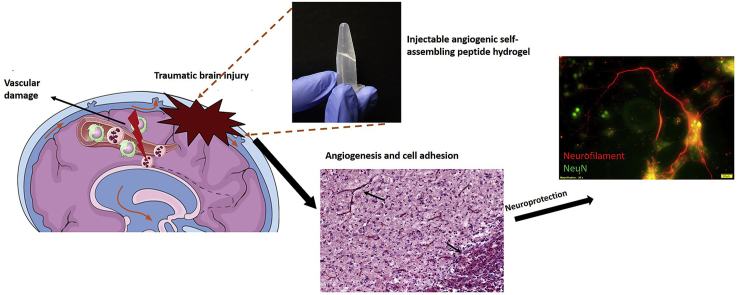
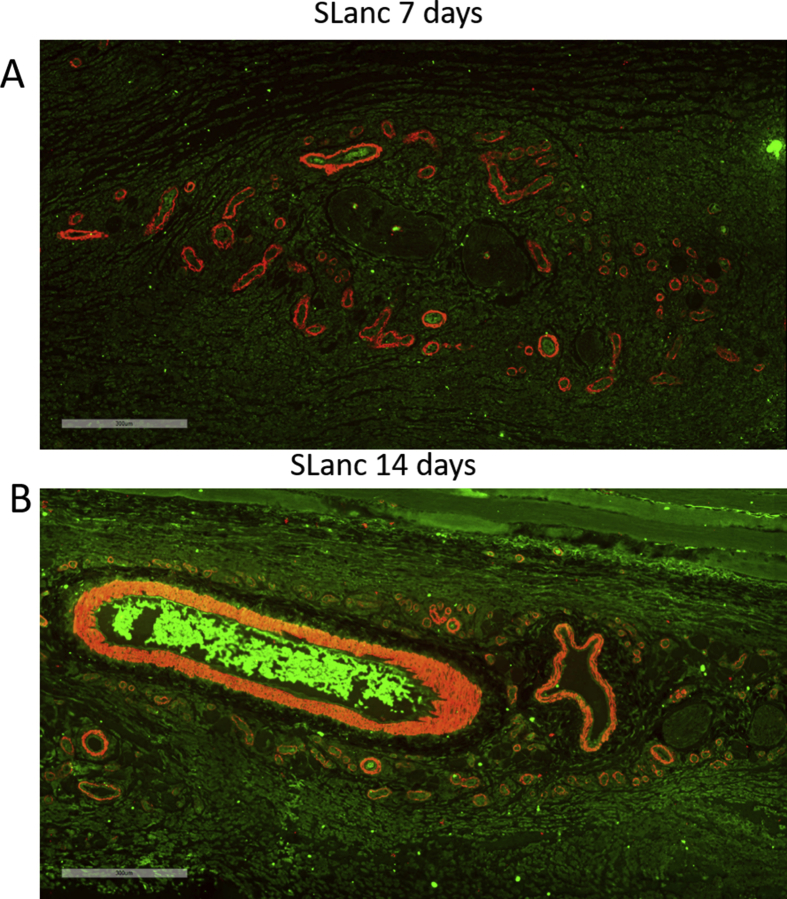
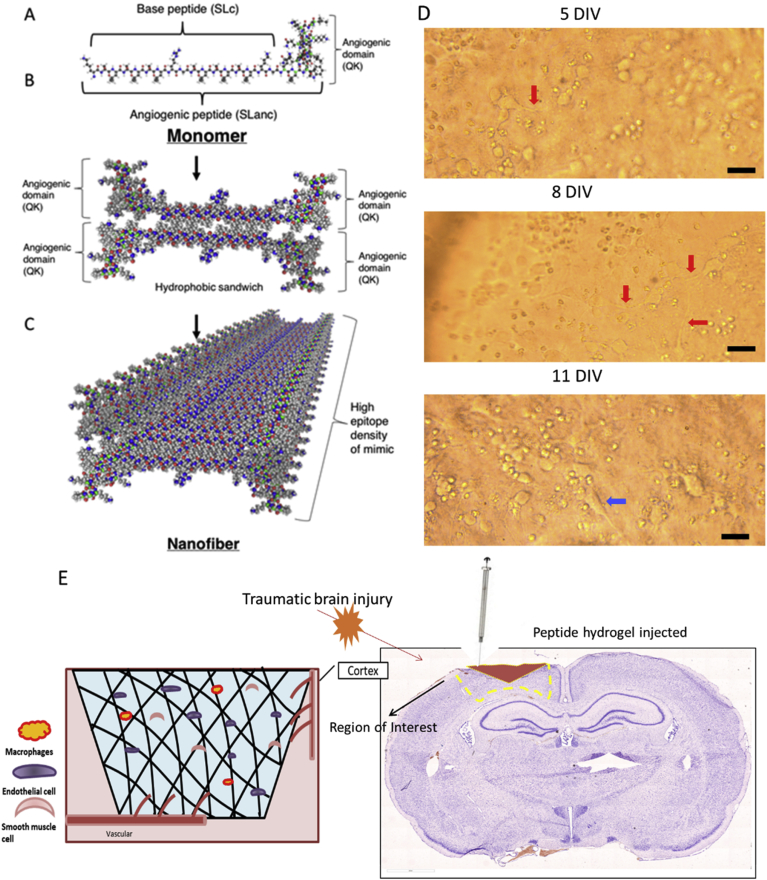
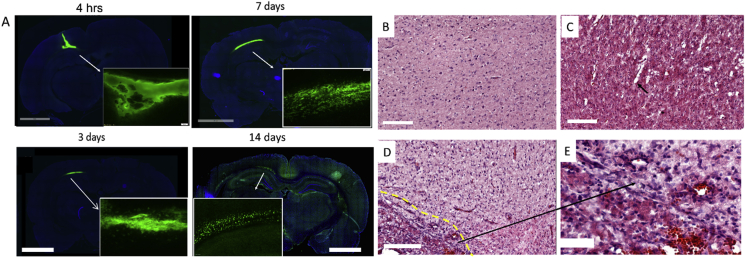
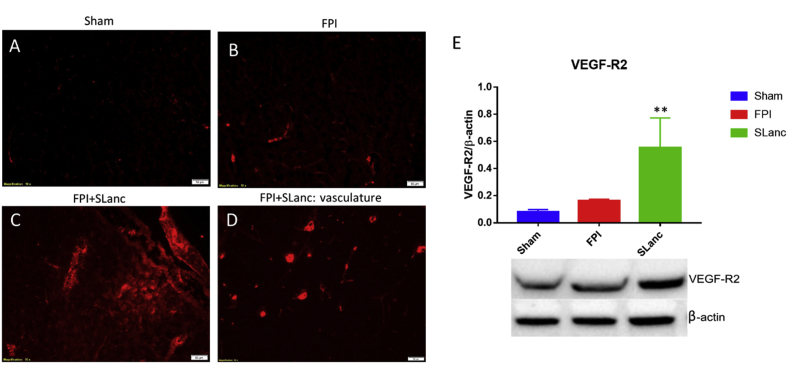
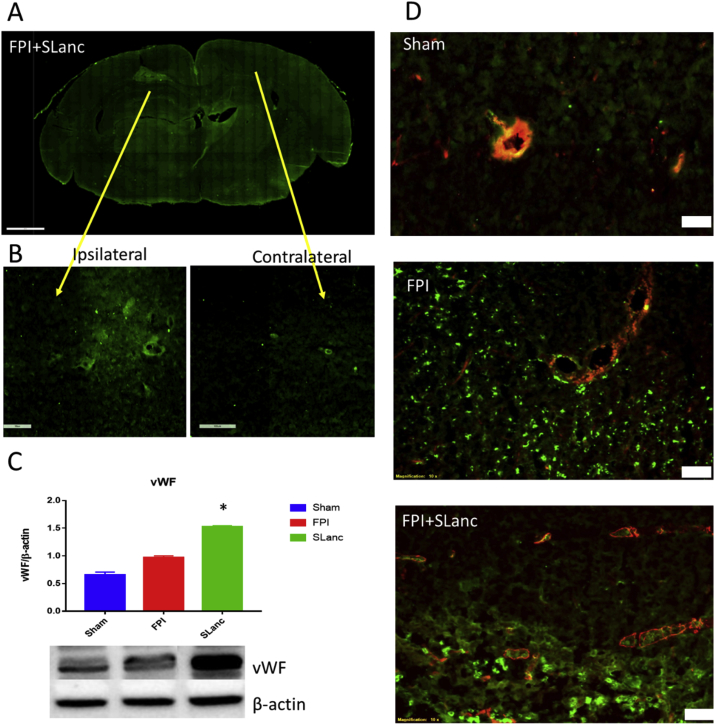
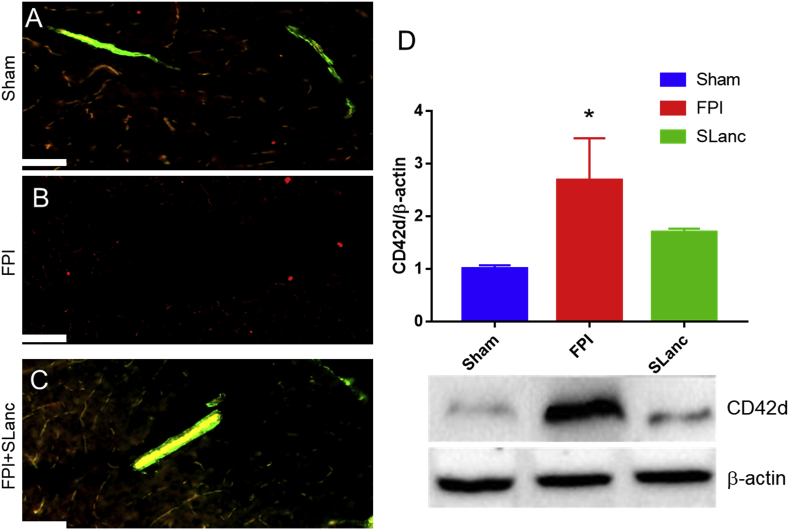
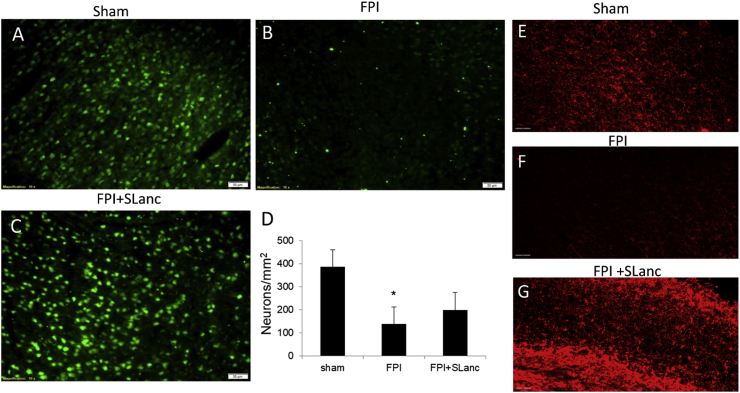
Traumatic brain injury (TBI) impacts over 3.17 million Americans. Management of hemorrhage and coagulation caused by vascular disruption after TBI is critical for the recovery of patients. Cerebrovascular pathologies play an important role in the underlying mechanisms of TBI. The objective of this study is to evaluate a novel regenerative medicine for the injured tissue after brain injury. We utilized a recently described synthetic growth factor with angiogenic potential to facilitate vascular growth in situ at the injury site. Previous work has shown how this injectable self-assembling peptide-based hydrogel ( creates a regenerative microenvironment for neovascularization at the injury site. Supramolecular assembly allows for thixotropy; the injectable drug delivery system provides sustained efficacy. In this study, a moderate blunt injury model was used to cause physical vascular damage and hemorrhage. The angiogenic SAPH was then applied directly on the injured rat brain. At day 7 post-TBI, significantly more blood vessels were observed than the sham and injury control group, as well as activation of VEGF-receptor 2, demonstrating the robust angiogenic response elicited by the angiogenic SAPH. Vascular markers von-Willebrand factor (vWF) and α-smooth muscle actin (α-SMA) showed a concomitant increase with blood vessel density in response to the angiogenic SAPH. Moreover, blood brain barrier integrity and blood coagulation were also examined as the parameters to indicate wound recovery post TBI. Neuronal rescue examination by NeuN and myelin basic protein staining showed that the angiogenic SAPH may provide and neuroprotective benefit in the long-term recovery.
创伤性脑损伤(TBI)影响着超过317万美国人。TBI后血管破裂引起的出血和凝血管理对患者的康复至关重要。脑血管病变在TBI的潜在机制中起重要作用。本研究的目的是评估一种用于脑损伤后受损组织的新型再生医学。我们利用一种最近描述的具有血管生成潜力的合成生长因子,以促进损伤部位原位血管生长。先前的研究表明,这种基于可注射自组装肽的水凝胶如何在损伤部位为新血管生成创造一个再生微环境。超分子组装允许触变性;可注射药物递送系统提供持续疗效。在本研究中,使用中度钝性损伤模型造成物理性血管损伤和出血。然后将血管生成性自组装肽水凝胶(SAPH)直接应用于受伤的大鼠脑。在TBI后第7天,观察到的血管比假手术组和损伤对照组明显更多,同时VEGF受体2也被激活,这表明血管生成性SAPH引发了强烈的血管生成反应。血管标志物血管性血友病因子(vWF)和α-平滑肌肌动蛋白(α-SMA)显示随着血管生成性SAPH作用,血管密度随之增加。此外,还检查了血脑屏障完整性和血液凝固情况,作为指示TBI后伤口恢复的参数。通过NeuN和髓鞘碱性蛋白染色进行的神经元拯救检查表明,血管生成性SAPH可能在长期恢复中提供神经保护益处。