Ngowi Ebenezeri Erasto, Sarfraz Muhammad, Afzal Attia, Khan Nazeer Hussain, Khattak Saadullah, Zhang Xin, Li Tao, Duan Shao-Feng, Ji Xin-Ying, Wu Dong-Dong
School of Basic Medical Sciences, Henan University, Kaifeng, China.
Henan International Joint Laboratory for Nuclear Protein Regulation, Henan University, Kaifeng, China.
Front Pharmacol. 2020 Nov 19;11:564281. doi: 10.3389/fphar.2020.564281. eCollection 2020.
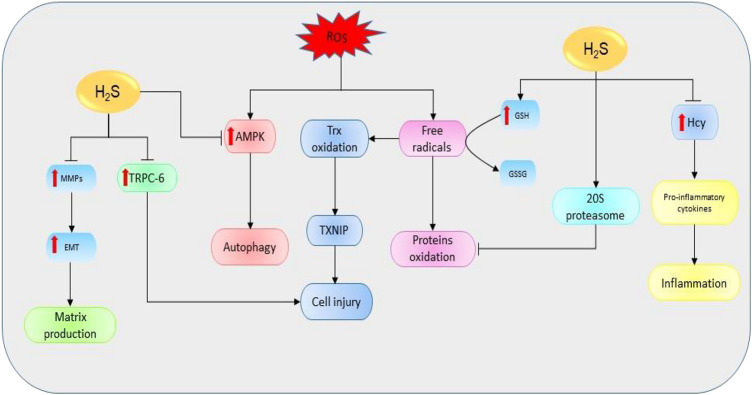
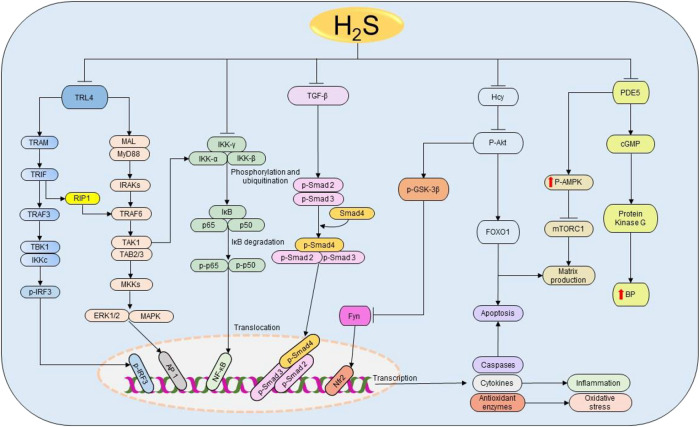
Hydrogen sulfide (HS) plays a key role in the regulation of physiological processes in mammals. The decline in HS level has been reported in numerous renal disorders. In animal models of renal disorders, treatment with HS donors could restore HS levels and improve renal functions. HS donors suppress renal dysfunction by regulating autophagy, apoptosis, oxidative stress, and inflammation through multiple signaling pathways, such as TRL4/NLRP3, AMP-activated protein kinase/mammalian target of rapamycin, transforming growth factor-β1/Smad3, extracellular signal-regulated protein kinases 1/2, mitogen-activated protein kinase, and nuclear factor kappa B. In this review, we summarize recent developments in the effects of HS donors on the treatment of common renal diseases, including acute/chronic kidney disease, renal fibrosis, unilateral ureteral obstruction, glomerulosclerosis, diabetic nephropathy, hyperhomocysteinemia, drug-induced nephrotoxicity, metal-induced nephrotoxicity, and urolithiasis. Novel HS donors can be designed and applied in the treatment of common renal diseases.
硫化氢(HS)在哺乳动物生理过程的调节中起着关键作用。在许多肾脏疾病中都有HS水平下降的报道。在肾脏疾病的动物模型中,用HS供体治疗可恢复HS水平并改善肾功能。HS供体通过多种信号通路(如TRL4/NLRP3、AMP激活的蛋白激酶/雷帕霉素哺乳动物靶蛋白、转化生长因子-β1/Smad3、细胞外信号调节蛋白激酶1/2、丝裂原活化蛋白激酶和核因子κB)调节自噬、凋亡、氧化应激和炎症,从而抑制肾功能障碍。在这篇综述中,我们总结了HS供体在治疗常见肾脏疾病(包括急性/慢性肾病、肾纤维化、单侧输尿管梗阻、肾小球硬化、糖尿病肾病、高同型半胱氨酸血症、药物性肾毒性、金属性肾毒性和尿石症)方面的最新进展。新型HS供体可被设计并应用于常见肾脏疾病的治疗。