
硬皮病中延迟性食管清除与反流的鉴别
Differentiating Delayed Esophageal Clearance From Reflux in Scleroderma.
作者信息
Pasumarthi Anusha, Mago Sheena, Banerjee Promila, Tadros Micheal
机构信息
Gastroenterology, Albany Medical Center, Albany, USA.
Internal Medicine, University of Connecticut Health Center, Farmington, USA.
出版信息
Cureus. 2020 Nov 18;12(11):e11553. doi: 10.7759/cureus.11553.
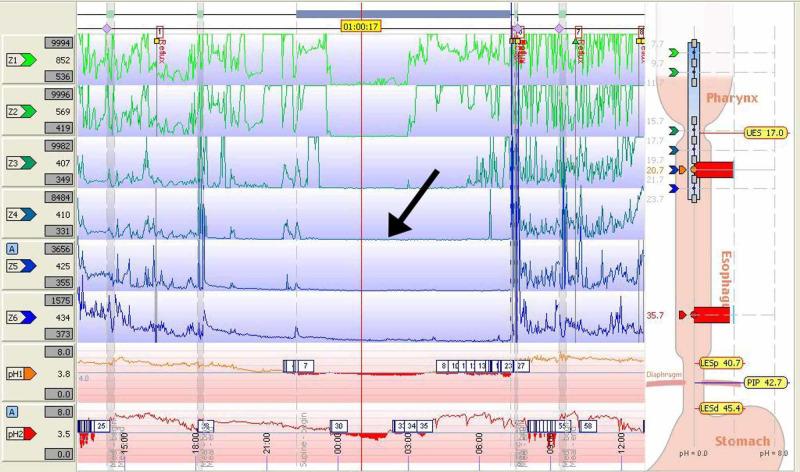
Abnormal acid exposure to the esophagus and esophageal dysmotility leading to symptoms of refractory reflux and dysphagia are common findings amongst patients with advanced systemic scleroderma (SSc). Although treatments and diagnostic methods for esophageal disease in the setting of SSc are currently limited to those used for gastroesophageal reflux disease (GERD), certain advancements in diagnostic testing allow potential for improved detection of the exact etiology and clinical management. Through the lens of a case presentation, we found that while GERD is usually diagnosed with high acid exposure from decreased lower esophageal sphincter tone, the high esophageal acidity seen in scleroderma can be attributed to esophageal hypo-motility, leading to fermentation of food residue.
在晚期系统性硬化症(SSc)患者中,食管异常酸暴露和食管动力障碍导致难治性反流和吞咽困难症状是常见表现。尽管目前SSc背景下食管疾病的治疗和诊断方法仅限于用于胃食管反流病(GERD)的方法,但诊断检测的某些进展为更准确地查明病因和改善临床管理提供了可能。通过一个病例展示,我们发现虽然GERD通常是由于食管下括约肌张力降低导致高酸暴露而被诊断出来的,但硬皮病中出现的高食管酸度可归因于食管动力不足,从而导致食物残渣发酵。


 Zotero 插件