Clinic of Masticatory Disorders, Center of Dental Medicine, University of Zurich, Zurich, Switzerland.
Clin Exp Dent Res. 2021 Jun;7(3):323-330. doi: 10.1002/cre2.371. Epub 2020 Dec 25.
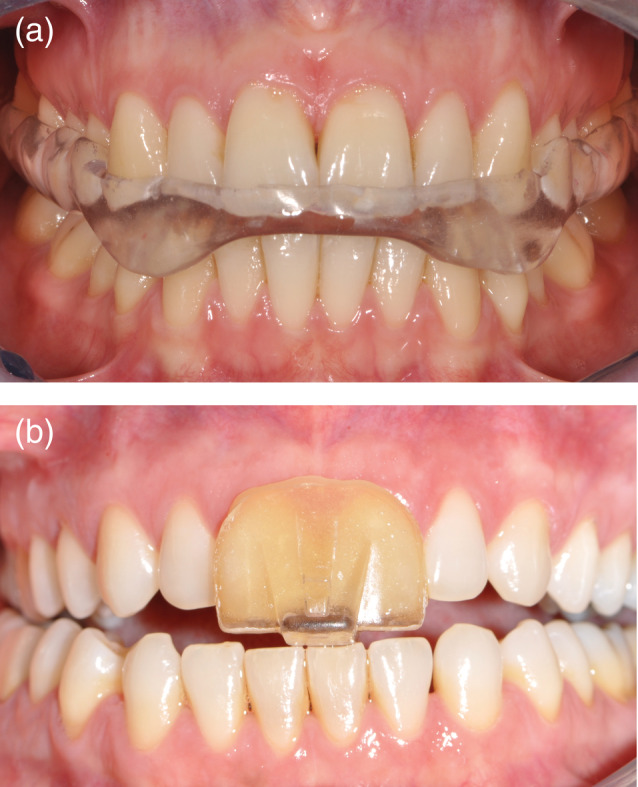
Sleep bruxism is mostly assessed by reporting of tooth-grinding or clenching during sleep and by clinical signs (tooth wear, cracks, or fractures). Parafunctional tooth damage is usually prevented by employing occlusal appliances mainly of the full arch covering type (Michigan splint) and of the partial type covering only central incisors (NTI-tss). To date, the effects of occlusal appliances on sleep bruxism or jaw muscle activity during sleep are still controversial. The present study is a randomized controlled clinical trial that evaluated the effects of two different splint designs on jaw muscle activity in sleep bruxers otherwise healthy.
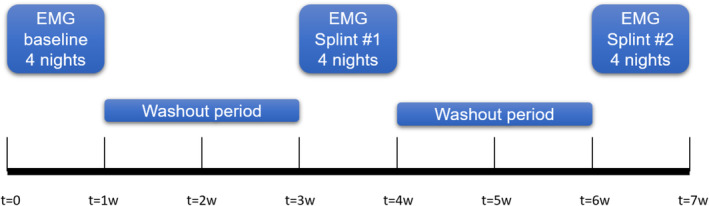
Ten patients from a private dental practice were treated by a single operator. A Michigan splint and an NTI-tss device were manufactured individually and used at random order. Electromyographic jaw muscle activity was recorded for four consecutive nights in the first, fourth, and seventh week with and without splint. Participants reported on splint comfort and side effects.
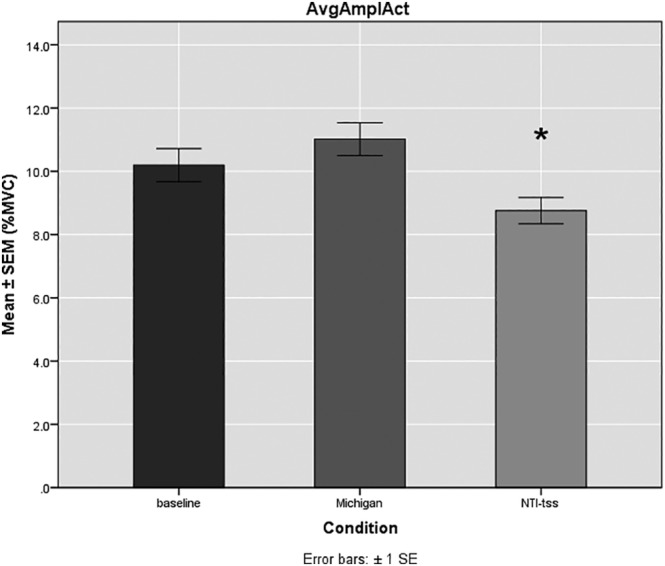
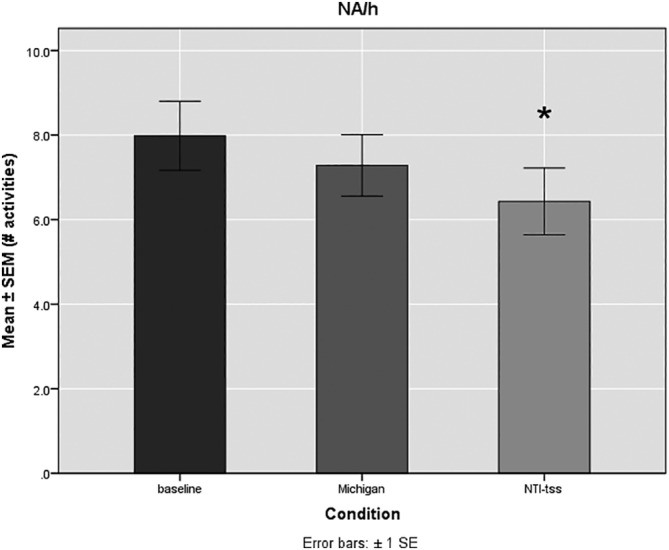
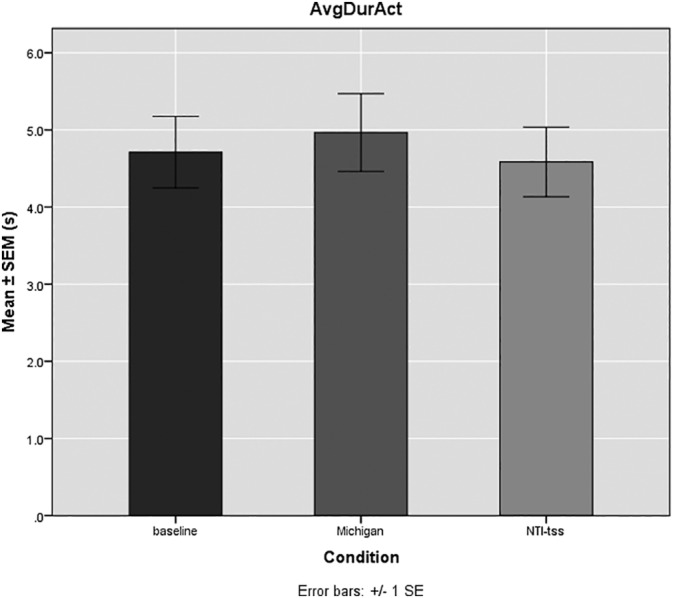
Muscle activity decreased only while wearing the NTI-tss device. Most patients preferred though the Michigan splint due to its greater wearing comfort.
NTI-tss devices proved more effective for the reduction of jaw muscle activity during sleep. The main advantage of the prefabricated NTI-tss is its prompt availability in an acute phase of temporomandibular disorders associated with sleep bruxism. In long-term therapies, patients should be informed of the possible risk of irreversible occlusal changes. Subjective preferences, wearing comfort, and costs should also be considered.
磨牙症主要通过报告睡眠中的磨牙或紧咬牙以及临床症状(牙齿磨损、裂纹或断裂)来评估。通过使用主要覆盖全弓的咬合矫治器(密歇根夹板)和仅覆盖中切牙的部分类型咬合矫治器(NTI-tss),通常可以预防功能性牙齿损伤。迄今为止,咬合矫治器对磨牙症或睡眠时颌肌活动的影响仍存在争议。本研究是一项随机对照临床试验,评估了两种不同夹板设计对 otherwise healthy 的磨牙症患者睡眠时颌肌活动的影响。
来自私人牙科诊所的 10 名患者由一名操作员进行治疗。密歇根夹板和 NTI-tss 装置单独制造,并随机使用。在第一、第四和第七周的四个连续晚上,在有和没有夹板的情况下记录了下颌肌的肌电图活动。参与者报告了夹板的舒适度和副作用。
只有佩戴 NTI-tss 装置时肌肉活动才会减少。尽管由于佩戴舒适性更高,大多数患者更喜欢密歇根夹板。
NTI-tss 装置在减少睡眠时颌肌活动方面更有效。预制 NTI-tss 的主要优势在于在与磨牙症相关的颞下颌关节紊乱的急性阶段能够立即获得。在长期治疗中,应告知患者可能存在不可逆转的咬合变化的风险。还应考虑主观偏好、佩戴舒适度和成本。