Université Paris-Saclay, CEA, CNRS, Institute for Integrative Biology of the Cell (I2BC), Gif-sur-Yvette, France.
Department of Medical Biochemistry and Biophysics, Umeå University, Umeå, Sweden.
Emerg Microbes Infect. 2021 Dec;10(1):132-147. doi: 10.1080/22221751.2020.1870413.
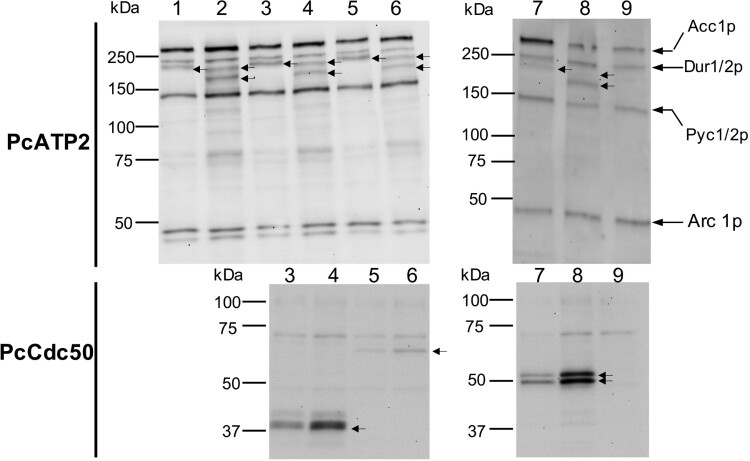
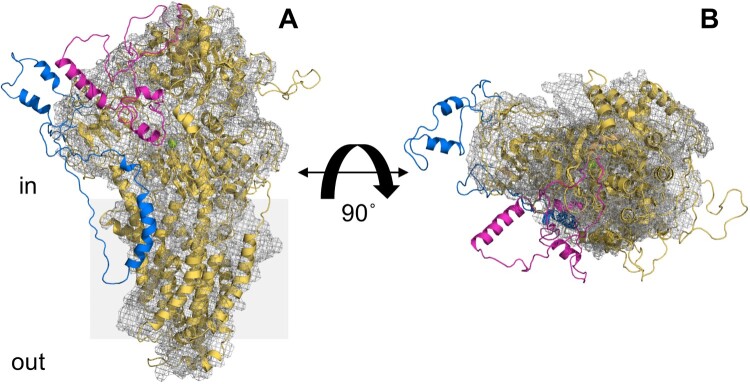
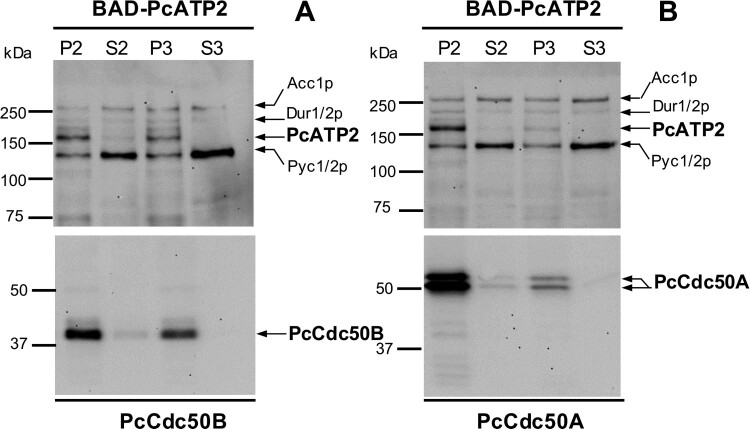
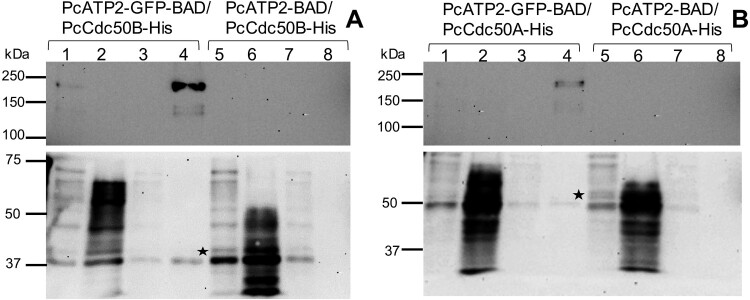
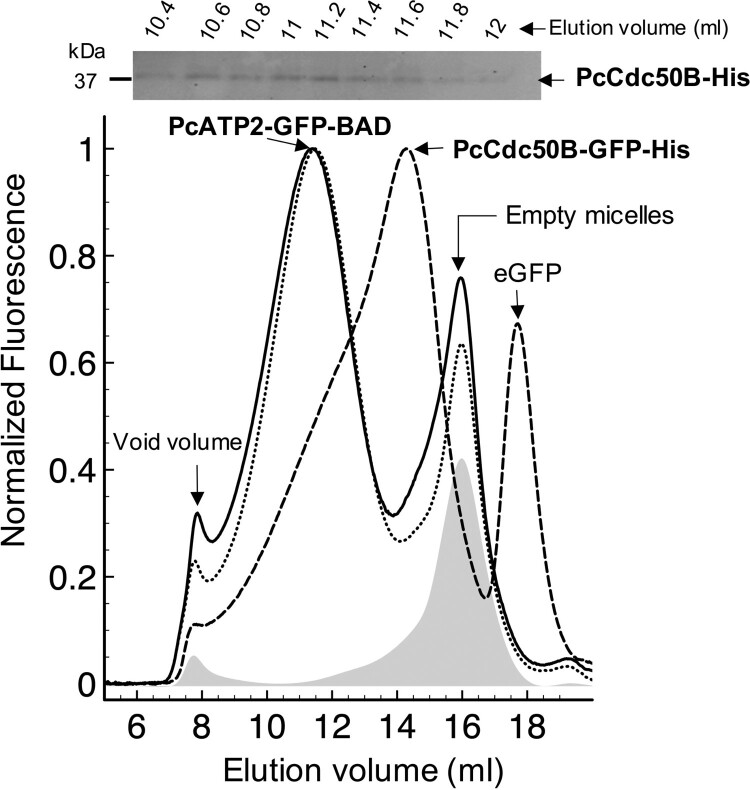
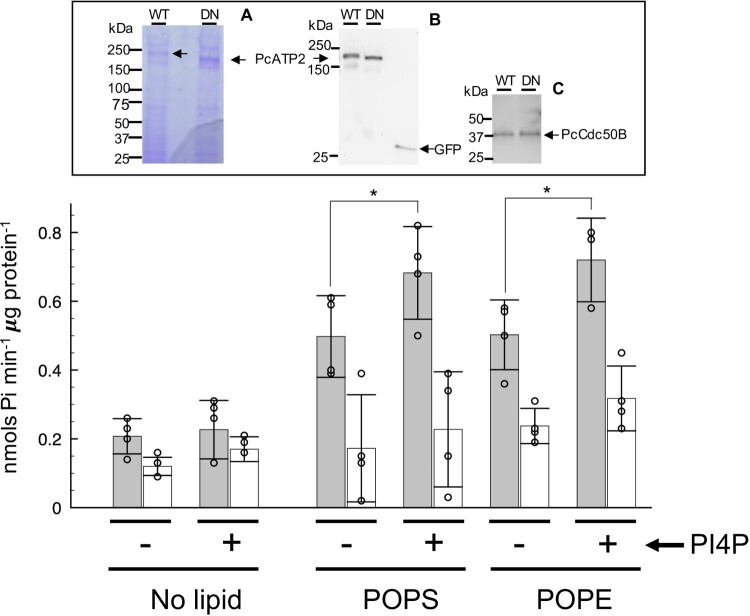
Gene targeting approaches have demonstrated the essential role for the malaria parasite of membrane transport proteins involved in lipid transport and in the maintenance of membrane lipid asymmetry, representing emerging oportunites for therapeutical intervention. This is the case of ATP2, a -encoded 4 P-type ATPase (P4-ATPase or lipid flippase), whose activity is completely irreplaceable during the asexual stages of the parasite. Moreover, a recent chemogenomic study has situated ATP2 as the possible target of two antimalarial drug candidates. In eukaryotes, P4-ATPases assure the asymmetric phospholipid distribution in membranes by translocating phospholipids from the outer to the inner leaflet. In this work, we have used a recombinantly-produced ATP2 (PcATP2), to gain insights into the function and structural organization of this essential transporter. Our work demonstrates that PcATP2 associates with two of the three encoded Cdc50 proteins: PcCdc50B and PcCdc50A. Purified PcATP2/PcCdc50B complex displays ATPase activity in the presence of either phosphatidylserine or phosphatidylethanolamine. In addition, this activity is upregulated by phosphatidylinositol 4-phosphate. Overall, our work describes the first biochemical characterization of a lipid flippase, a first step towards the understanding of the essential physiological role of this transporter and towards its validation as a potential antimalarial drug target.
基因靶向方法已经证明了涉及脂质转运和膜脂不对称性维持的膜转运蛋白在疟原虫中的重要作用,为治疗干预提供了新的机会。这就是 ATP2 的情况,它是一种编码的 4 P 型 ATP 酶(P4-ATP 酶或脂质翻转酶),其在寄生虫的无性阶段的活性完全不可替代。此外,最近的化学基因组学研究将 ATP2 定位为两种抗疟候选药物的可能靶标。在真核生物中,P4-ATP 酶通过将磷脂从外叶向内叶转运,确保膜中不对称磷脂的分布。在这项工作中,我们使用重组产生的 ATP2(PcATP2),深入了解这种必需转运蛋白的功能和结构组织。我们的工作表明,PcATP2 与三个编码的 Cdc50 蛋白中的两个结合:PcCdc50B 和 PcCdc50A。纯化的 PcATP2/PcCdc50B 复合物在存在磷脂酰丝氨酸或磷脂酰乙醇胺的情况下显示 ATP 酶活性。此外,该活性被磷脂酰肌醇 4-磷酸上调。总的来说,我们的工作描述了第一个脂质翻转酶的生化特征,这是理解这种转运蛋白的基本生理作用及其作为潜在抗疟药物靶标的验证的第一步。