Charité-Universitätsmedizin Berlin, Corporate Member of Freie Universität Berlin, Humboldt-Universität zu Berlin, and Berlin Institute of Health, Department of Rheumatology and Clinical Immunology, 10117 Berlin, Germany.
German Rheumatism Research Centre (DRFZ) Berlin, a Leibniz Institute, 10117 Berlin, Germany.
Int J Mol Sci. 2020 Dec 24;22(1):128. doi: 10.3390/ijms22010128.
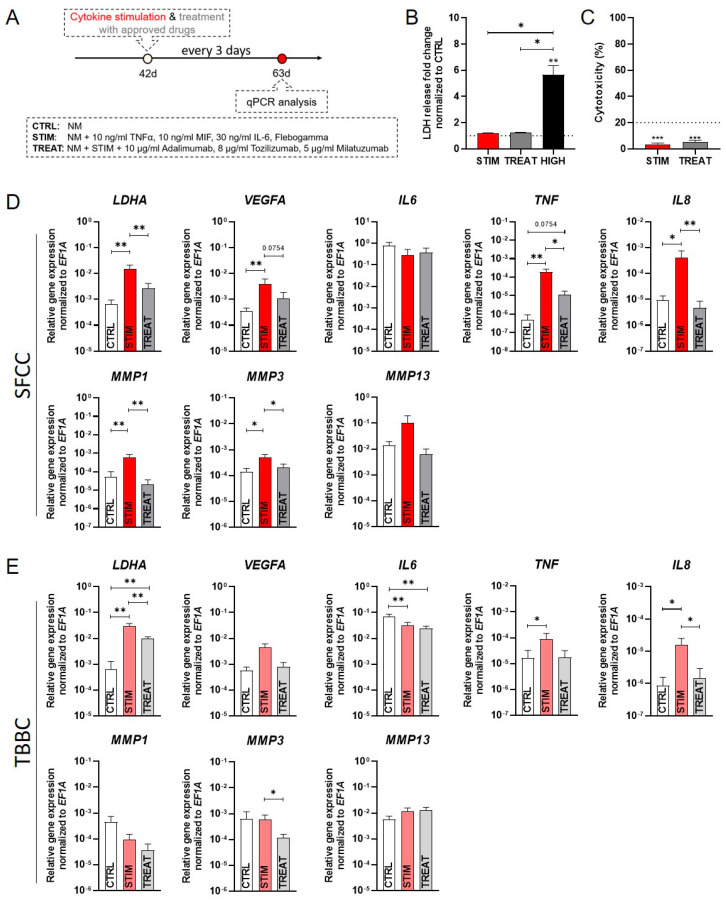
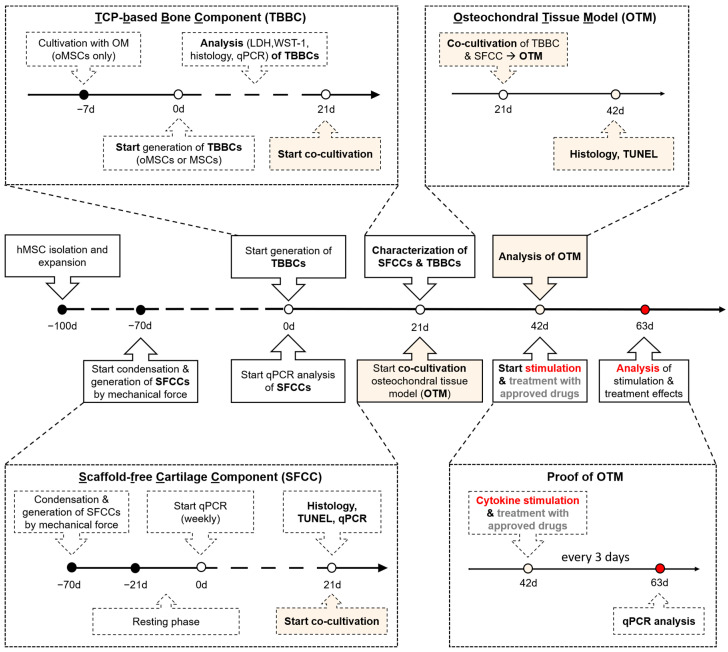
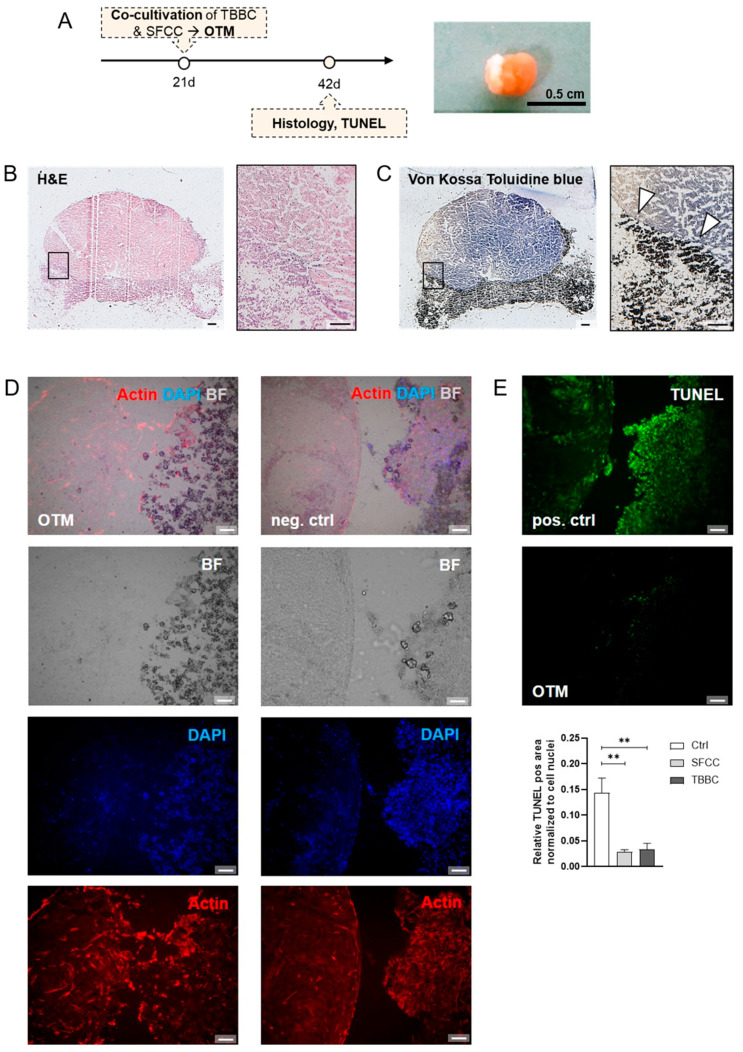
Adequate tissue engineered models are required to further understand the (patho)physiological mechanism involved in the destructive processes of cartilage and subchondral bone during rheumatoid arthritis (RA). Therefore, we developed a human in vitro 3D osteochondral tissue model (OTM), mimicking cytokine-induced cellular and matrix-related changes leading to cartilage degradation and bone destruction in order to ultimately provide a preclinical drug screening tool. To this end, the OTM was engineered by co-cultivation of mesenchymal stromal cell (MSC)-derived bone and cartilage components in a 3D environment. It was comprehensively characterized on cell, protein, and mRNA level. Stimulating the OTM with pro-inflammatory cytokines, relevant in RA (tumor necrosis factor α, interleukin-6, macrophage migration inhibitory factor), caused cell- and matrix-related changes, resulting in a significantly induced gene expression of lactate dehydrogenase A, interleukin-8 and tumor necrosis factor α in both, cartilage and bone, while the matrix metalloproteases 1 and 3 were only induced in cartilage. Finally, application of target-specific drugs prevented the induction of inflammation and matrix-degradation. Thus, we here provide evidence that our human in vitro 3D OTM mimics cytokine-induced cell- and matrix-related changes-key features of RA-and may serve as a preclinical tool for the evaluation of both new targets and potential drugs in a more translational setup.
需要足够的组织工程模型来进一步了解类风湿关节炎(RA)中软骨和软骨下骨破坏性过程所涉及的(病理)生理机制。因此,我们开发了一种人类体外 3D 骨软骨组织模型(OTM),模拟细胞因子诱导的细胞和基质相关变化,导致软骨降解和骨破坏,最终提供一种临床前药物筛选工具。为此,通过在 3D 环境中共同培养间充质基质细胞(MSC)衍生的骨和软骨成分来设计 OTM。在细胞、蛋白质和 mRNA 水平上对其进行了全面表征。用促炎细胞因子刺激 OTM,相关的 RA (肿瘤坏死因子 α、白细胞介素 6、巨噬细胞移动抑制因子)引起细胞和基质相关变化,导致软骨和骨中乳酸脱氢酶 A、白细胞介素 8 和肿瘤坏死因子 α 的基因表达显著诱导,而基质金属蛋白酶 1 和 3 仅在软骨中诱导。最后,应用靶向特异性药物可预防炎症和基质降解的诱导。因此,我们在此提供证据表明,我们的人类体外 3D OTM 模拟了细胞因子诱导的细胞和基质相关变化 - RA 的关键特征 - 并可作为评估更具转化性的新靶标和潜在药物的临床前工具。