Endocrinology and Metabolism Laboratory, West Division, Faculty of Medicine, University of Chile, Santiago 8380000, Chile.
Department of Nutritional Sciences, Faculty of Medicine, University of Toronto, Toronto, ON M5S1A8, Canada.
Nutrients. 2020 Dec 23;13(1):19. doi: 10.3390/nu13010019.
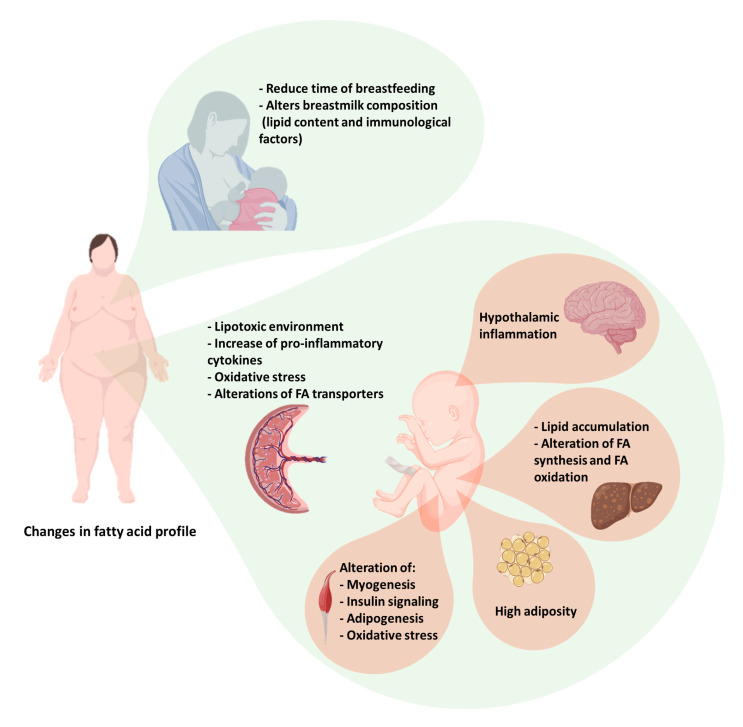
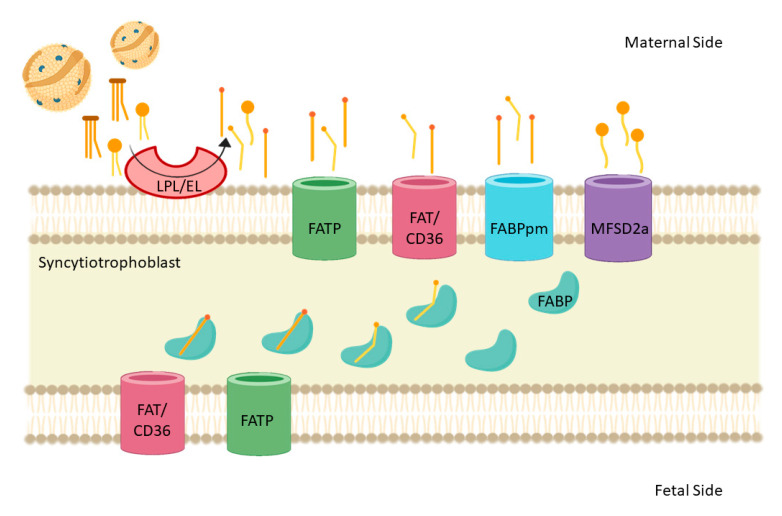
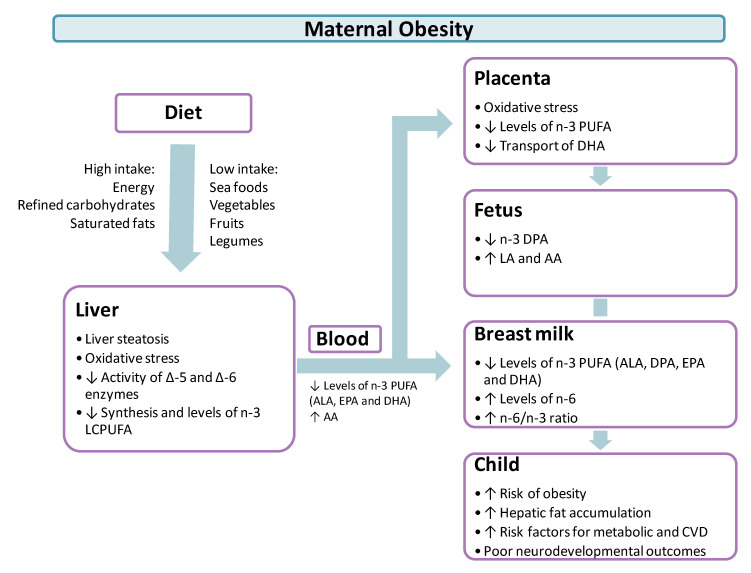
: Prenatal and postnatal development are closely related to healthy maternal conditions that allow for the provision of all nutritional requirements to the offspring. In this regard, an appropriate supply of fatty acids (FA), mainly -3 and -6 long-chain polyunsaturated fatty acids (LCPUFA), is crucial to ensure a normal development, because they are an integral part of cell membranes and participate in the synthesis of bioactive molecules that regulate multiple signaling pathways. On the other hand, maternal obesity and excessive gestational weight gain affect FA supply to the fetus and neonate, altering placental nutrient transfer, as well as the production and composition of breast milk during lactation. In this regard, maternal obesity modifies FA profile, resulting in low -3 and elevated -6 PUFA levels in maternal and fetal circulation during pregnancy, as well as in breast milk during lactation. These modifications are associated with a pro-inflammatory state and oxidative stress with short and long-term consequences in different organs of the fetus and neonate, including in the liver, brain, skeletal muscle, and adipose tissue. Altogether, these changes confer to the offspring a higher risk of developing obesity and its complications, as well as neuropsychiatric disorders, asthma, and cancer. Considering the consequences of an abnormal FA supply to offspring induced by maternal obesity, we aimed to review the effects of obesity on the metabolism and bioavailability of FA during pregnancy and breastfeeding, with an emphasis on LCPUFA homeostasis.
产前和产后发育与健康的母体状况密切相关,母体状况能够为后代提供所有营养需求。在这方面,适当供应脂肪酸(FA),主要是 -3 和 -6 长链多不饱和脂肪酸(LCPUFA),对于确保正常发育至关重要,因为它们是细胞膜的组成部分,并参与调节多种信号通路的生物活性分子的合成。另一方面,母体肥胖和过度妊娠体重增加会影响胎儿和新生儿的 FA 供应,改变胎盘营养物质的转移,以及哺乳期母乳的产生和组成。在这方面,母体肥胖会改变 FA 谱,导致妊娠期间母体和胎儿循环中 -3 降低和 -6 PUFA 升高,以及哺乳期母乳中 -3 降低和 -6 PUFA 升高。这些变化与促炎状态和氧化应激有关,对胎儿和新生儿的不同器官(包括肝脏、大脑、骨骼肌和脂肪组织)具有短期和长期的后果。总的来说,这些变化使后代患肥胖及其并发症以及神经精神障碍、哮喘和癌症的风险增加。考虑到母体肥胖对后代 FA 供应异常的影响,我们旨在综述肥胖对妊娠和哺乳期 FA 代谢和生物利用度的影响,重点关注 LCPUFA 稳态。