Department of Clinical and Biological Sciences, University of Turin, Regione Gonzole 10, 10043 Orbassano, Italy.
Department of Medical Sciences, University of Turin, Corso Dogliotti 14, 10126 Turin, Italy.
Cells. 2020 Dec 23;10(1):13. doi: 10.3390/cells10010013.
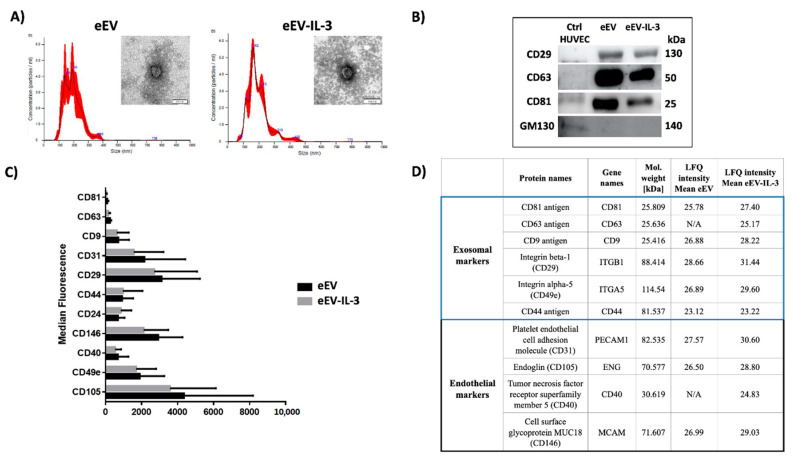
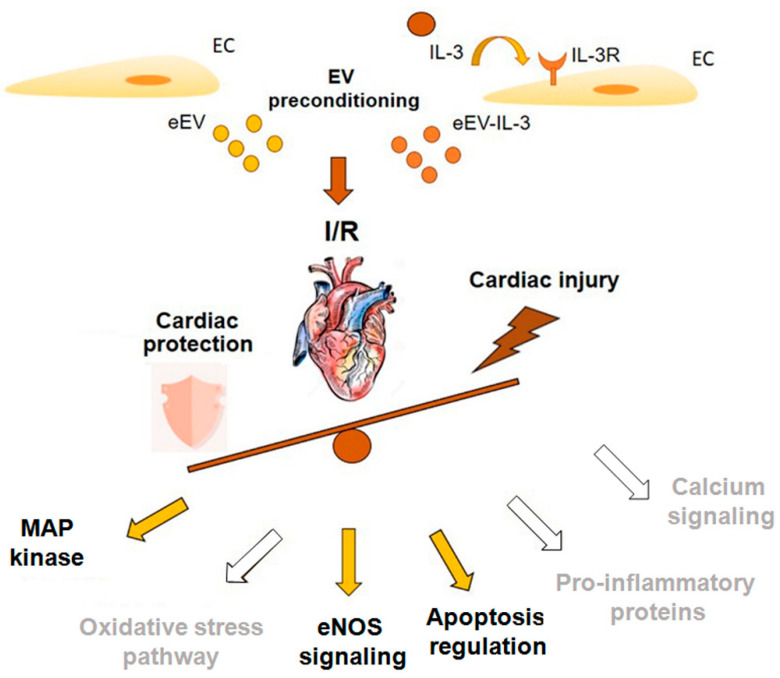
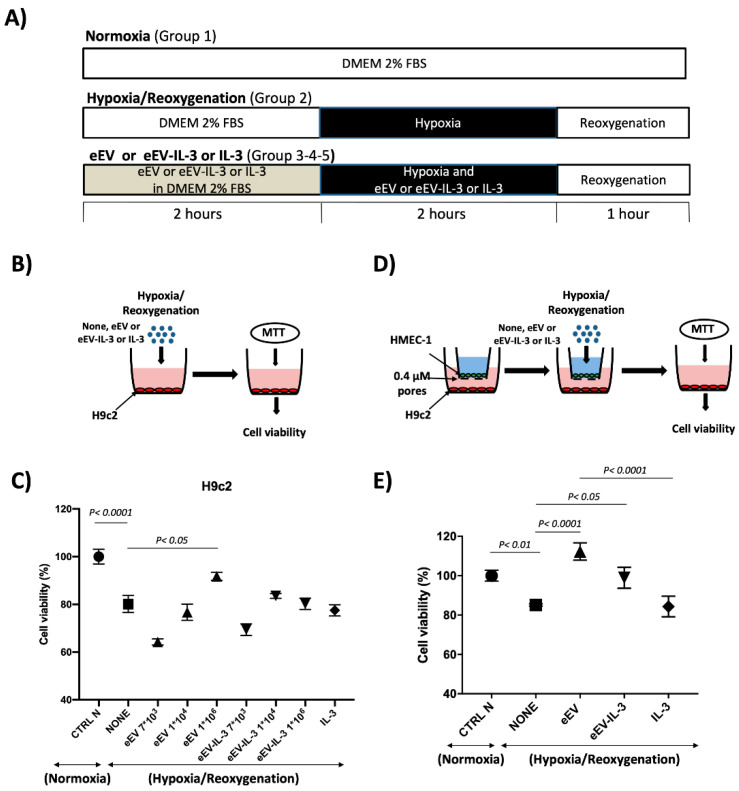
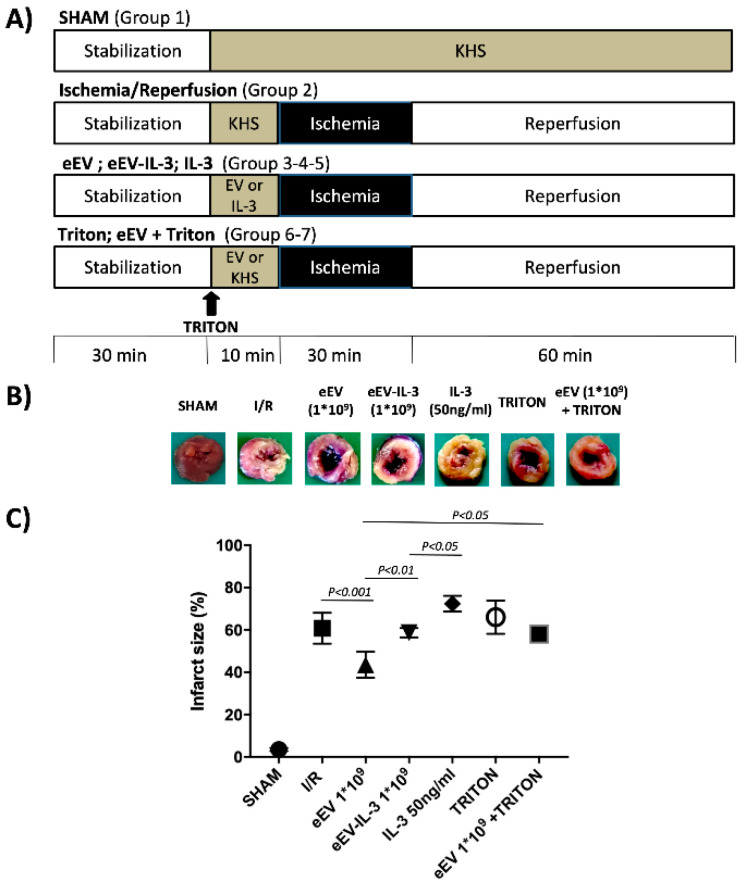
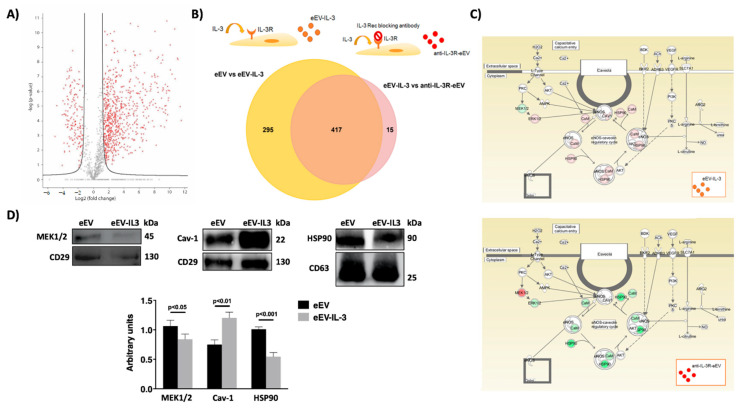
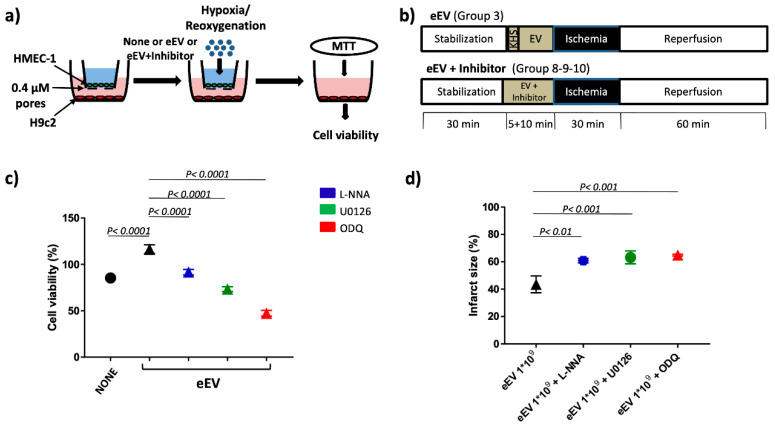
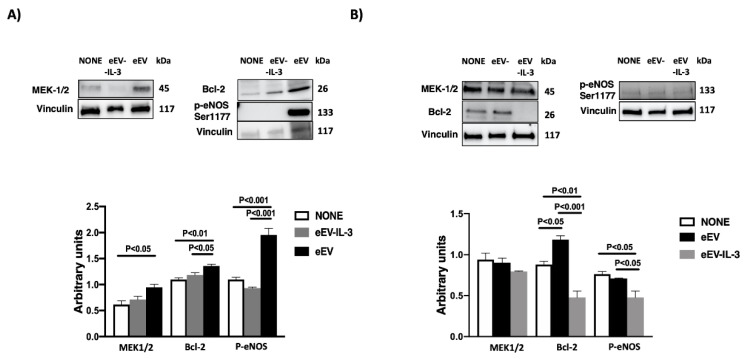
The biological relevance of extracellular vesicles (EV) released in an ischemia/reperfusion setting is still unclear. We hypothesized that the inflammatory microenvironment prevents cardioprotection mediated by endothelial cell (EC)-derived extracellular vesicles. The effects of naïve EC-derived EV (eEV) or eEV released in response to interleukin-3 (IL-3) (eEV-IL-3) were evaluated in cardiomyoblasts (H9c2) and rat hearts. In transwell assay, eEV protected the H9c2 exposed to hypoxia/reoxygenation (H/R) more efficiently than eEV-IL-3. Conversely, only eEV directly protected H9c2 cells to H/R-induced damage. Consistent with this latter observation, eEV, but not eEV-IL-3, exerted beneficial effects in the whole heart. Protein profiles of eEV and eEV-IL-3, established using label-free mass spectrometry, demonstrated that IL-3 drives changes in eEV-IL-3 protein cargo. Gene ontology analysis revealed that both eEV and eEV-IL-3 were equipped with full cardioprotective machinery, including the . eEV-IL-3 were also enriched in the endothelial-nitric oxide-synthase (eNOS)-antagonist caveolin-1 and proteins related to the inflammatory response. In vitro and ex vivo experiments demonstrated that a functional Mitogen-Activated Protein Kinase Kinase (MEK1/2)/eNOS/guanylyl-cyclase (GC) pathway is required for eEV-mediated cardioprotection. Consistently, eEV were found enriched in MEK1/2 and able to induce the expression of B-cell-lymphoma-2 (Bcl-2) and the phosphorylation of eNOS in vitro. We conclude that an inflammatory microenvironment containing IL-3 changes the eEV cargo and impairs eEV cardioprotective action.
细胞外囊泡(EV)在缺血/再灌注环境中释放的生物学相关性尚不清楚。我们假设炎症微环境会阻止内皮细胞(EC)衍生的细胞外囊泡介导的心脏保护作用。在心肌细胞(H9c2)和大鼠心脏中评估了幼稚 EC 衍生的 EV(eEV)或对白细胞介素 3(IL-3)反应释放的 eEV(eEV-IL-3)的作用。在 Transwell 测定中,eEV 比 eEV-IL-3更有效地保护暴露于缺氧/复氧(H/R)的 H9c2。相反,只有 eEV 直接保护 H9c2 细胞免受 H/R 诱导的损伤。与后一种观察结果一致,eEV 而不是 eEV-IL-3 在整个心脏中发挥有益作用。使用无标记质谱法建立的 eEV 和 eEV-IL-3 的蛋白质谱表明,IL-3 驱动 eEV-IL-3 蛋白货物的变化。GO 分析表明,eEV 和 eEV-IL-3 都配备了完整的心脏保护机制,包括. eEV-IL-3 还富含内皮一氧化氮合酶(eNOS)拮抗剂 caveolin-1 和与炎症反应相关的蛋白质。体外和离体实验表明,功能性丝裂原激活蛋白激酶激酶(MEK1/2)/eNOS/鸟苷酸环化酶(GC)途径对于 eEV 介导的心脏保护作用是必需的。一致地,发现 eEV 富含 MEK1/2,并能够在体外诱导 B 细胞淋巴瘤-2(Bcl-2)的表达和 eNOS 的磷酸化。我们得出结论,含有 IL-3 的炎症微环境改变了 eEV 的货物,并损害了 eEV 的心脏保护作用。