Gallego Marta, Arnal Milagros, Barat José Manuel, Talens Pau
Departamento de Tecnología de Alimentos, Universitat Politècnica de València, Camino de Vera s/n, 46022 Valencia, Spain.
Foods. 2020 Dec 26;10(1):47. doi: 10.3390/foods10010047.
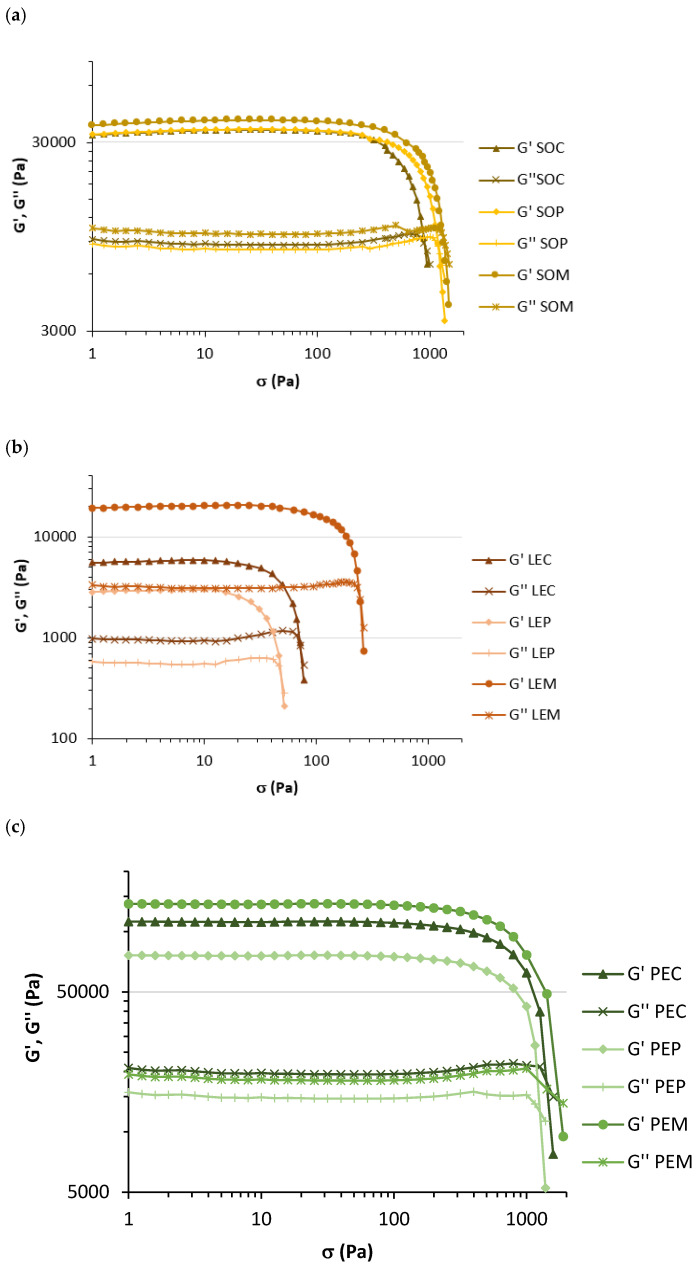
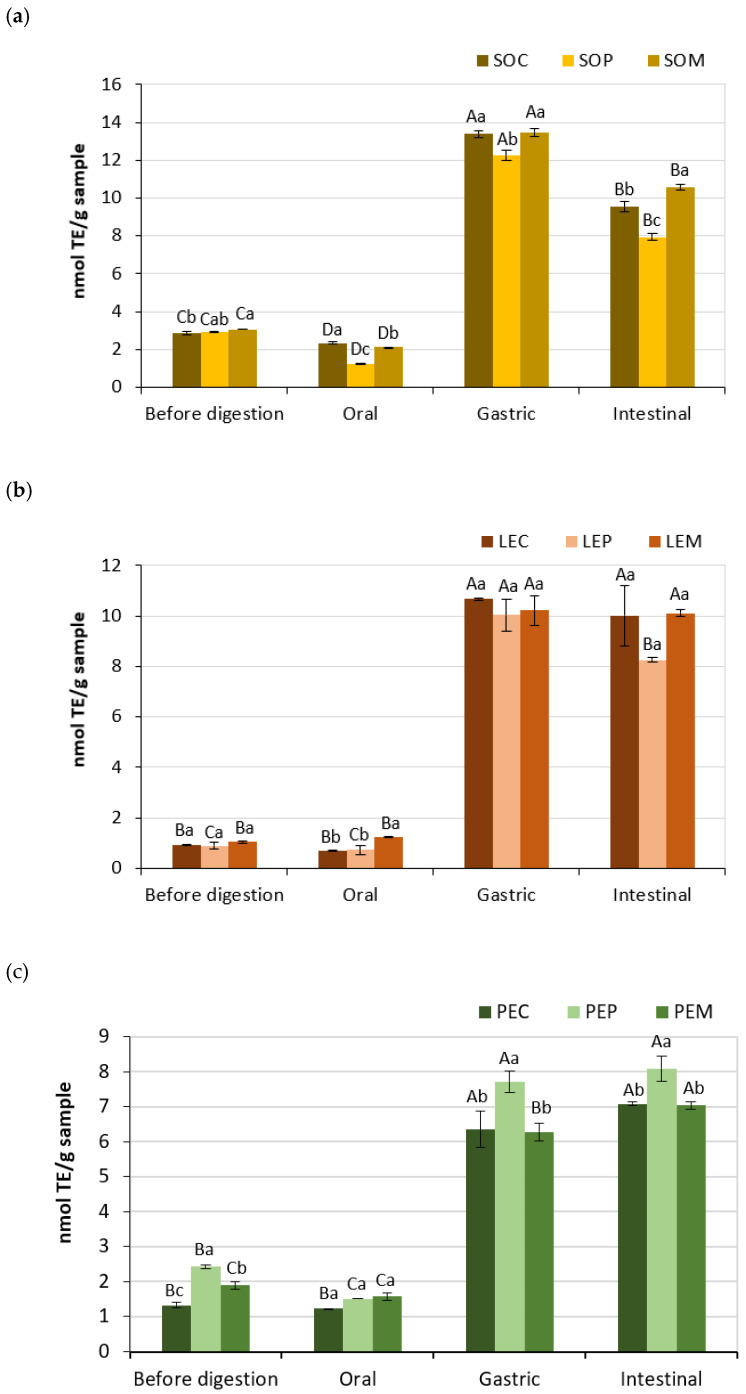
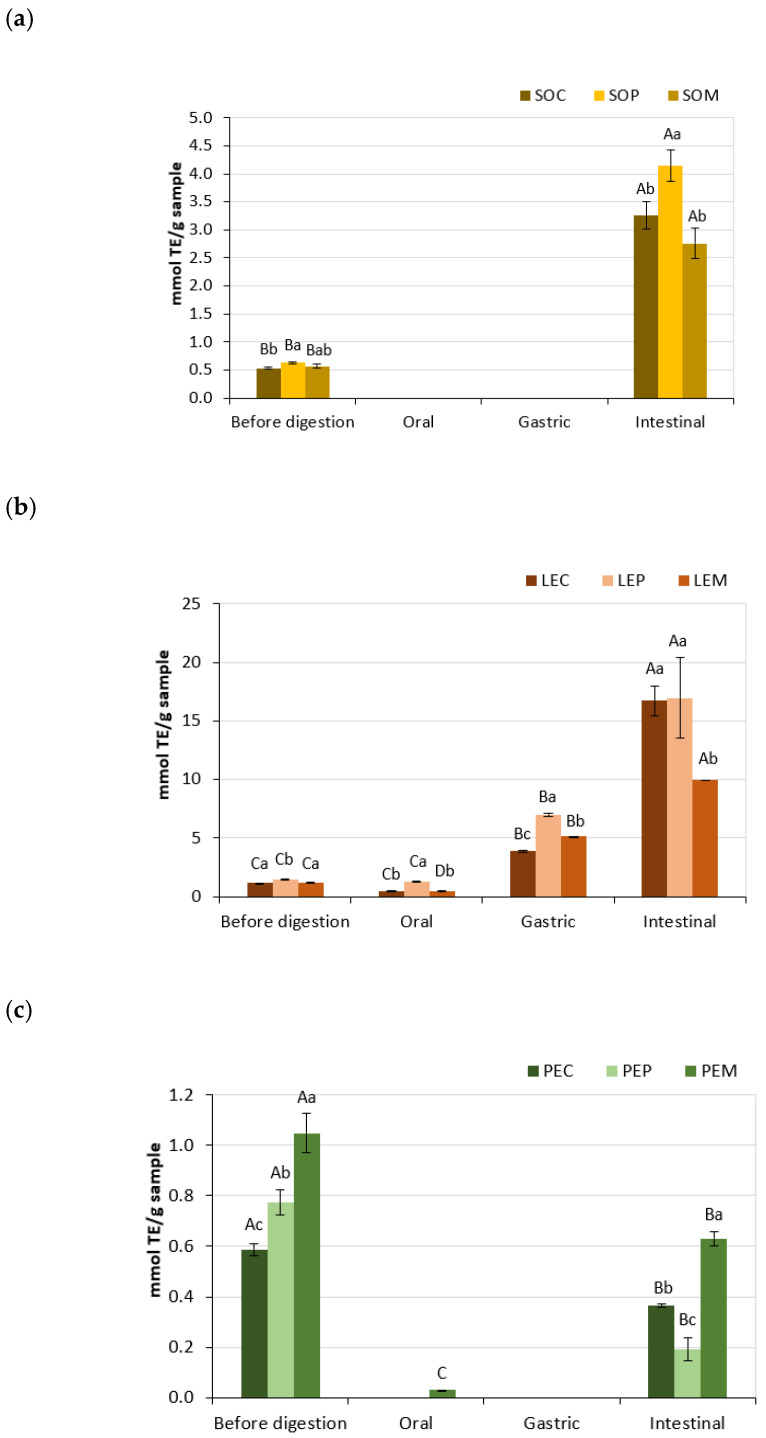
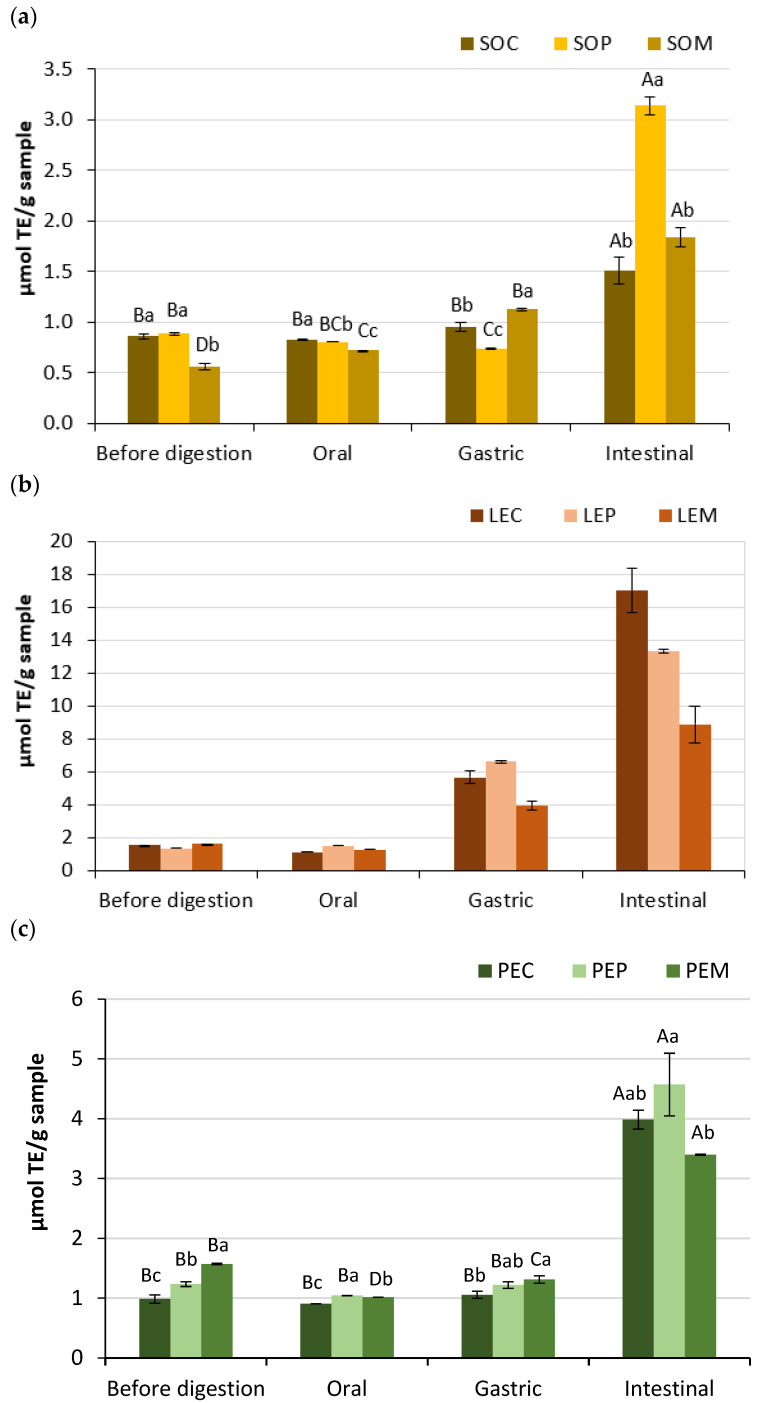
Legumes are protein-rich foods that can be used to prepare pastes or pureed foods suitable for babies and the elderly. The aims of this study were the characterization of different legume pastes (from soybean, lentil, and pea) subjected to three processing methods (ordinary cooking, pressure cooking, and microwave) and the evaluation of protein digestion and antioxidant activity during simulated gastrointestinal digestion (GID). The different cooking methods of legumes led to differences in the physicochemical properties of the pastes, as well as on the textural and viscoelastic characteristics, except for soybean samples, despite all the pastes presenting elastic properties and weak gel behavior. Cooking followed by GID improved the protein digestibility and antioxidant activity of the legumes, which was attributed to released peptides and amino acids more than free phenolics. However, the fate and extent at each digestion stage was different according to the legume type and cooking method, as it would be influenced by the matrix structure and interaction between components. This work has expanded knowledge about the properties, digestibility, and antioxidant activity of different cooked legumes for a future design of pastes.
豆类是富含蛋白质的食物,可用于制作适合婴儿和老年人的糊状物或泥状食品。本研究的目的是对经过三种加工方法(普通烹饪、高压烹饪和微波)处理的不同豆类糊状物(大豆、小扁豆和豌豆)进行表征,并评估模拟胃肠道消化(GID)过程中的蛋白质消化率和抗氧化活性。豆类的不同烹饪方法导致糊状物的物理化学性质以及质地和粘弹性特征存在差异,大豆样品除外,尽管所有糊状物都具有弹性特性和弱凝胶行为。烹饪后进行GID提高了豆类的蛋白质消化率和抗氧化活性,这归因于释放的肽和氨基酸,而不是游离酚类物质。然而,根据豆类类型和烹饪方法,每个消化阶段的命运和程度是不同的,因为它会受到基质结构和成分之间相互作用的影响。这项工作扩展了关于不同煮熟豆类的性质、消化率和抗氧化活性的知识,以便未来设计糊状物。