Sánchez-Velázquez Oscar Abel, Cuevas-Rodríguez Edith Oliva, Mondor Martin, Ribéreau Sabine, Arcand Yves, Mackie Alan, Hernández-Álvarez Alan Javier
Programa Regional de Posgrado en Biotecnología, Facultad de Ciencias Químico-Biológicas, Universidad Autónoma de Sinaloa, Av. Universitarios s/n, Ciudad Universitaria, Col. Universitarios, P. C. 80030, Culiacán Rosales, Sinaloa, Mexico.
Posgrado en Ciencia y Tecnología de Alimentos, Facultad de Ciencias Químico-Biológicas, Universidad Autónoma de Sinaloa. Av. Universitarios s/n, Ciudad Universitaria, Col. Universitarios, P. C. 80030, Culiacán Rosales, Sinaloa, Mexico.
Curr Res Food Sci. 2021 Feb 12;4:93-104. doi: 10.1016/j.crfs.2021.02.003. eCollection 2021.
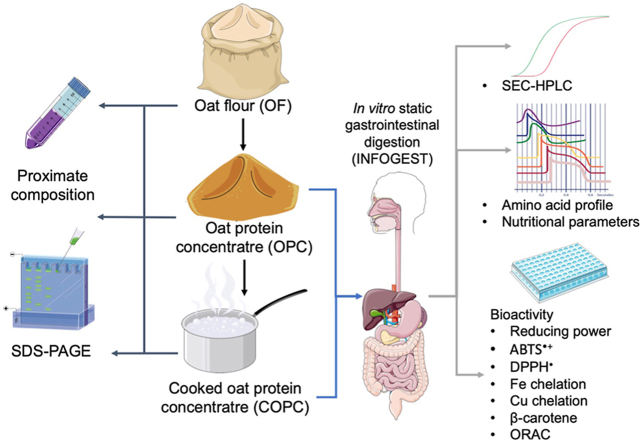
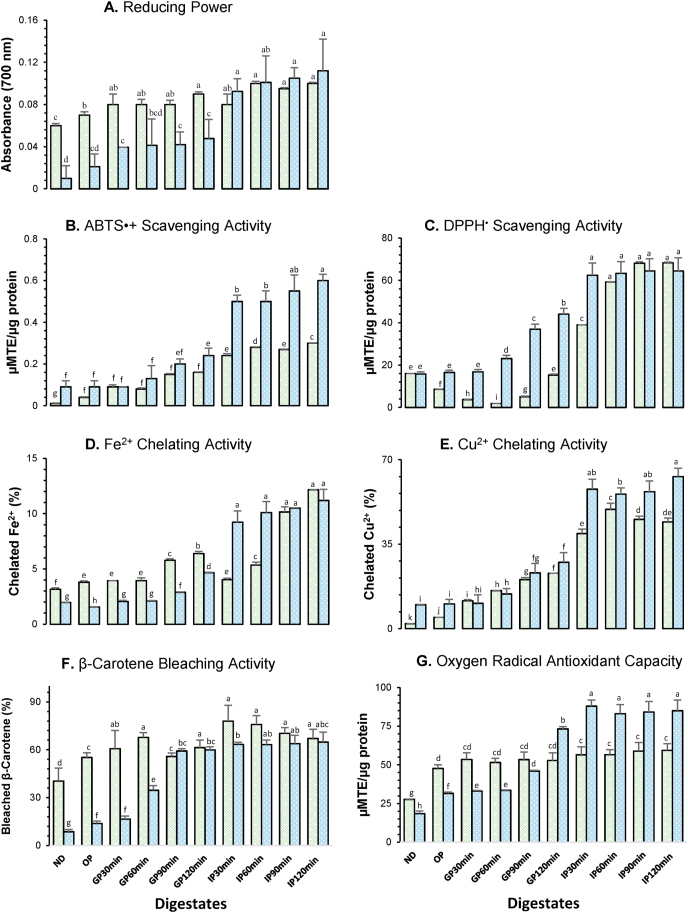
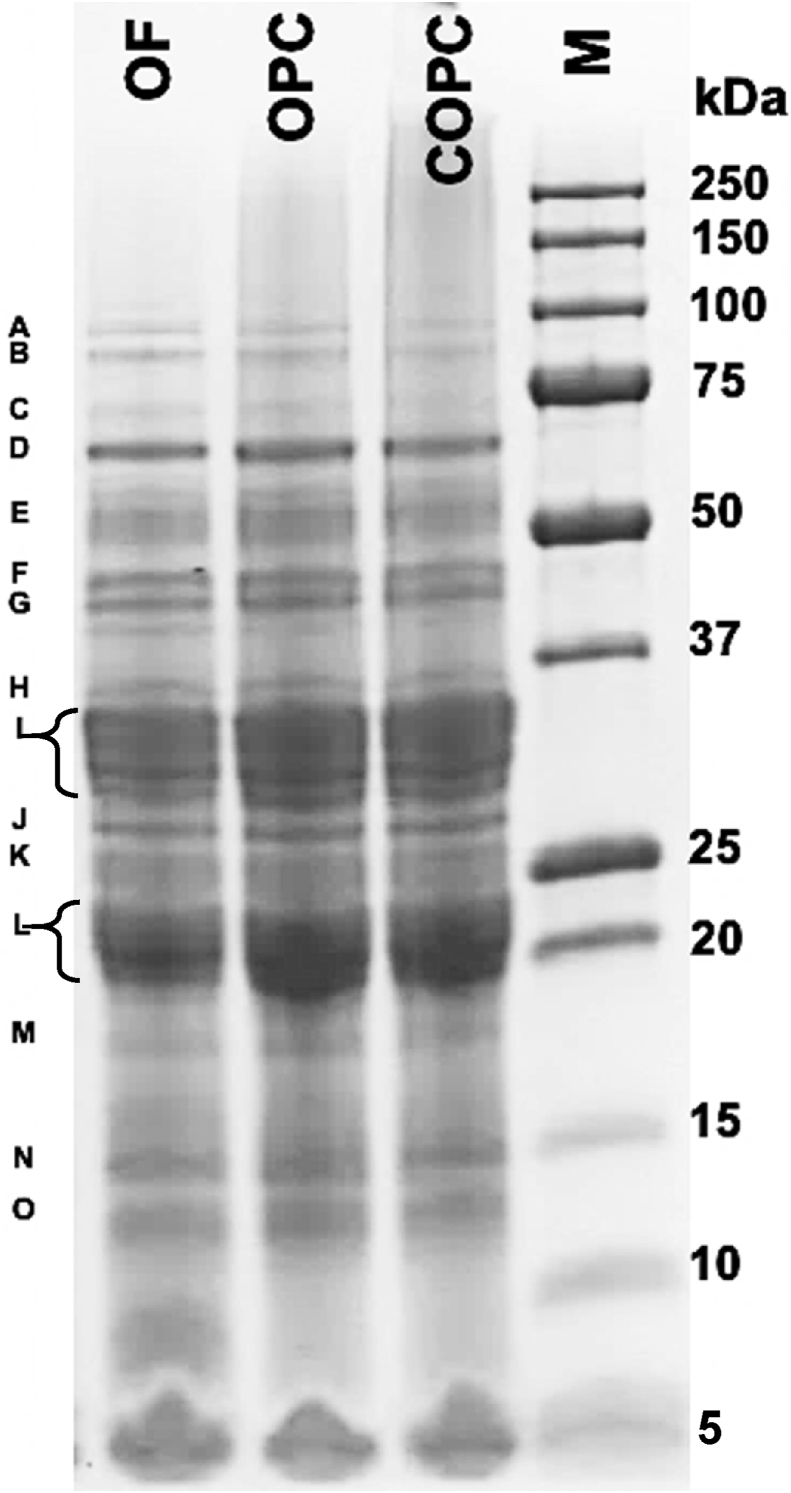
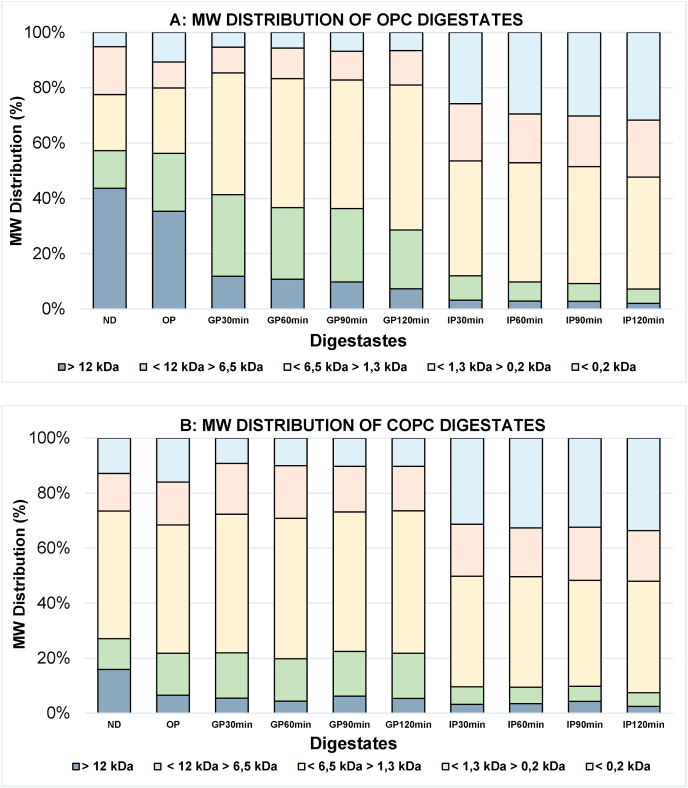
Oat () is one of the most cultivated and consumed cereals worldwide. Recognized among cereals for its high protein content (12%-24%), it makes it an excellent source of bioactive peptides, which could be modified during processes such as heating and gastrointestinal digestion (GID). This work aims to evaluate the impact of heat treatment on the proteolysis of oat proteins and on the evolution of antioxidant peptide released during static GID, in terms of comparative analysis between cooked oat protein concentrate (COPC) and non-heated oat protein concentrate (OPC) samples. The protein extraction method and cooking procedure used showed no detrimental effects on protein quality. After GID, the proportion of free amino acids/dipeptides (<0.2 kDa) reached >40% for both samples (OPC and COPC), thus producing peptides with low molecular weight and enhanced bioactivity. Furthermore, during GID, the amino acid profile showed an increase in essential, positively-charged, hydrophobic and aromatic amino acids. At the end of GID, the reducing power of OPC and COPC increased >0.3 and 8-fold, respectively, in comparison to the non-digested samples; while ABTS and DPPH showed a >20-fold increase. Fe chelating capacity of OPC and COPC was enhanced >4 times; similarly, Cu chelation showed a >19-fold enhancement for OPC and >10 for COPC. β-carotene bleaching activity was improved 0.8 times in OPC and >9 times in COPC; the oxygen radical antioxidant capacity assay increased 2 times in OPC and >4.7 times in COPC, respectively. This study suggests that OPC after cooking and GID positively influenced the nutritional and bioactive properties of oat peptides. Thus, COPC could be used as a functional food ingredient with health-promoting effects, as hydrothermal treatment is frequently used for this type of cereals.
燕麦是全球种植和消费最为广泛的谷物之一。在谷物中,燕麦因其高蛋白含量(12%-24%)而闻名,这使其成为生物活性肽的优质来源,这些生物活性肽在加热和胃肠道消化(GID)等过程中可能会发生变化。本研究旨在通过对熟化燕麦浓缩蛋白(COPC)和未加热燕麦浓缩蛋白(OPC)样品进行对比分析,评估热处理对燕麦蛋白水解以及静态GID过程中释放的抗氧化肽变化的影响。所采用的蛋白质提取方法和烹饪程序对蛋白质质量未产生不利影响。GID后,两个样品(OPC和COPC)中游离氨基酸/二肽(<0.2 kDa)的比例均达到>40%,从而产生了低分子量且生物活性增强的肽。此外,在GID过程中,氨基酸谱显示必需氨基酸、带正电荷的氨基酸、疏水性氨基酸和芳香族氨基酸有所增加。GID结束时,与未消化样品相比,OPC和COPC的还原能力分别提高了>0.3倍和8倍;而ABTS和DPPH的清除能力提高了>20倍。OPC和COPC的铁螯合能力增强了>4倍;同样,OPC的铜螯合能力增强了>19倍,COPC增强了>10倍。β-胡萝卜素漂白活性在OPC中提高了0.8倍,在COPC中提高了>9倍;氧自由基抗氧化能力测定在OPC中增加了2倍,在COPC中增加了>4.7倍。本研究表明,烹饪和GID后的OPC对燕麦肽的营养和生物活性特性产生了积极影响。因此,由于水热处理常用于此类谷物,COPC可作为具有促进健康作用的功能性食品成分。