Li Shuxian, Liu Jinling, Zhou Junfen, Wang Yingshuo, Jin Fang, Chen Xiaoyang, Yang Jun, Chen Zhimin
Department of Pulmonology, Children's Hospital, Zhejiang University School of Medicine, National Clinical Research Center for Child Health, Hangzhou, Zhejiang 310052, China.
Department of Pediatrics, Wenling Maternal and Child Health Care Hospital, Wenling, Zhejiang 317500, China.
J Asthma Allergy. 2020 Dec 18;13:713-724. doi: 10.2147/JAA.S281198. eCollection 2020.
Despite considerable efforts, the pathogenic mechanisms of asthma are still incompletely understood, due to its heterogeneous nature. However, metabolomics can offer a global view of a biological system, making it a valuable tool for further elucidation of mechanisms and biomarker discovery in asthma.
GC-MS-based metabolomic analysis was conducted for comparison of urine metabolic profiles between asthmatic children (n=30) and healthy controls (n=30).
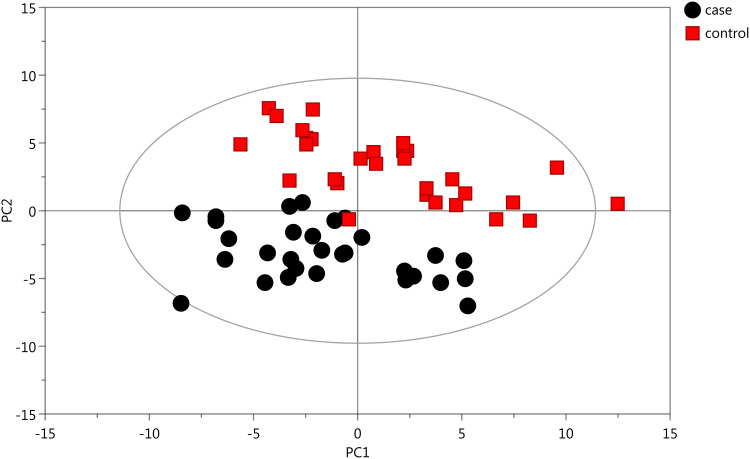
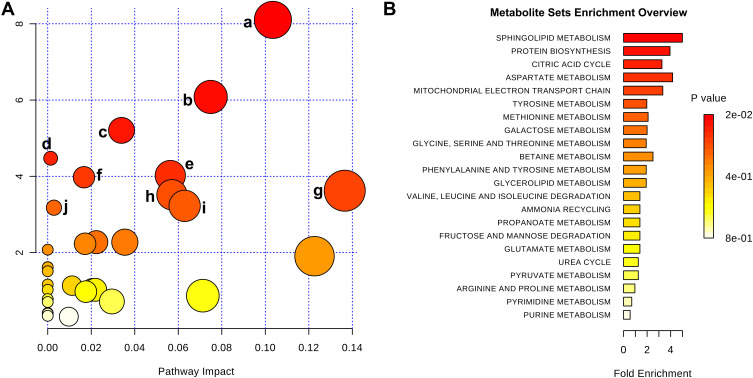
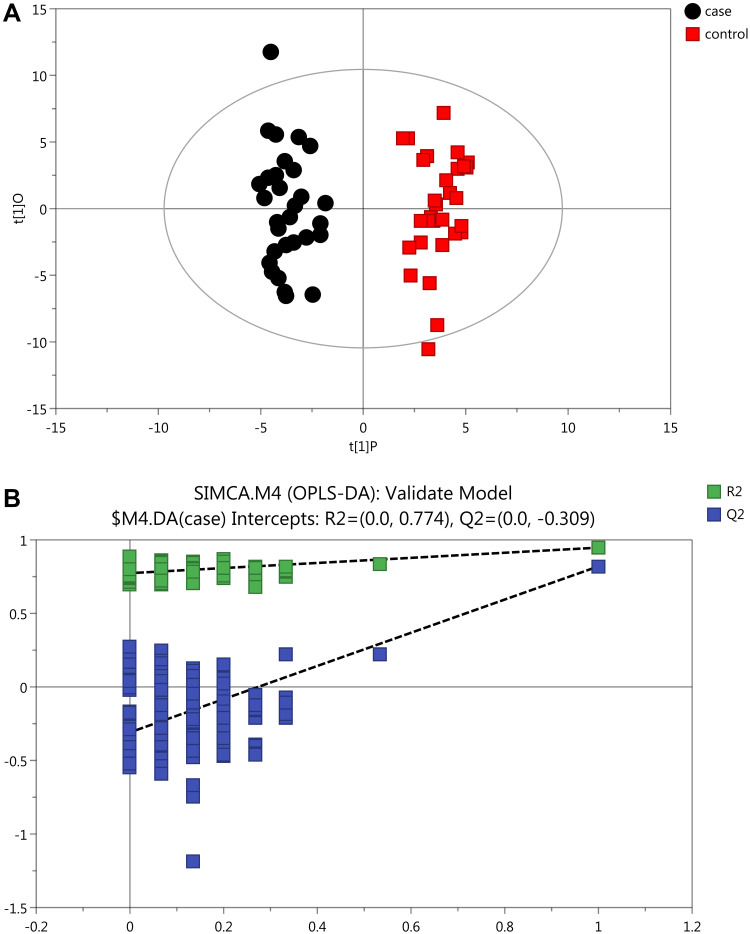
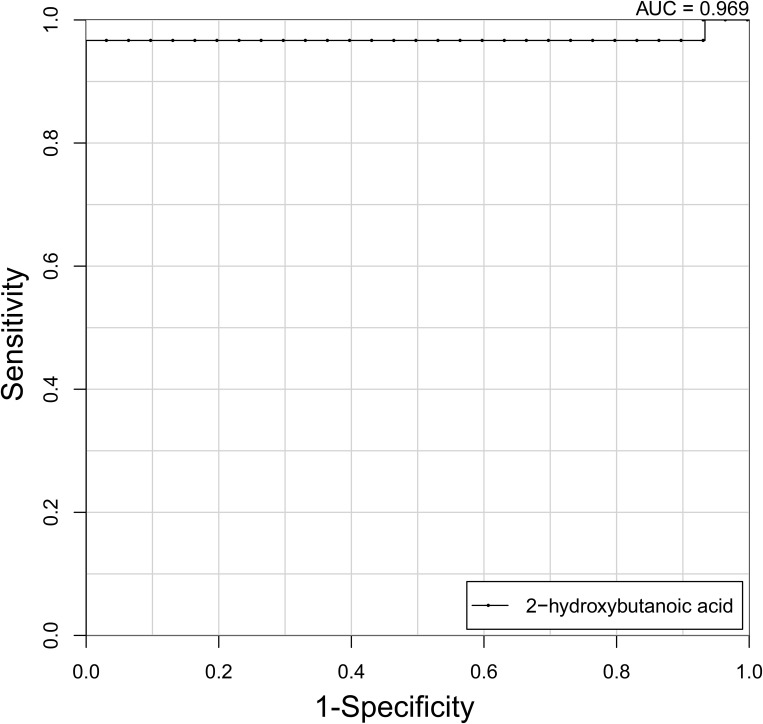
An orthogonal projections to latent structures discriminant-analysis model revealed a clear separation of the asthma and control groups ( =0.137, =0.947, =0.82). A total of 20 differential metabolites were identified as discriminant factors, of which eleven were significantly increased and nine decreased in the asthma group compared to the control group. Pathway-enrichment analysis based on these differential metabolites indicated that sphingolipid metabolism, protein biosynthesis, and citric acid cycle were strongly associated with asthma. Among the identified metabolites, 2-hydroxybutanoic acid showed excellent discriminatory performance for distinguishing asthma from healthy controls, with an AUC of 0.969.
Our study revealed significant changes in the urine metabolome of asthma patients. Several perturbed pathways (eg, sphingolipid metabolism and citric acid cycle) may be related to asthma pathogenesis, and 2-hydroxybutanoic acid could serve as a potential biomarker for asthma diagnosis.
尽管付出了巨大努力,但由于哮喘具有异质性,其发病机制仍未完全明确。然而,代谢组学可以提供生物系统的整体视图,使其成为进一步阐明哮喘发病机制和发现生物标志物的有价值工具。
采用基于气相色谱 - 质谱联用(GC-MS)的代谢组学分析方法,比较哮喘儿童(n = 30)和健康对照(n = 30)的尿液代谢谱。
正交投影到潜在结构判别分析模型显示哮喘组和对照组明显分离(R2 = 0.137,Q2 = 0.947,F = 0.82)。共鉴定出20种差异代谢物作为判别因子,与对照组相比,哮喘组中有11种显著增加,9种减少。基于这些差异代谢物的通路富集分析表明,鞘脂代谢、蛋白质生物合成和柠檬酸循环与哮喘密切相关。在所鉴定的代谢物中,2-羟基丁酸在区分哮喘患者和健康对照方面表现出优异的判别性能,曲线下面积(AUC)为0.969。
我们的研究揭示了哮喘患者尿液代谢组的显著变化。几种受干扰的通路(如鞘脂代谢和柠檬酸循环)可能与哮喘发病机制有关,2-羟基丁酸可作为哮喘诊断的潜在生物标志物。