Schranner Daniela, Kastenmüller Gabi, Schönfelder Martin, Römisch-Margl Werner, Wackerhage Henning
Exercise Biology Group, Department of Sport and Health Sciences, Technische Universität München, Munich, Germany.
Institute of Bioinformatics and Systems Biology, Helmholtz Zentrum München, Neuherberg, Germany.
Sports Med Open. 2020 Feb 10;6(1):11. doi: 10.1186/s40798-020-0238-4.
Exercise changes the concentrations of many metabolites, which are small molecules (< 1.5 kDa) metabolized by the reactions of human metabolism. In recent years, especially mass spectrometry-based metabolomics methods have allowed researchers to measure up to hundreds of metabolites in a single sample in a non-biased fashion. To summarize human exercise metabolomics studies to date, we conducted a systematic review that reports the results of experiments that found metabolite concentrations changes after a bout of human endurance or resistance exercise.
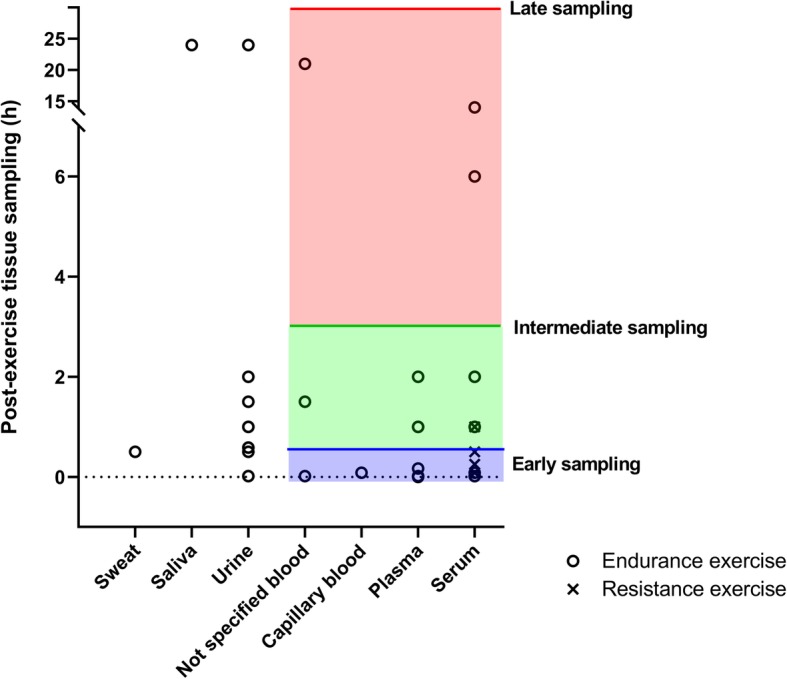
We carried out a systematic review following PRISMA guidelines and searched for human metabolomics studies that report metabolite concentrations before and within 24 h after endurance or resistance exercise in blood, urine, or sweat. We then displayed metabolites that significantly changed their concentration in at least two experiments.
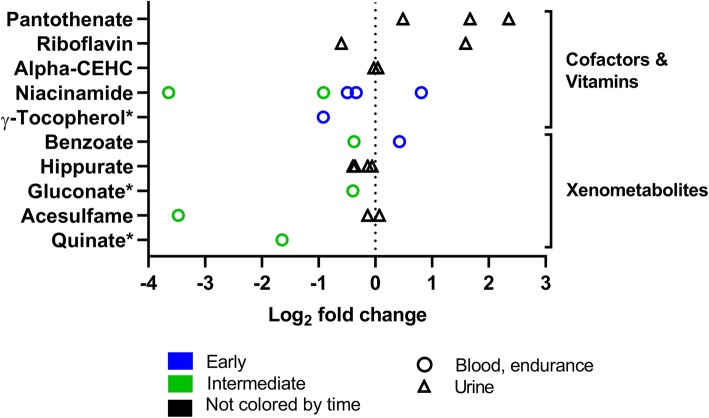
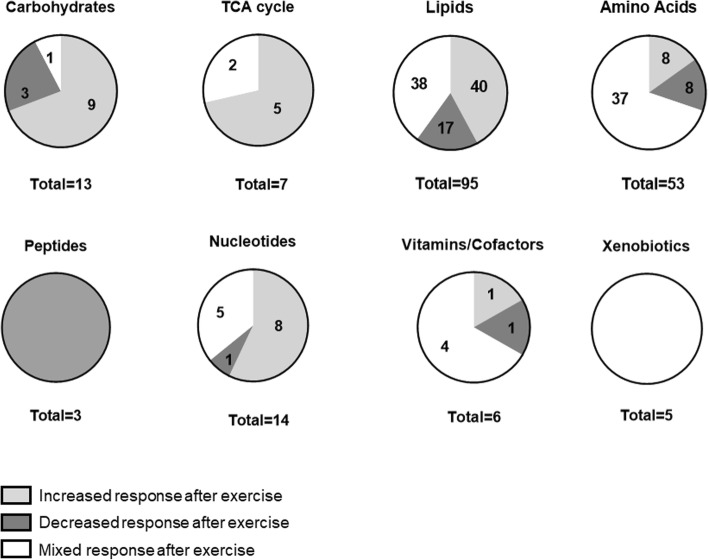
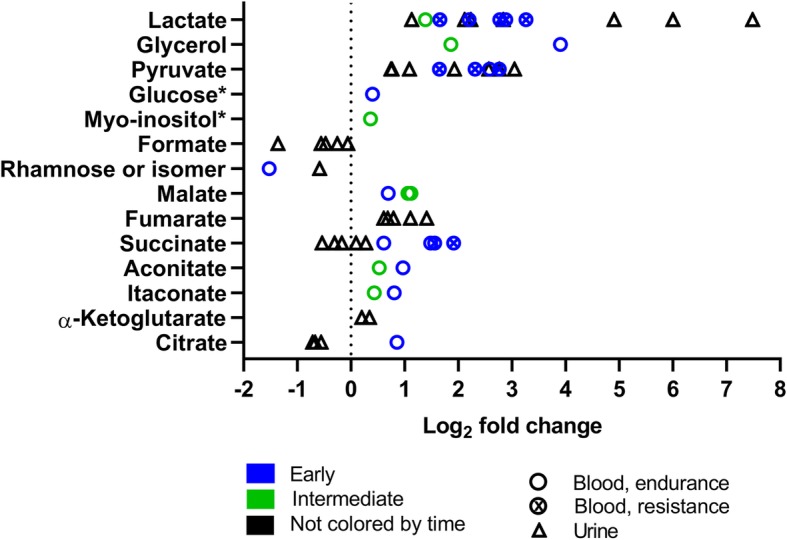
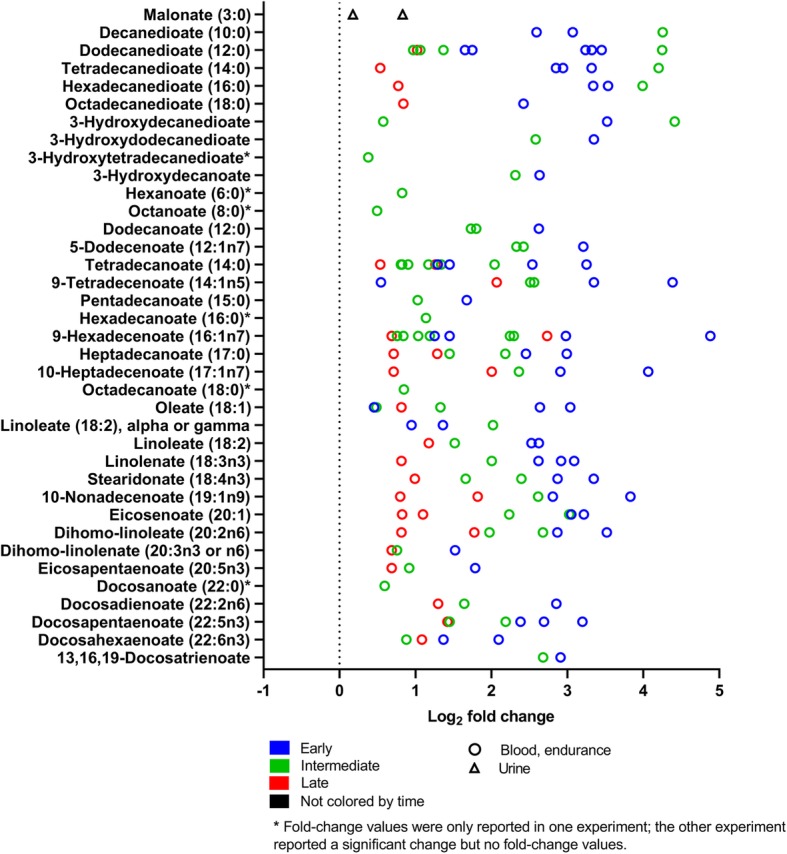
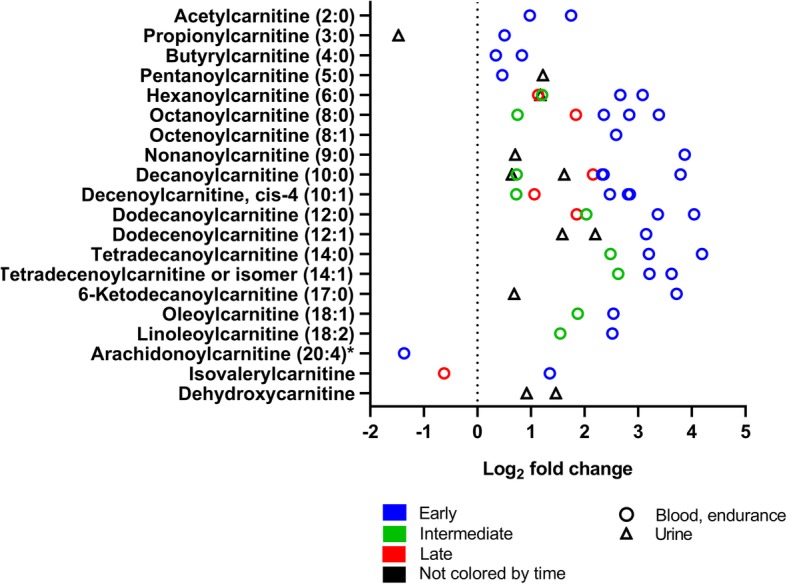
Twenty-seven studies and 57 experiments matched our search criteria and were analyzed. Within these studies, 196 metabolites changed their concentration significantly within 24 h after exercise in at least two experiments. Human biofluids contain mainly unphosphorylated metabolites as the phosphorylation of metabolites such as ATP, glycolytic intermediates, or nucleotides traps these metabolites within cells. Lactate, pyruvate, TCA cycle intermediates, fatty acids, acylcarnitines, and ketone bodies all typically increase after exercise, whereas bile acids decrease. In contrast, the concentrations of proteinogenic and non-proteinogenic amino acids change in different directions.
Across different exercise modes and in different subjects, exercise often consistently changes the average concentrations of metabolites that belong to energy metabolism and other branches of metabolism. This dataset is a useful resource for those that wish to study human exercise metabolism.
运动可改变许多代谢物的浓度,这些代谢物是通过人体新陈代谢反应进行代谢的小分子(<1.5 kDa)。近年来,尤其是基于质谱的代谢组学方法使研究人员能够以无偏倚的方式在单个样本中测量多达数百种代谢物。为了总结迄今为止的人体运动代谢组学研究,我们进行了一项系统综述,报告了发现一轮人体耐力或阻力运动后代谢物浓度变化的实验结果。
我们按照PRISMA指南进行了系统综述,并搜索了报告耐力或阻力运动前后24小时内血液、尿液或汗液中代谢物浓度的人体代谢组学研究。然后展示了在至少两个实验中浓度发生显著变化的代谢物。
27项研究和57个实验符合我们的搜索标准并进行了分析。在这些研究中,196种代谢物在运动后24小时内至少在两个实验中浓度发生了显著变化。人体生物流体主要包含未磷酸化的代谢物,因为诸如ATP、糖酵解中间体或核苷酸等代谢物的磷酸化会将这些代谢物困在细胞内。乳酸、丙酮酸、三羧酸循环中间体、脂肪酸、酰基肉碱和酮体通常在运动后都会增加,而胆汁酸则会减少。相比之下,蛋白质ogenic和非蛋白质ogenic氨基酸的浓度变化方向不同。
在不同的运动模式和不同的受试者中,运动通常会持续改变属于能量代谢和其他代谢分支的代谢物的平均浓度。该数据集对于那些希望研究人体运动代谢的人来说是一个有用的资源。