Gill Center for Molecular Bioscience, Department of Psychological and Brain Sciences, Indiana University, Bloomington, IN 47405, USA.
Molecules. 2022 Sep 2;27(17):5655. doi: 10.3390/molecules27175655.
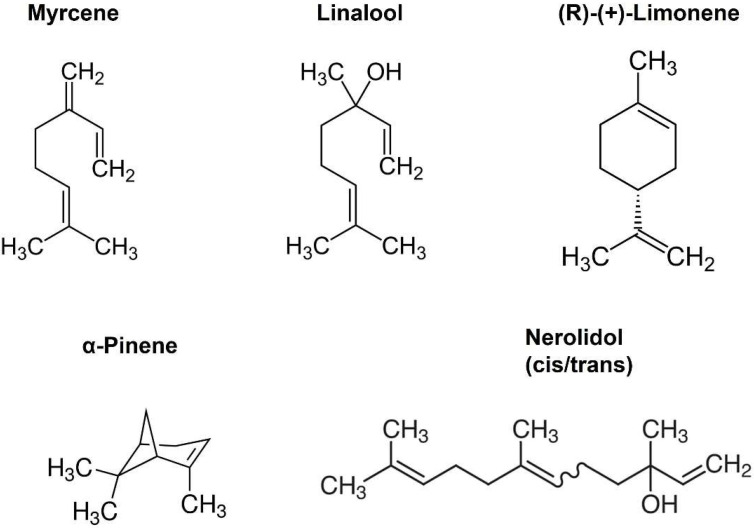
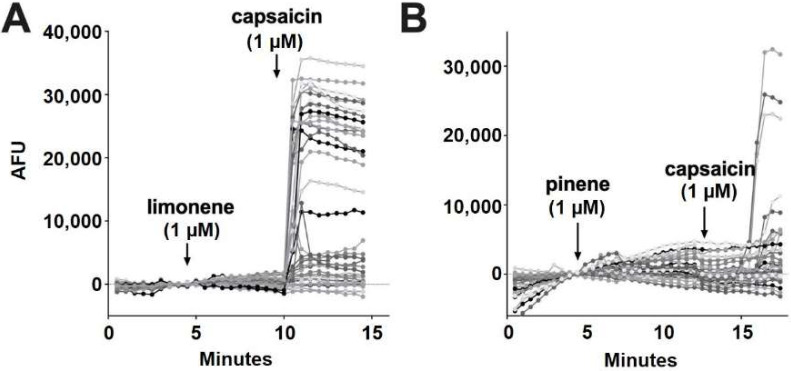
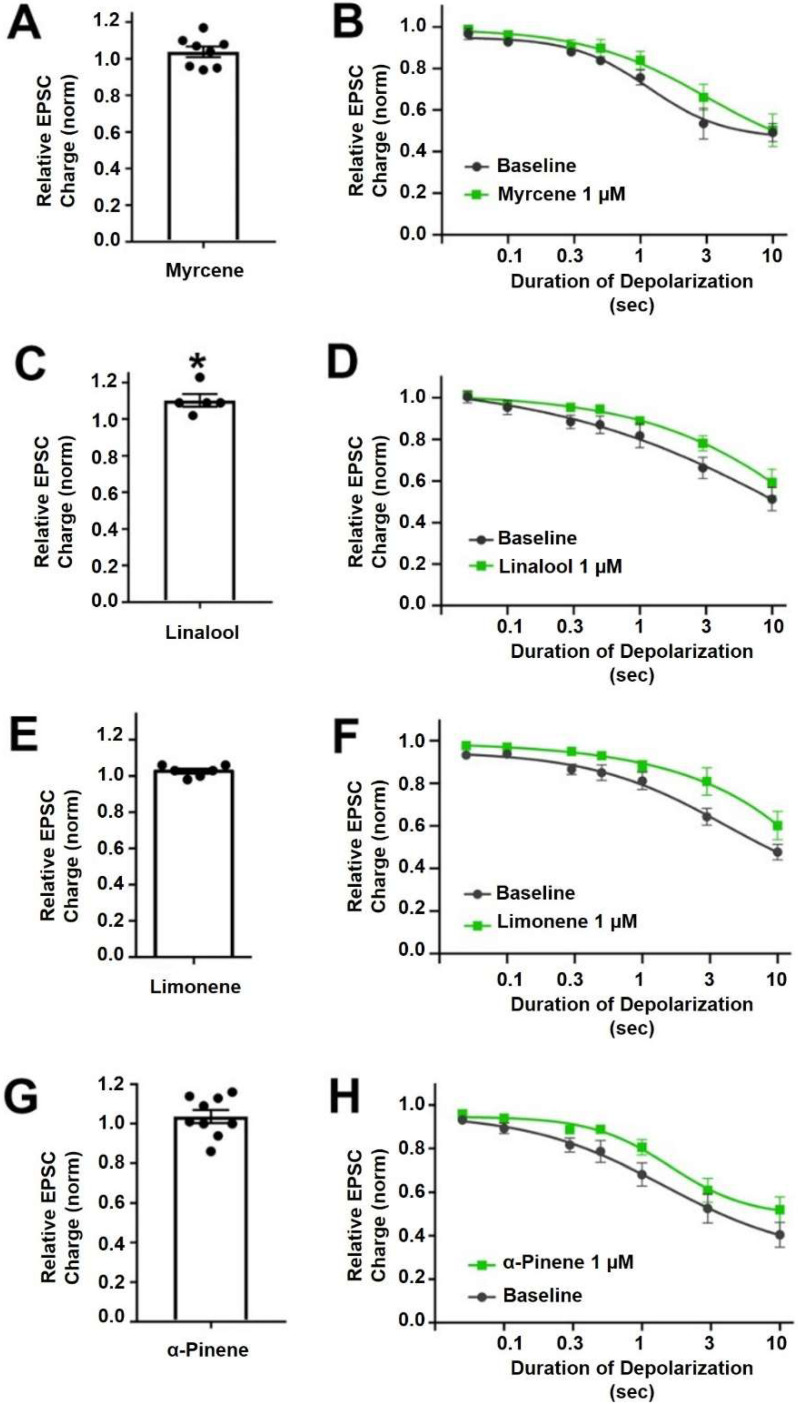
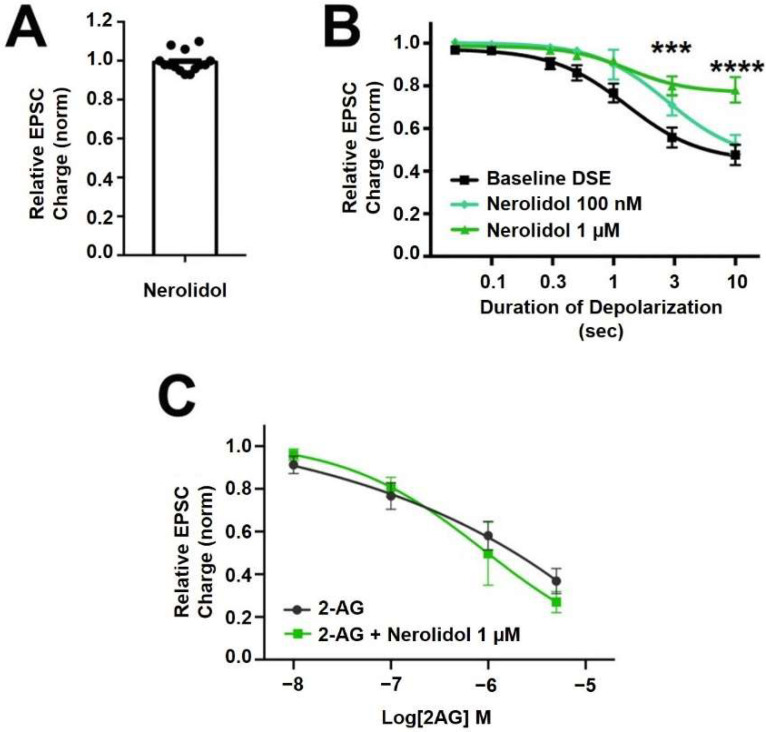
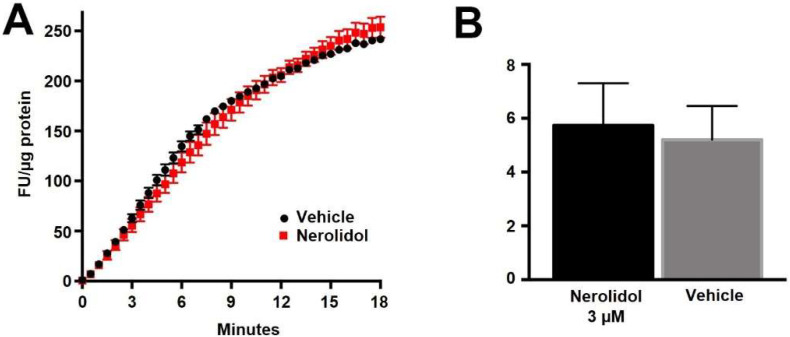
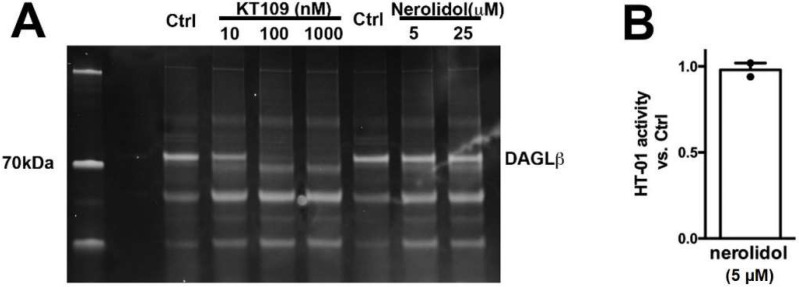
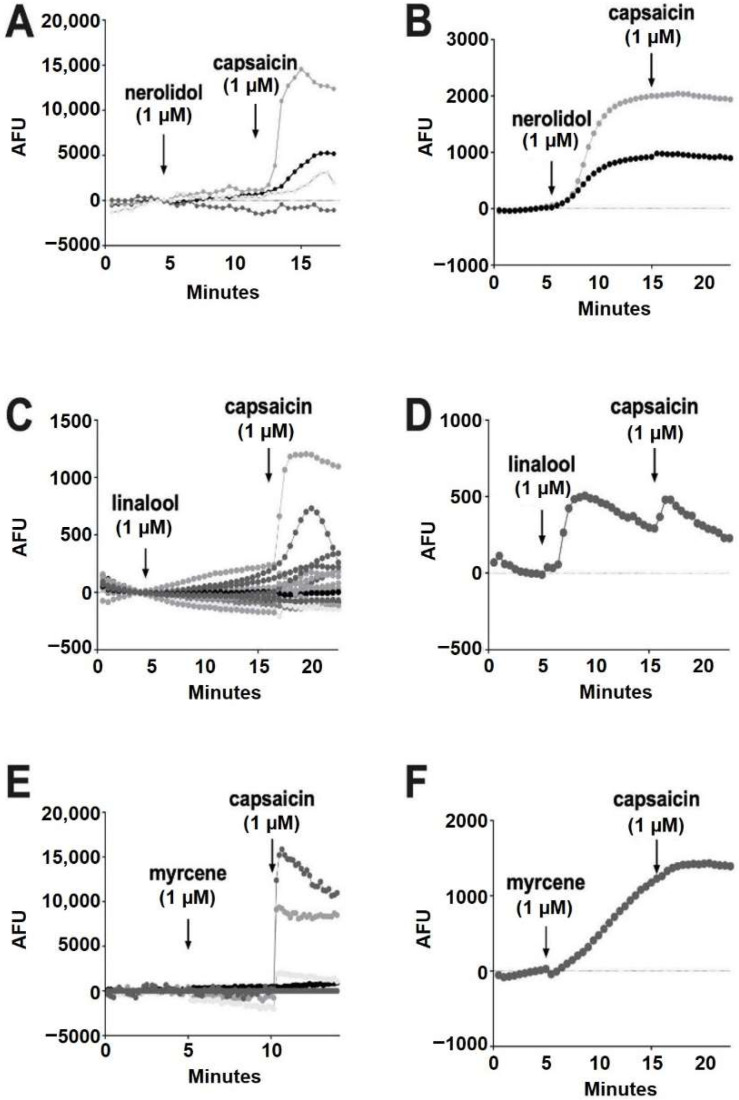
In addition to phytocannabinoids, cannabis contains terpenoids that are claimed to have a myriad of effects on the body. We tested a panel of five common cannabis terpenoids, myrcene, linalool, limonene, α-pinene and nerolidol, in two neuronal models, autaptic hippocampal neurons and dorsal root ganglion (DRG) neurons. Autaptic neurons express a form of cannabinoid CB1 receptor-dependent retrograde plasticity while DRGs express a variety of transient receptor potential (TRP) channels. Most terpenoids had little or no effect on neuronal cannabinoid signaling. The exception was nerolidol, which inhibited endocannabinoid signaling. Notably, this is not via inhibition of CB1 receptors but by inhibiting some aspect of 2-arachidonoylglycerol (2-AG) production/delivery; the mechanism does not involve reducing the activity of the 2-AG-synthesizing diacylglycerol lipases (DAGLs). Nerolidol was also the only terpenoid that activated a sustained calcium response in a small (7%) subpopulation of DRGs. In summary, we found that only one of five terpenoids tested had notable effects on cannabinoid signaling in two neuronal models. Our results suggest that a few terpenoids may indeed interact with some components of the cannabinoid signaling system and may therefore offer interesting insights upon further study.
除了植物大麻素,大麻还含有萜烯,据称萜烯对身体有多种影响。我们在两种神经元模型中测试了五种常见的大麻萜烯,即月桂烯、芳樟醇、柠檬烯、α-蒎烯和橙花叔醇,这两种神经元模型是自突触海马神经元和背根神经节(DRG)神经元。自突触神经元表达一种依赖于大麻素 CB1 受体的逆行可塑性,而 DRG 则表达多种瞬时受体电位(TRP)通道。大多数萜烯对神经元大麻素信号几乎没有影响。橙花叔醇是个例外,它抑制内源性大麻素信号。值得注意的是,这不是通过抑制 CB1 受体,而是通过抑制 2-花生四烯酸甘油(2-AG)产生/传递的某个方面;该机制不涉及降低 2-AG 合成二酰基甘油脂肪酶(DAGL)的活性。橙花叔醇也是唯一一种在一小部分(7%)DRG 中激活持续钙反应的萜烯。总之,我们发现,在两种神经元模型中,只有五种测试的萜烯之一对大麻素信号有显著影响。我们的结果表明,一些萜烯可能确实与大麻素信号系统的某些成分相互作用,因此在进一步研究中可能会提供有趣的见解。