Strack Elisabeth, Rolfe P Alexander, Fink Annika F, Bankov Katrin, Schmid Tobias, Solbach Christine, Savai Rajkumar, Sha Weixiao, Pradel Leon, Hartmann Sylvia, Brüne Bernhard, Weigert Andreas
Faculty of Medicine, Institute of Biochemistry I, Goethe-University Frankfurt, Frankfurt, Germany.
EMD Serono Research and Development Institute, Billerica, Massachusetts.
Clin Transl Med. 2020 Dec;10(8):e239. doi: 10.1002/ctm2.239.
Breast cancer is the leading cause of cancer-related deaths in women, demanding new treatment options. With the advent of immune checkpoint blockade, immunotherapy emerged as a treatment option. In addition to lymphocytes, tumor-associated macrophages exert a significant, albeit controversial, impact on tumor development. Pro-inflammatory macrophages are thought to hinder, whereas anti-inflammatory macrophages promote tumor growth. However, molecular markers to identify prognostic macrophage populations remain elusive.
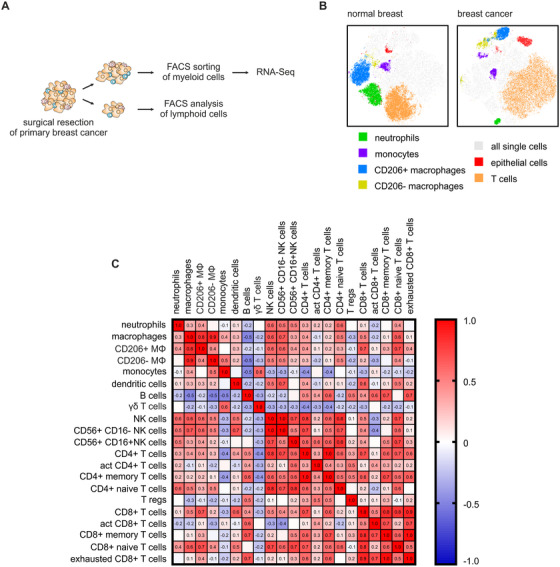
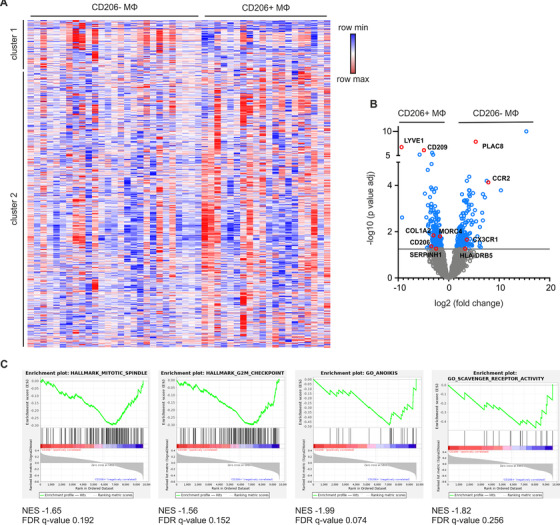
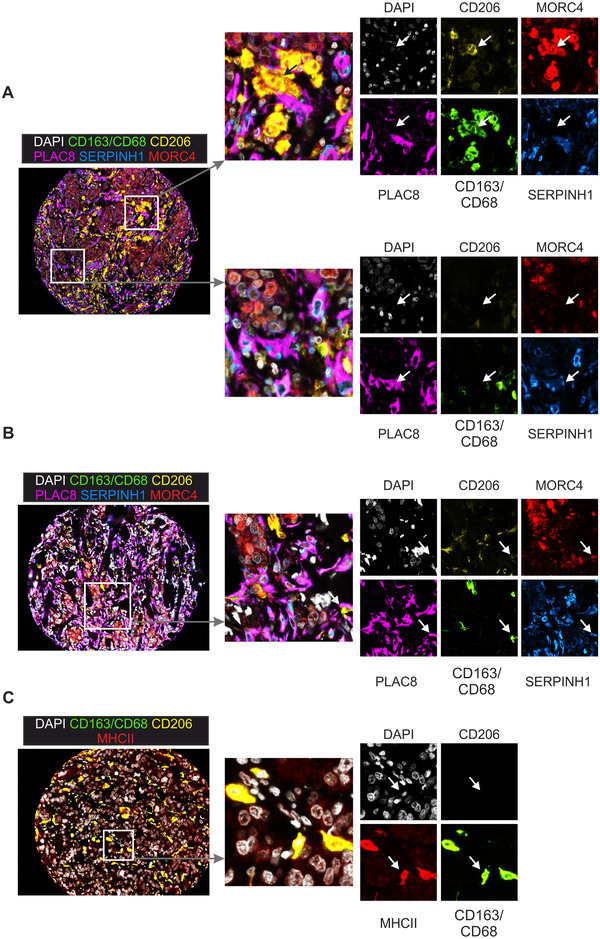
We isolated two macrophage subsets, from 48 primary human breast tumors, distinguished by the expression of CD206. Their transcriptomes were analyzed via RNA-Seq, and potential prognostic macrophage markers were validated by PhenOptics in tissue microarrays of patients with invasive breast cancer.
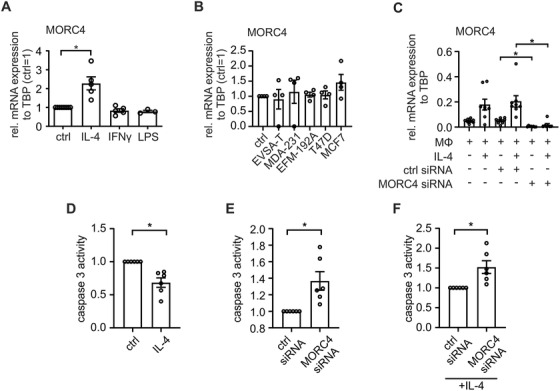
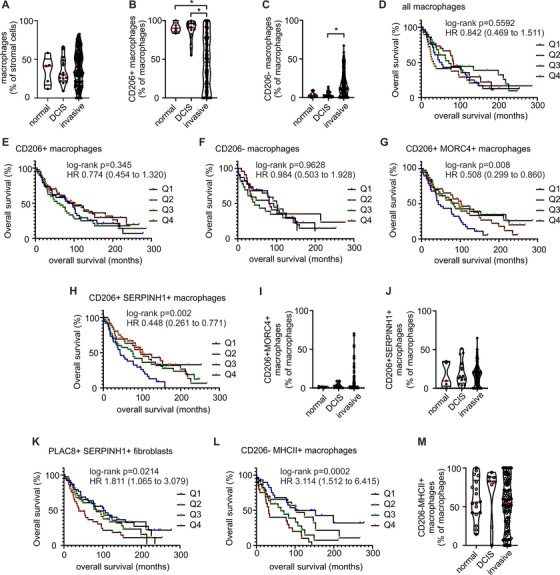
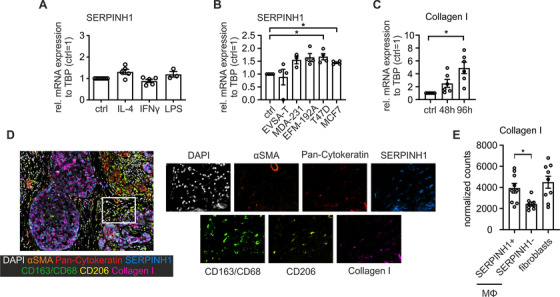
Normal human breast tissue contained mainly CD206 macrophages, while increased relative amounts of CD206 macrophages were observed in tumors. The presence of CD206 macrophages correlated with a pronounced lymphocyte infiltrate and subsets of CD206 macrophages, expressing SERPINH1 and collagen 1, or MORC4, were unexpectedly associated with improved survival of breast cancer patients. In contrast, MHCII CD206 macrophages were linked with a poor survival prognosis.
Our data highlight the heterogeneity of tumor-infiltrating macrophages and suggest the use of multiple phenotypic markers to predict the impact of macrophage subpopulations on cancer prognosis. We identified novel macrophage markers that correlate with the survival of patients with invasive mammary carcinoma.
乳腺癌是女性癌症相关死亡的主要原因,需要新的治疗选择。随着免疫检查点阻断疗法的出现,免疫疗法成为一种治疗选择。除淋巴细胞外,肿瘤相关巨噬细胞对肿瘤发展也有显著影响,尽管存在争议。促炎性巨噬细胞被认为会阻碍肿瘤生长,而抗炎性巨噬细胞则促进肿瘤生长。然而,用于识别预后巨噬细胞群体的分子标志物仍然难以捉摸。
我们从48例原发性人类乳腺肿瘤中分离出两个巨噬细胞亚群,通过CD206的表达进行区分。通过RNA测序分析它们的转录组,并在浸润性乳腺癌患者的组织微阵列中通过PhenOptics验证潜在的预后巨噬细胞标志物。
正常人类乳腺组织主要含有CD206巨噬细胞,而在肿瘤中观察到CD206巨噬细胞的相对数量增加。CD206巨噬细胞的存在与明显的淋巴细胞浸润相关,表达SERPINH1和胶原蛋白1或MORC4的CD206巨噬细胞亚群意外地与乳腺癌患者的生存期改善相关。相比之下,MHCII CD206巨噬细胞与不良的生存预后相关。
我们的数据突出了肿瘤浸润巨噬细胞的异质性,并建议使用多种表型标志物来预测巨噬细胞亚群对癌症预后的影响。我们鉴定出了与浸润性乳腺癌患者生存相关的新型巨噬细胞标志物。