Institute for Risk Assessment Sciences (IRAS), Division of Environmental Epidemiology, Utrecht University, 3584 CK Utrecht, The Netherlands.
Department of Physical Geography, Utrecht University, 3508 TC Utrecht, The Netherlands.
Environ Sci Technol. 2021 Jan 19;55(2):1067-1075. doi: 10.1021/acs.est.0c06806. Epub 2020 Dec 30.
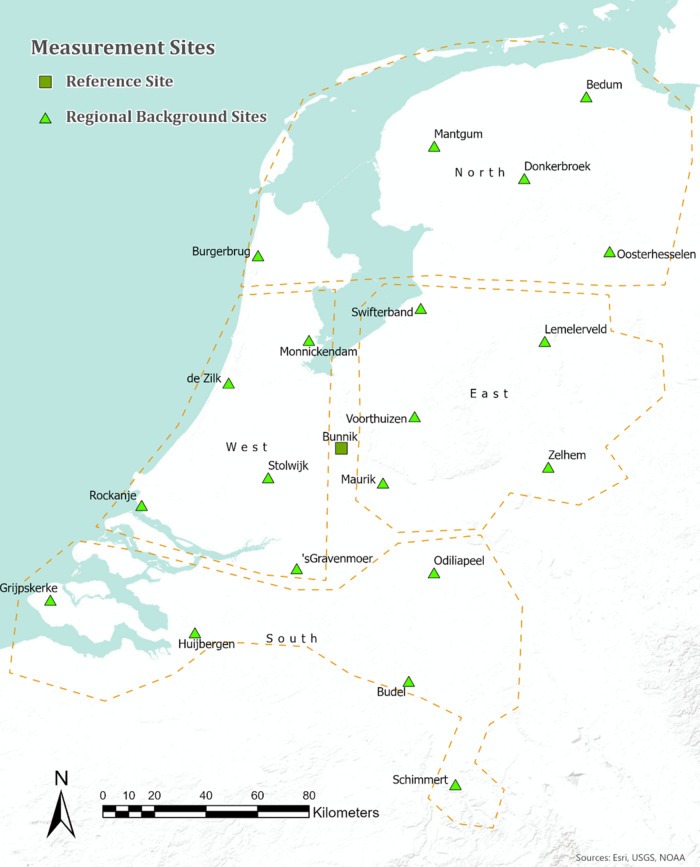
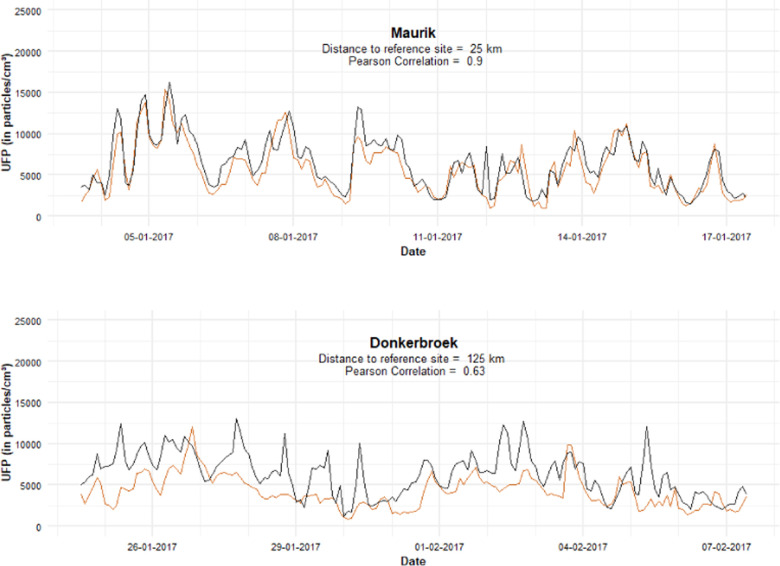
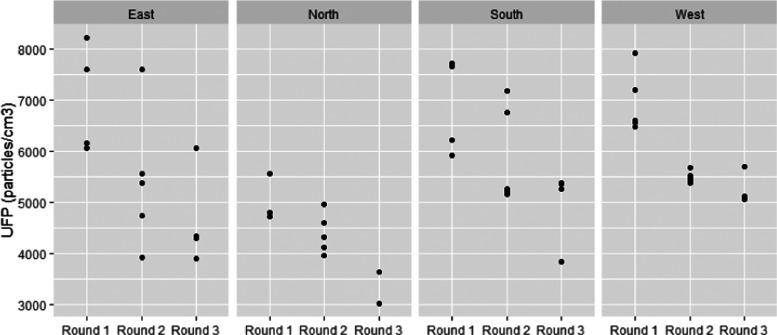
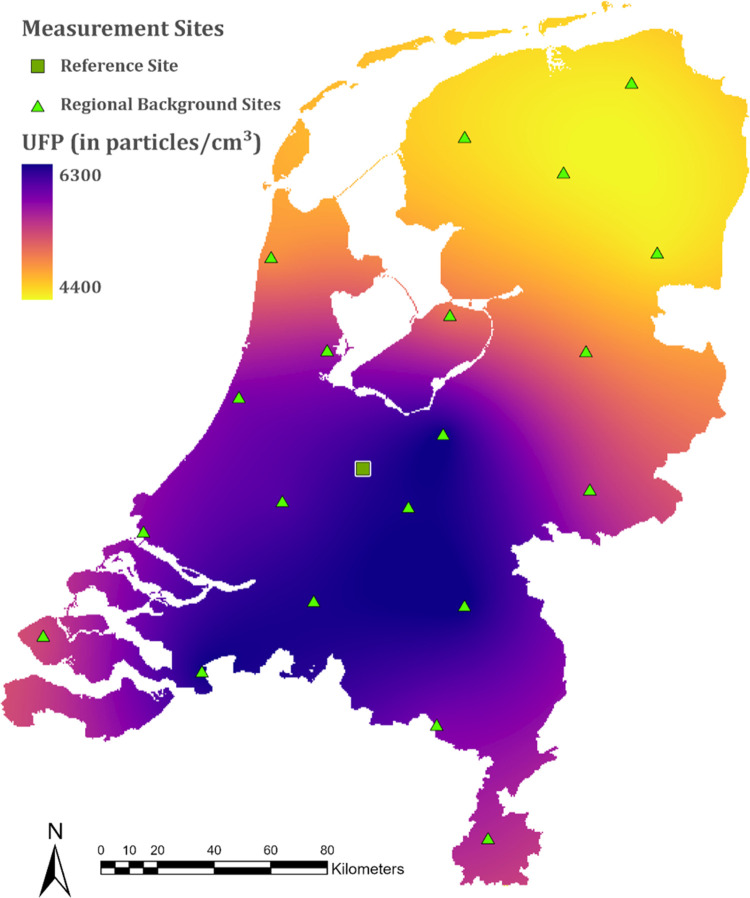
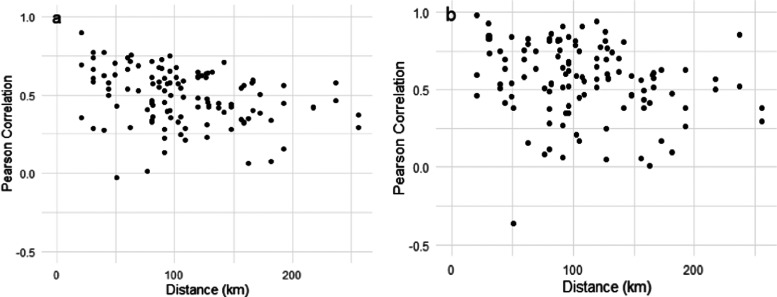
Studies of the health effects of ultrafine particles (UFPs) in large nationwide cohorts are currently hampered by a lack of knowledge about spatial and spatiotemporal variations in regional background UFPs. We measured the UFP (10-300 nm) at 20 regional background locations (3 × 2 weeks) across the Netherlands and a reference site continuously over a total period of 14 months in 2016-2017. We compared the overall averages for each site and used kriging to create a regional background spatial map of the Netherlands. Spatiotemporal variability was analyzed by correlating time-series of 2 and 24 h average concentrations. The overall average measured UFP concentrations at the 20 locations ranged from 3814 to 7070 particles/cm. We found the spatial correlation in the UFP concentrations up to 180 km and clear differences between the north and the more populated southern parts of the country. The average temporal correlation between 2 and 24 h average UFP concentrations was 0.50 (IQR: 0.36-0.61) and 0.58 (IQR: 0.44-0.75), respectively. Temporal correlation declined weakly with a distance between sites, from 0.58 for sites within 80 km of each other to 0.47 for sites farther away. The substantial spatial variation in the regional background UFP concentrations suggests that regional variation may contribute importantly to exposure contrast in nationwide health studies of UFP.
目前,由于缺乏对区域背景超细颗粒(UFPs)的空间和时空变化的了解,大规模全国性队列中 UFPs 健康影响的研究受到阻碍。我们在 2016 年至 2017 年期间,在荷兰 20 个区域背景地点(3 次×2 周)和一个参考地点连续测量了 UFP(10-300nm),总时长为 14 个月。我们比较了每个地点的总体平均值,并使用克里金法创建了荷兰区域背景的空间地图。通过对 2 小时和 24 小时平均浓度的时间序列进行相关分析,研究了时空变异性。在 20 个地点测量的 UFP 浓度的总体平均值范围为 3814 至 7070 个颗粒/cm。我们发现,UFP 浓度的空间相关性可达 180 公里,且该国北部和人口更为密集的南部地区之间存在明显差异。2 小时和 24 小时平均 UFP 浓度之间的平均时间相关性分别为 0.50(IQR:0.36-0.61)和 0.58(IQR:0.44-0.75)。时间相关性随站点之间的距离呈弱下降趋势,彼此相距 80 公里以内的站点的相关性为 0.58,而距离较远的站点的相关性为 0.47。区域背景 UFP 浓度的显著空间变化表明,区域变化可能对全国性 UFPs 健康研究中的暴露对比产生重要影响。