Ordway Bryce, Tomaszewski Michal, Byrne Samantha, Abrahams Dominique, Swietach Pawel, Gillies Robert J, Damaghi Mehdi
Department of Cancer Physiology, Moffitt Cancer Center and Research Institute, Tampa, FL 33612, USA.
Department of Physiology, Anatomy & Genetics, University of Oxford, Oxford OX1 3PT, UK.
Cancers (Basel). 2020 Dec 28;13(1):64. doi: 10.3390/cancers13010064.
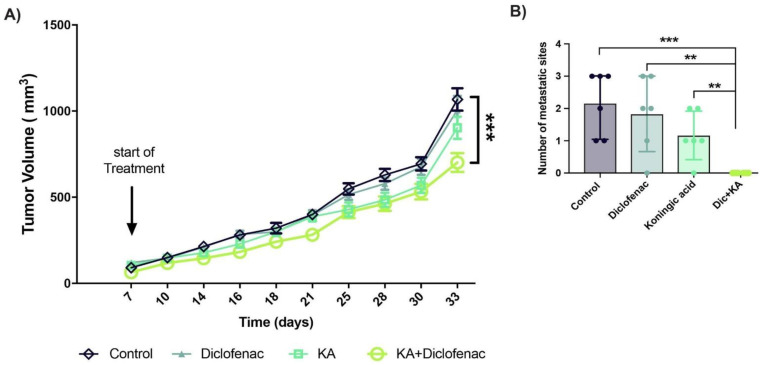
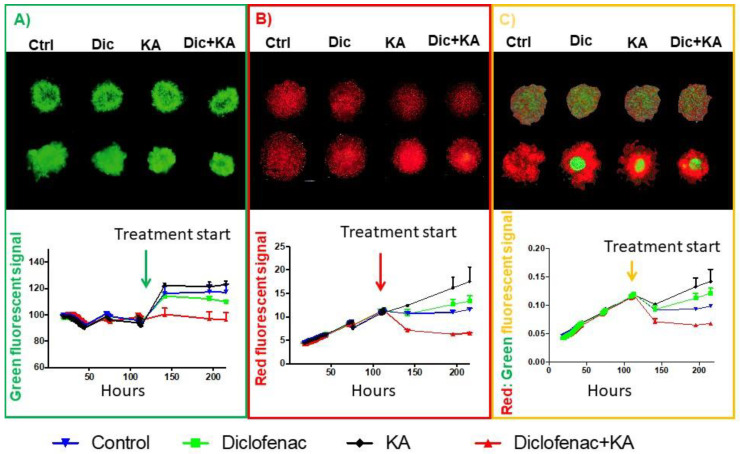
Evolutionary dynamics can be used to control cancers when a cure is not clinically considered to be achievable. Understanding Darwinian intratumoral interactions of microenvironmental selection forces can be used to steer tumor progression towards a less invasive trajectory. Here, we approach intratumoral heterogeneity and evolution as a dynamic interaction among subpopulations through the application of small, but selective biological forces such as intracellular pH (pHi) and/or extracellular pH (pHe) vulnerabilities. Increased glycolysis is a prominent phenotype of cancer cells under hypoxia or normoxia (Warburg effect). Glycolysis leads to an important aspect of cancer metabolism: reduced pHe and higher pHi. We recently showed that decreasing pHi and targeting pHi sensitive enzymes can reverse the Warburg effect (WE) phenotype and inhibit tumor progression. Herein, we used diclofenac (DIC) repurposed to control MCT activity, and Koningic acid (KA) that is a GAPDH partial inhibitor, and observed that we can control the subpopulation of cancer cells with WE phenotype within a tumor in favor of a less aggressive phenotype without a WE to control progression and metastasis. In a 3D spheroid co-cultures, we showed that our strategy can control the growth of more aggressive MDA-MB-231 cells, while sparing the less aggressive MCF7 cells. In an animal model, we show that our approach can reduce tumor growth and metastasis. We thus propose that evolutionary dynamics can be used to control tumor cells' clonal or sub-clonal populations in favor of slower growth and less damage to patients. We propose that this can result in cancer control for tumors where cure is not an option.
当临床上认为无法治愈癌症时,进化动力学可用于控制癌症。了解微环境选择力的达尔文式肿瘤内相互作用,可用于引导肿瘤进展朝着侵袭性较小的轨迹发展。在这里,我们通过应用小的但具有选择性的生物力,如细胞内pH值(pHi)和/或细胞外pH值(pHe)的脆弱性,将肿瘤内异质性和进化视为亚群之间的动态相互作用。糖酵解增加是癌细胞在缺氧或正常氧条件下的一个突出表型(瓦伯格效应)。糖酵解导致癌症代谢的一个重要方面:pHe降低和pHi升高。我们最近表明,降低pHi并靶向pHi敏感酶可以逆转瓦伯格效应(WE)表型并抑制肿瘤进展。在此,我们使用重新用于控制MCT活性的双氯芬酸(DIC)和作为GAPDH部分抑制剂的科宁酸(KA),并观察到我们可以控制肿瘤内具有WE表型的癌细胞亚群,使其有利于不具有WE的侵袭性较小的表型,以控制进展和转移。在3D球体共培养中,我们表明我们的策略可以控制侵袭性更强的MDA-MB-231细胞的生长,同时使侵袭性较小的MCF7细胞不受影响。在动物模型中,我们表明我们的方法可以减少肿瘤生长和转移。因此,我们提出进化动力学可用于控制肿瘤细胞的克隆或亚克隆群体,以利于较慢的生长并减少对患者的损害。我们提出,这可以导致对无法治愈的肿瘤进行癌症控制。