Department of Biological Sciences, Lehigh University, Bethlehem, Pennsylvania, United States of America.
PLoS Genet. 2020 Dec 31;16(12):e1009219. doi: 10.1371/journal.pgen.1009219. eCollection 2020 Dec.
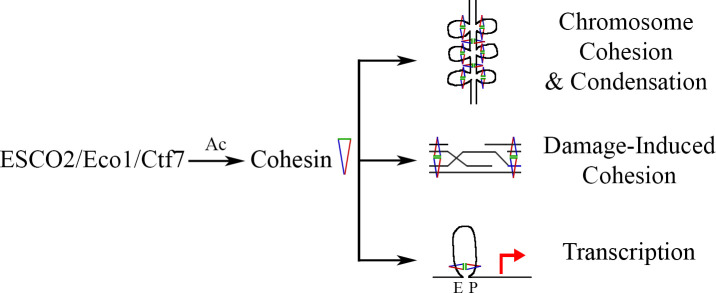
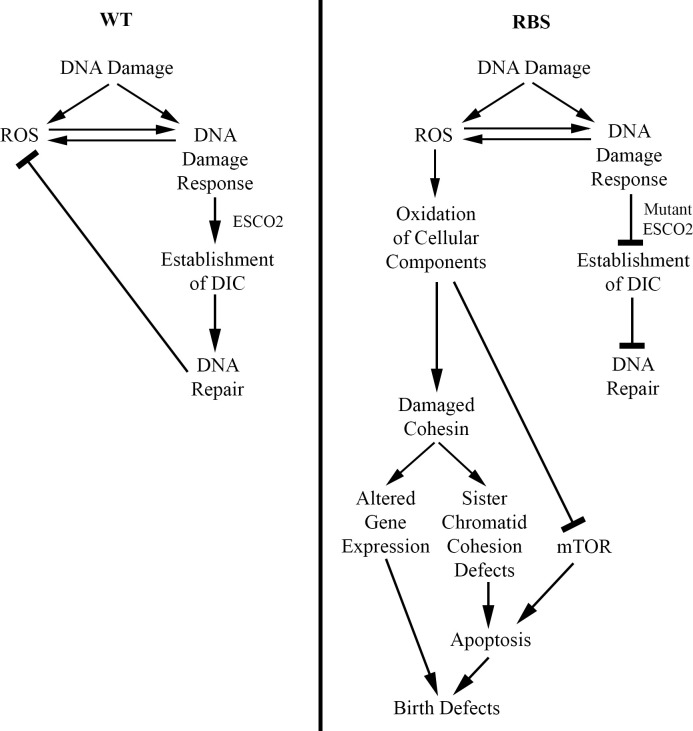
Roberts syndrome (RBS) is a rare developmental disorder that can include craniofacial abnormalities, limb malformations, missing digits, intellectual disabilities, stillbirth, and early mortality. The genetic basis for RBS is linked to autosomal recessive loss-of-function mutation of the establishment of cohesion (ESCO) 2 acetyltransferase. ESCO2 is an essential gene that targets the DNA-binding cohesin complex. ESCO2 acetylates alternate subunits of cohesin to orchestrate vital cellular processes that include sister chromatid cohesion, chromosome condensation, transcription, and DNA repair. Although significant advances were made over the last 20 years in our understanding of ESCO2 and cohesin biology, the molecular etiology of RBS remains ambiguous. In this review, we highlight current models of RBS and reflect on data that suggests a novel role for macromolecular damage in the molecular etiology of RBS.
罗伯茨综合征(RBS)是一种罕见的发育障碍,可包括颅面异常、肢体畸形、缺指、智力残疾、死胎和早期死亡。RBS 的遗传基础与建立凝聚力(ESCO)2 乙酰转移酶的常染色体隐性功能丧失突变有关。ESCO2 是一种必需基因,可靶向 DNA 结合黏合复合物。ESCO2 乙酰化黏合复合物的替代亚基,以协调包括姐妹染色单体凝聚、染色体浓缩、转录和 DNA 修复在内的重要细胞过程。尽管在过去的 20 年中,我们对 ESCO2 和黏合蛋白生物学的理解取得了重大进展,但 RBS 的分子病因仍然不清楚。在这篇综述中,我们强调了当前的 RBS 模型,并反思了表明大分子损伤在 RBS 分子病因中的新作用的数据。