Section for Comparative Pediatrics and Nutrition, Department of Veterinary and Animal Sciences, Faculty of Health and Medical Sciences, University of Copenhagen , Copenhagen, Denmark.
Section of Food Microbiology and Fermentation, Department of Food Science, Faculty of Science, Copenhagen University , Copenhagen, Denmark.
Gut Microbes. 2021 Jan-Dec;13(1):1-16. doi: 10.1080/19490976.2020.1849997.
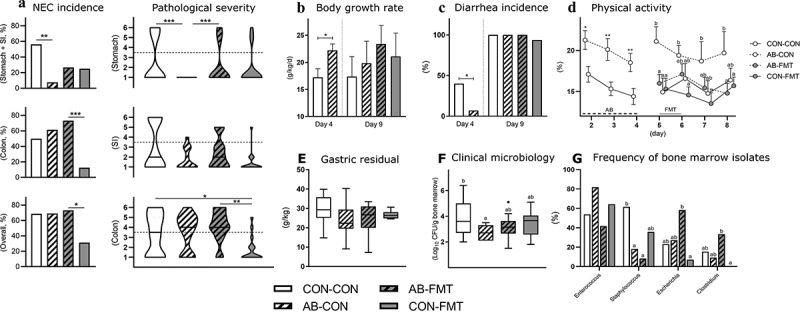
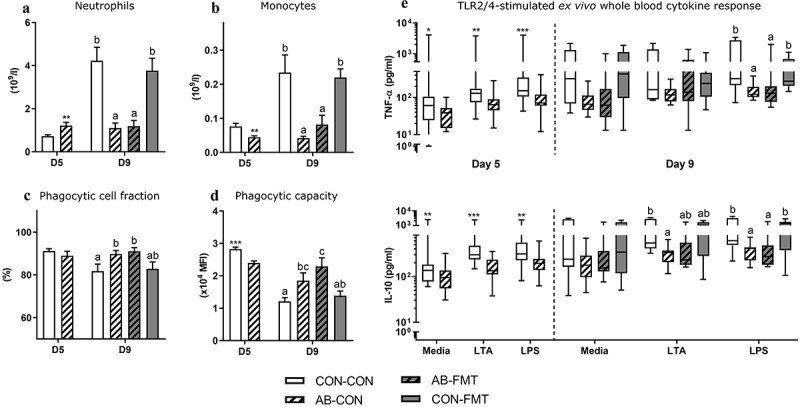
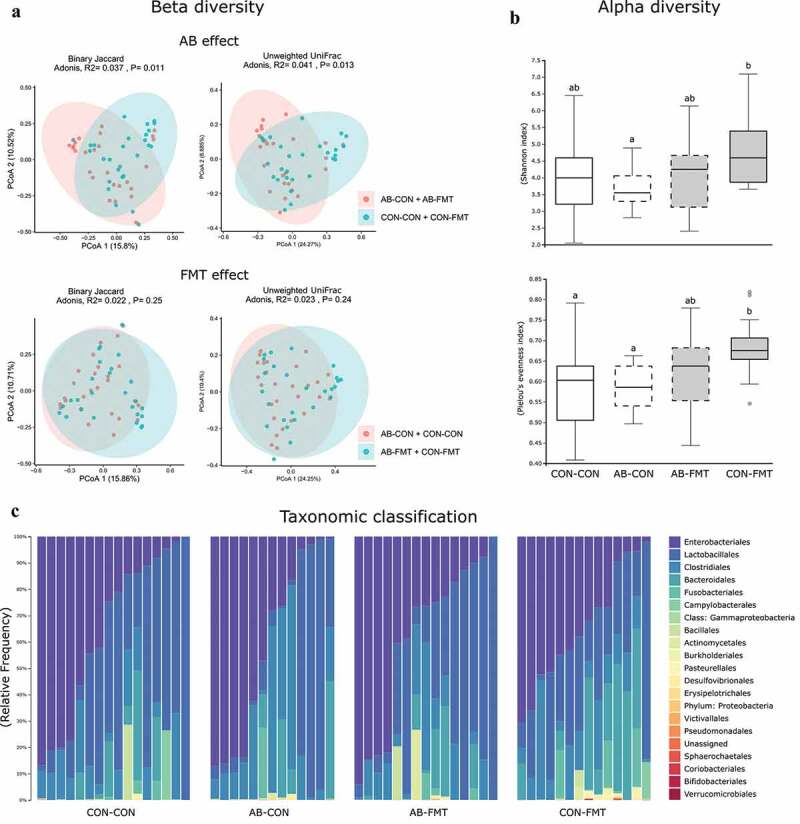
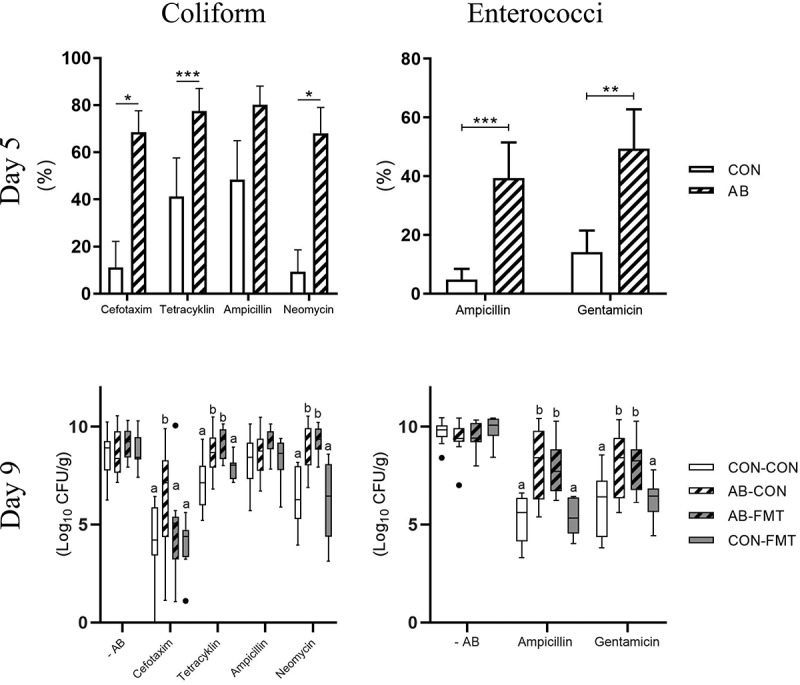
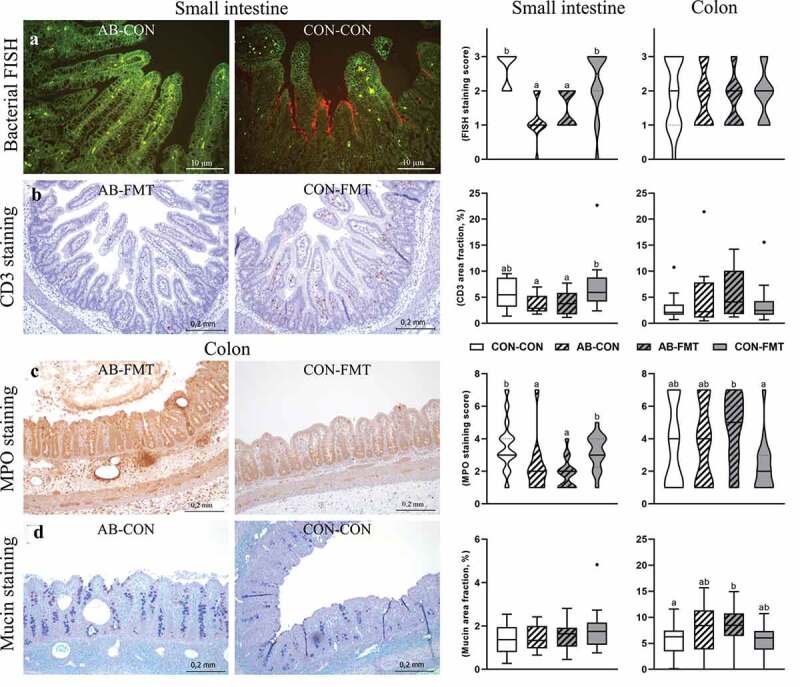
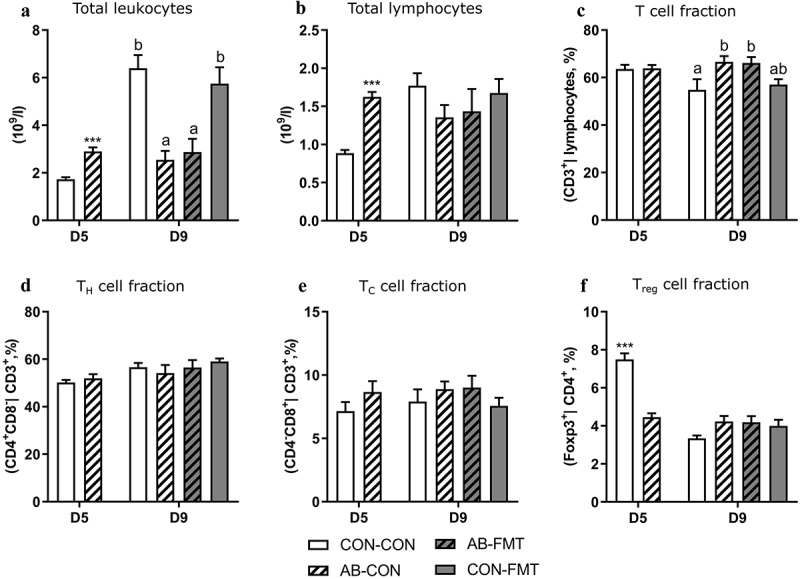
Preterm infants are at risk of multiple morbidities including necrotizing enterocolitis (NEC). Suspected NEC patients receive intravenous antibiotics (AB) to prevent sepsis, although enteral AB is arguably more effective at reducing NEC but is rarely used due to the risk of AB resistance. Fecal microbiota transplantation (FMT) has shown protective effects against NEC in animal experiments, but the interaction between AB and FMT has not been investigated in neonates. We hypothesized that administration of enteral AB followed by rectal FMT would effectively prevent NEC with negligible changes in AB resistance and systemic immunity. Using preterm piglets, we examined host and gut microbiota responses to AB, FMT, or a sequential combination thereof, with emphasis on NEC development. In a saline-controlled experiment, preterm piglets (n = 67) received oro-gastric neomycin (50 mg/kg/d) and amoxicillin-clavulanate (50/12.5 mg/kg/d) (hereafter AB) for four days after cesarean delivery, and were subsequently given rectal FMT from healthy suckling piglet donors. Whereas AB protected the stomach and small intestine, and FMT primarily protected the colon, the sequential combination treatment surprisingly provided no NEC protection. Furthermore, minor changes in the gut microbiota composition were observed in response to either treatment, although AB treatment decreased species diversity and increased AB resistance among coliform bacteria and Enterococci, which were both partly reversed by FMT. Besides, enteral AB treatment suppressed cellular and functional systemic immune development, which was not prevented by subsequent FMT. We discovered an antagonistic relationship between enteral AB and FMT in terms of NEC development. The outcome may depend on choice of AB compounds, FMT composition, doses, treatment duration, and administration routes, but these results challenge the applicability of enteral AB and FMT in preterm infants.
早产儿存在多种患病风险,包括坏死性小肠结肠炎(NEC)。疑似 NEC 患者接受静脉注射抗生素(AB)以预防败血症,尽管肠内 AB 更有效地降低 NEC 风险,但由于 AB 耐药的风险,很少使用。粪便微生物群移植(FMT)在动物实验中已显示出对 NEC 的保护作用,但在新生儿中尚未研究 AB 与 FMT 之间的相互作用。我们假设,给予肠内 AB 后直肠 FMT 将有效地预防 NEC,而 AB 耐药性和全身免疫几乎没有变化。我们使用早产仔猪研究了宿主和肠道微生物群对 AB、FMT 或两者顺序组合的反应,重点是 NEC 的发展。在盐水对照实验中,接受剖宫产的早产仔猪(n=67)接受口胃新霉素(50mg/kg/d)和阿莫西林克拉维酸(50/12.5mg/kg/d)(简称 AB)治疗四天,然后接受来自健康哺乳仔猪供体的直肠 FMT。AB 保护胃和小肠,FMT 主要保护结肠,而序贯组合治疗出人意料地没有提供 NEC 保护。此外,两种治疗方法都观察到肠道微生物群组成的微小变化,尽管 AB 治疗降低了种多样性,并增加了大肠菌和肠球菌中的 AB 耐药性,而 FMT 部分逆转了这两种情况。此外,肠内 AB 治疗抑制了细胞和功能系统免疫的发育,而随后的 FMT 并不能预防这种情况。我们发现肠内 AB 和 FMT 在 NEC 发展方面存在拮抗关系。结果可能取决于 AB 化合物、FMT 组成、剂量、治疗持续时间和给药途径的选择,但这些结果对肠内 AB 和 FMT 在早产儿中的适用性提出了挑战。