Cong Guangzhi, Yan Ru, Sachdev Ulka
Department of Surgery, University of Pittsburgh Medical Center, Pittsburgh, PA, USA.
Department of Cardiology, Cardiovascular Institute, General Hospital of Ningxia Medical University, Yinchuan, Ningxia, CN 750004, China.
Int J Cardiol Hypertens. 2020 Sep;6. doi: 10.1016/j.ijchy.2020.100037. Epub 2020 Dec 22.
Cigarette smoking is one of the most critical risk factors for peripheral arterial disease (PAD) and inversely correlated Vitamin C. Here we determine whether serum vitamin C correlates with the risk of PAD, especially among current smokers.
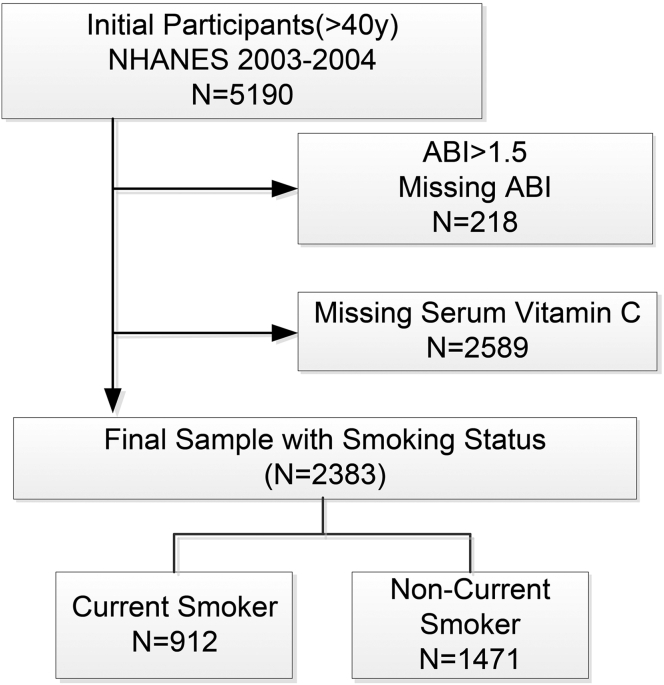
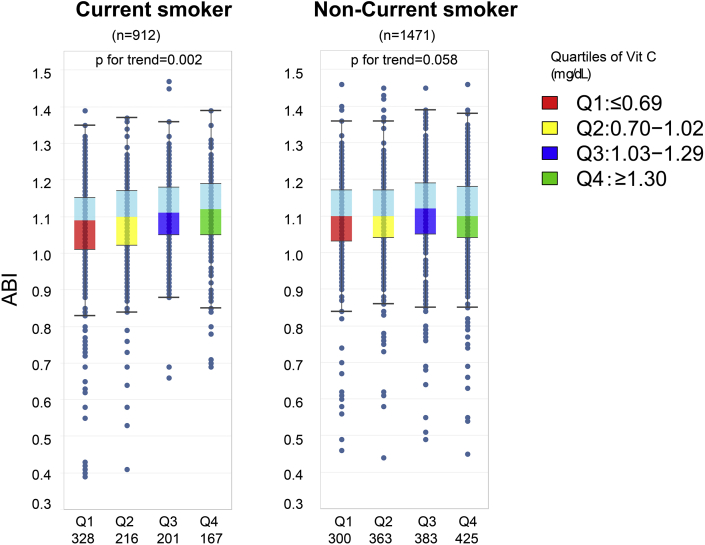
A cross-sectional analysis of 2383 individuals ≥40 y was performed from the U.S. National Health and Nutrition Examination Survey (NHANES 2003-2004), including measurement of ankle-brachial index (ABI), smoking status and serum vitamin C. We examined the interactions between plasma vitamin C and exposure to smoking on the risk of PAD.
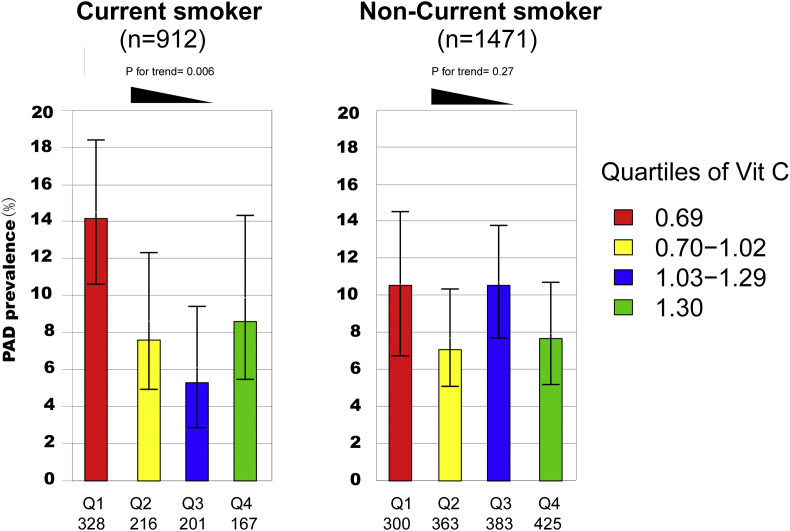
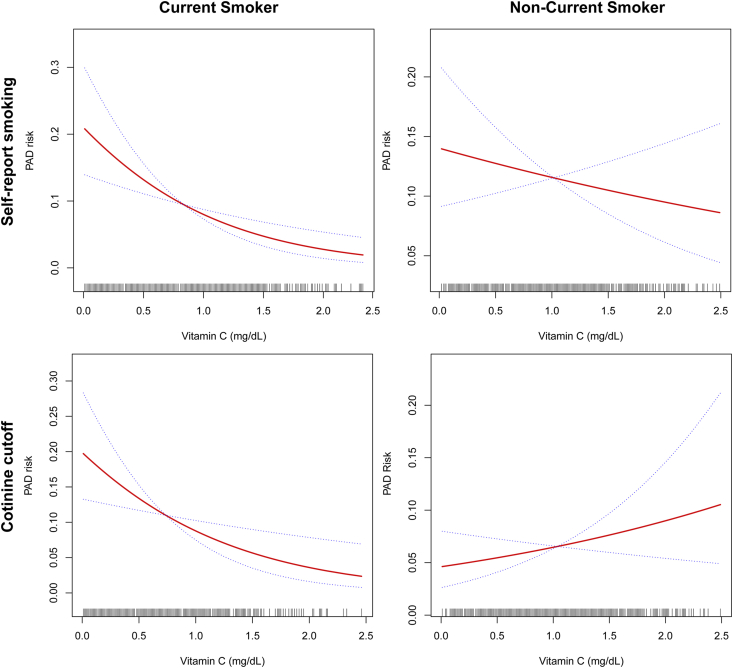
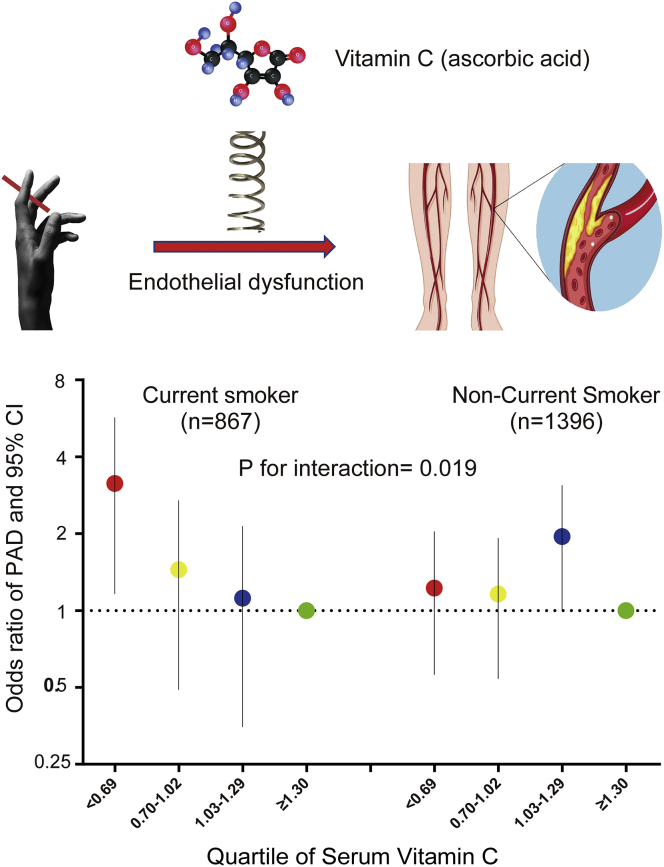
912 (38.2%) were current smokers while 207 participants were diagnosed with PAD based on ABI(ABI≤0.9). Current smokers in the lowest vitamin C quartile had the highest prevalence of PAD (14.1%) compared to other quartiles. However, this trend was not significant in nonsmokers. Current smokers in the lowest quartile had a 2.32-fold risk (95% CI, 1.03-5.32; P = 0.04) for PAD after weighted adjustment for potential confounders, including vitamin D and C-reactive protein. In contrast, non-smokers did not have a differing risk of PAD as a function of vitamin C (P for interaction = 0.019).
As an anti-oxidant and anti-inflammatory, low serum vitamin C appears to associates with the risk of PAD in smokers. A relationship between PAD and vitamin C in non-current smokers is not apparent. Modulating vitamin C in current smokers may help mitigate the risk of PAD and should be a target of mechanistic study.
吸烟是外周动脉疾病(PAD)最关键的危险因素之一,且与维生素C呈负相关。在此,我们确定血清维生素C是否与PAD风险相关,尤其是在当前吸烟者中。
对来自美国国家健康与营养检查调查(2003 - 2004年NHANES)的2383名年龄≥40岁的个体进行横断面分析,包括测量踝臂指数(ABI)、吸烟状况和血清维生素C。我们研究了血浆维生素C与吸烟暴露对PAD风险的相互作用。
912名(38.2%)为当前吸烟者,而基于ABI(ABI≤0.9)诊断出207名参与者患有PAD。维生素C处于最低四分位数的当前吸烟者中PAD患病率最高(14.1%),与其他四分位数相比。然而,在非吸烟者中这种趋势并不显著。在对包括维生素D和C反应蛋白等潜在混杂因素进行加权调整后,维生素C处于最低四分位数的当前吸烟者患PAD的风险为2.32倍(95%可信区间,1.03 - 5.32;P = 0.04)。相比之下,非吸烟者患PAD的风险不会因维生素C而有所不同(交互作用P = 0.019)。
作为一种抗氧化剂和抗炎物质,低血清维生素C似乎与吸烟者患PAD的风险相关。当前非吸烟者中PAD与维生素C之间的关系并不明显。调节当前吸烟者体内的维生素C可能有助于降低患PAD的风险,应成为机制研究的一个靶点。