Functional and Molecular Imaging Laboratory, Cancer Research Department, Sidra Medicine, Doha, Qatar.
Research Department, Sidra Medicine, Doha, Qatar.
Mol Cancer. 2021 Jan 4;20(1):2. doi: 10.1186/s12943-020-01294-3.
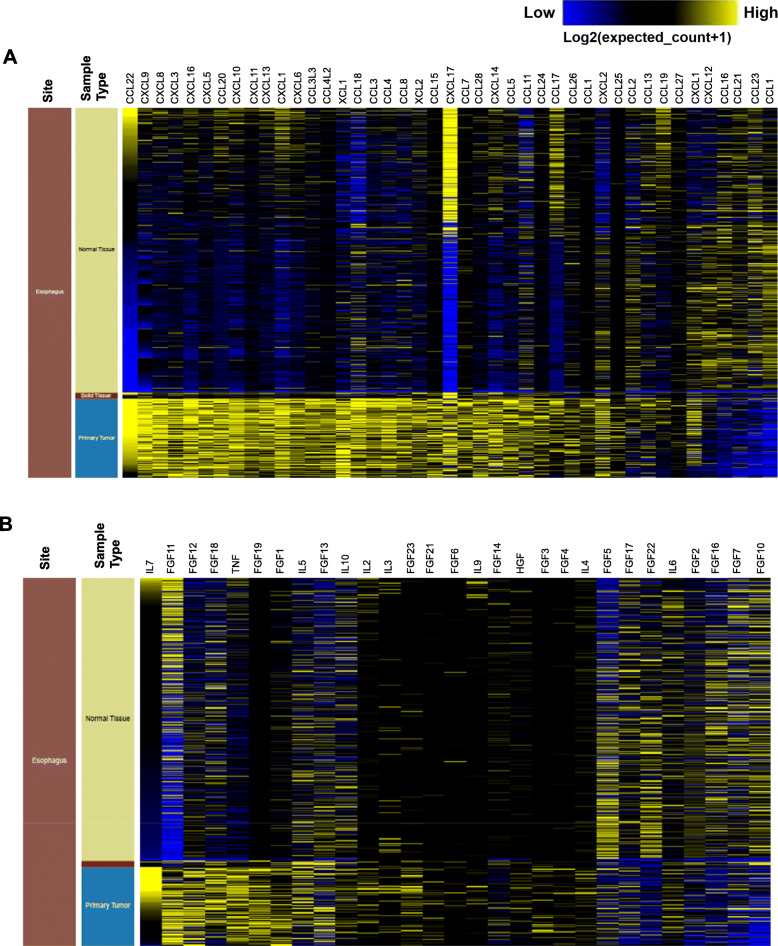
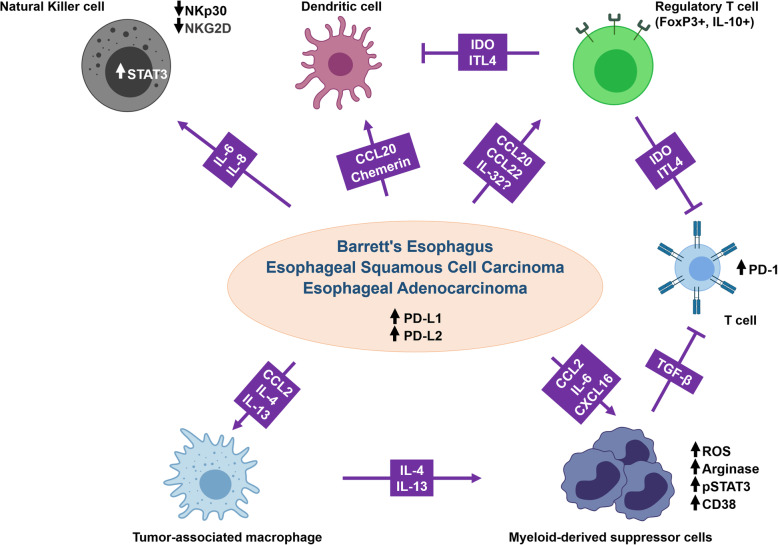
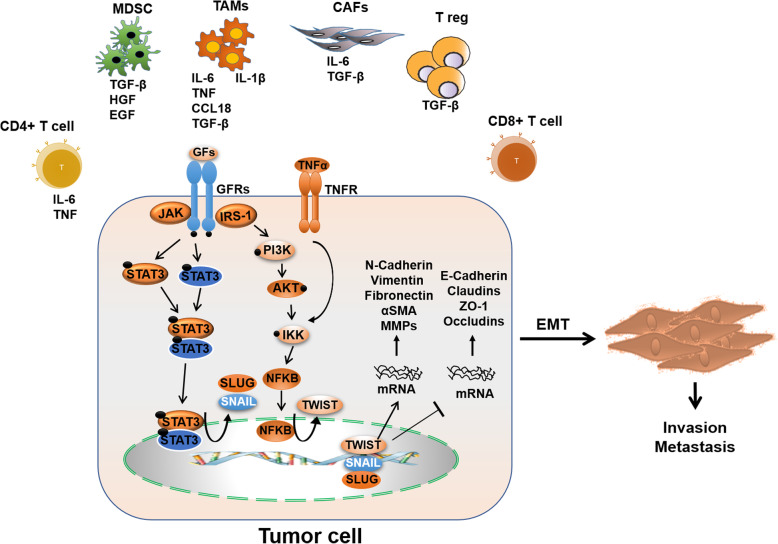
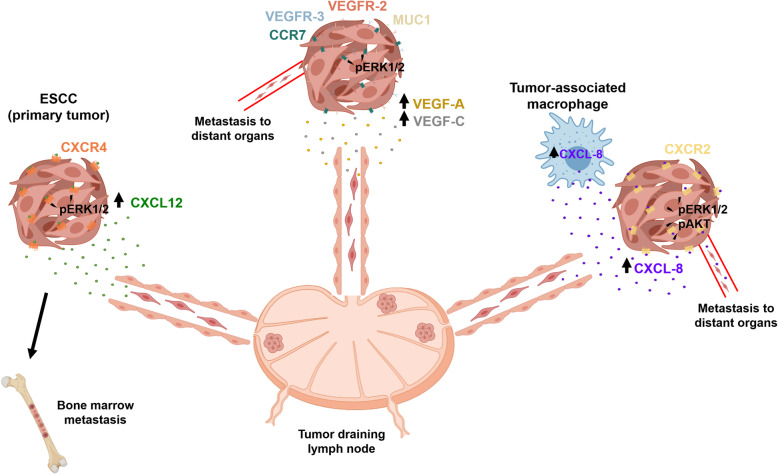
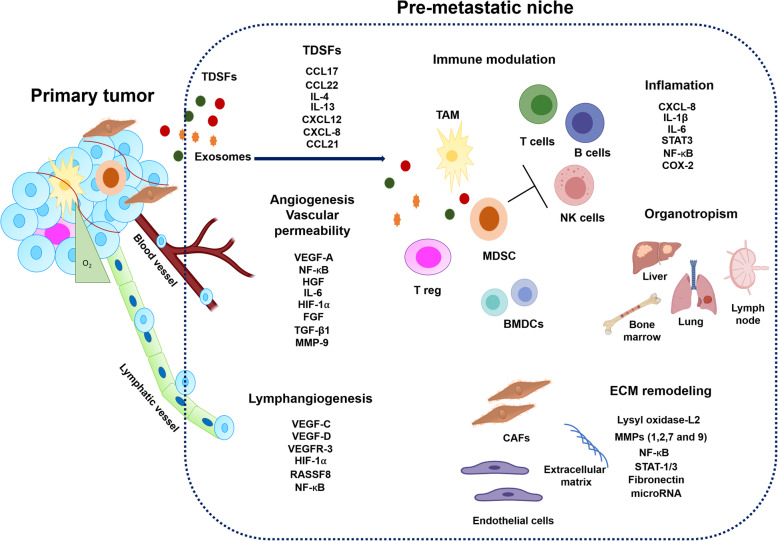
Esophageal cancer (EC) is a disease often marked by aggressive growth and poor prognosis. Lack of targeted therapies, resistance to chemoradiation therapy, and distant metastases among patients with advanced disease account for the high mortality rate. The tumor microenvironment (TME) contains several cell types, including fibroblasts, immune cells, adipocytes, stromal proteins, and growth factors, which play a significant role in supporting the growth and aggressive behavior of cancer cells. The complex and dynamic interactions of the secreted cytokines, chemokines, growth factors, and their receptors mediate chronic inflammation and immunosuppressive TME favoring tumor progression, metastasis, and decreased response to therapy. The molecular changes in the TME are used as biological markers for diagnosis, prognosis, and response to treatment in patients. This review highlighted the novel insights into the understanding and functional impact of deregulated cytokines and chemokines in imparting aggressive EC, stressing the nature and therapeutic consequences of the cytokine-chemokine network. We also discuss cytokine-chemokine oncogenic potential by contributing to the Epithelial-Mesenchymal Transition (EMT), angiogenesis, immunosuppression, metastatic niche, and therapeutic resistance development. In addition, it discusses the wide range of changes and intracellular signaling pathways that occur in the TME. Overall, this is a relatively unexplored field that could provide crucial insights into tumor immunology and encourage the effective application of modulatory cytokine-chemokine therapy to EC.
食管癌(EC)是一种通常以侵袭性生长和预后不良为特征的疾病。缺乏靶向治疗、对放化疗的耐药性以及晚期患者的远处转移是导致高死亡率的原因。肿瘤微环境(TME)包含多种细胞类型,包括成纤维细胞、免疫细胞、脂肪细胞、基质蛋白和生长因子,它们在支持癌细胞生长和侵袭性行为方面发挥着重要作用。分泌的细胞因子、趋化因子、生长因子及其受体的复杂和动态相互作用介导慢性炎症和免疫抑制性 TME,有利于肿瘤的进展、转移和对治疗的反应降低。TME 中的分子变化被用作患者诊断、预后和治疗反应的生物标志物。本综述强调了对失调细胞因子和趋化因子在赋予侵袭性 EC 方面的理解和功能影响的新见解,强调了细胞因子-趋化因子网络的性质和治疗后果。我们还通过促进上皮-间充质转化(EMT)、血管生成、免疫抑制、转移龛和治疗耐药性的发展,讨论了细胞因子-趋化因子的致癌潜力。此外,它还讨论了 TME 中发生的广泛变化和细胞内信号通路。总的来说,这是一个相对未被探索的领域,它可以为肿瘤免疫学提供关键的见解,并鼓励对 EC 进行有效的调节细胞因子-趋化因子治疗。