Department of Cell Biology, Key Laboratory of Cell Biology, National Health Commission of the PRC, and Key Laboratory of Medical Cell Biology, Ministry of Education of the PRC, China Medical University, No. 77, Puhe Road, Shenyang North New Area, 110122 Shenyang, Liaoning, China.
Department of Breast Surgery, The First Affiliated Hospital of China Medical University, 155 Nanjing Road, 110001 Shenyang, China.
Int J Biol Sci. 2021 Jan 1;17(1):247-258. doi: 10.7150/ijbs.53477. eCollection 2021.
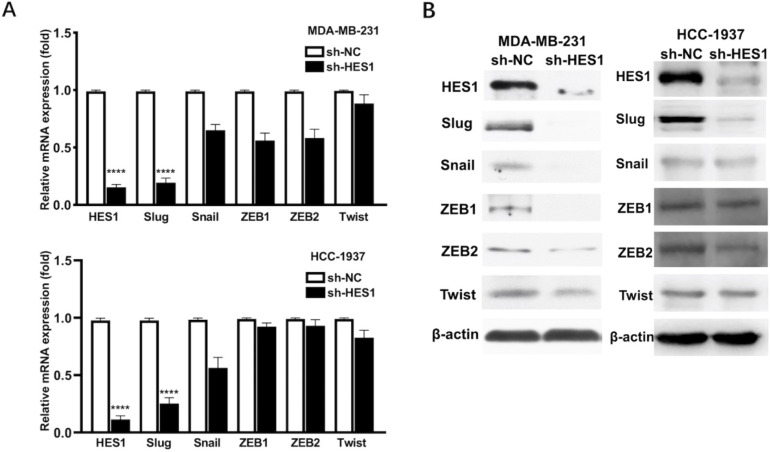
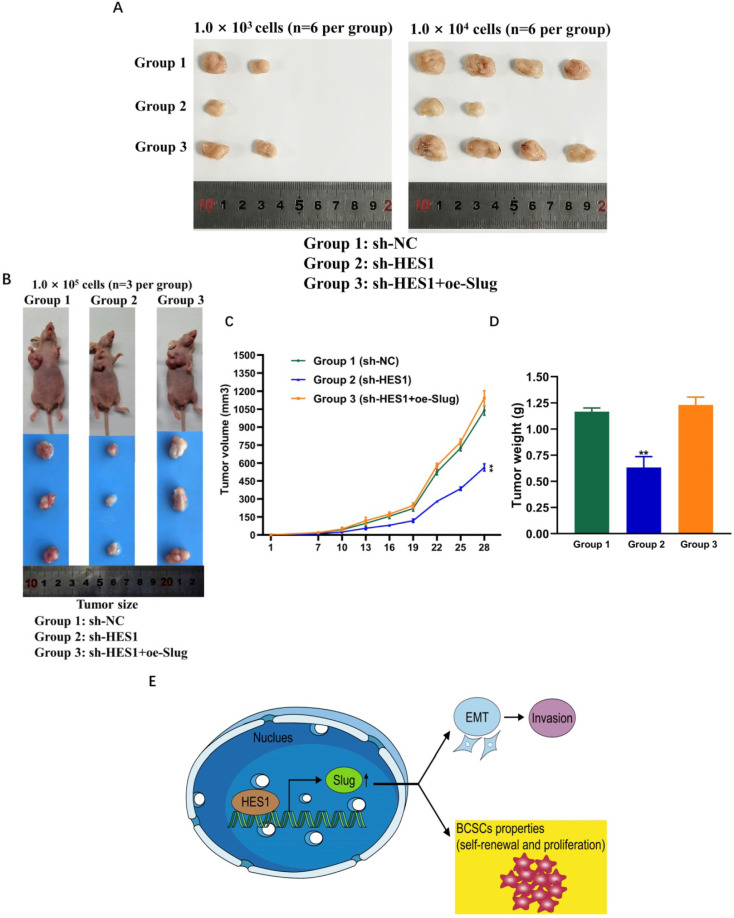
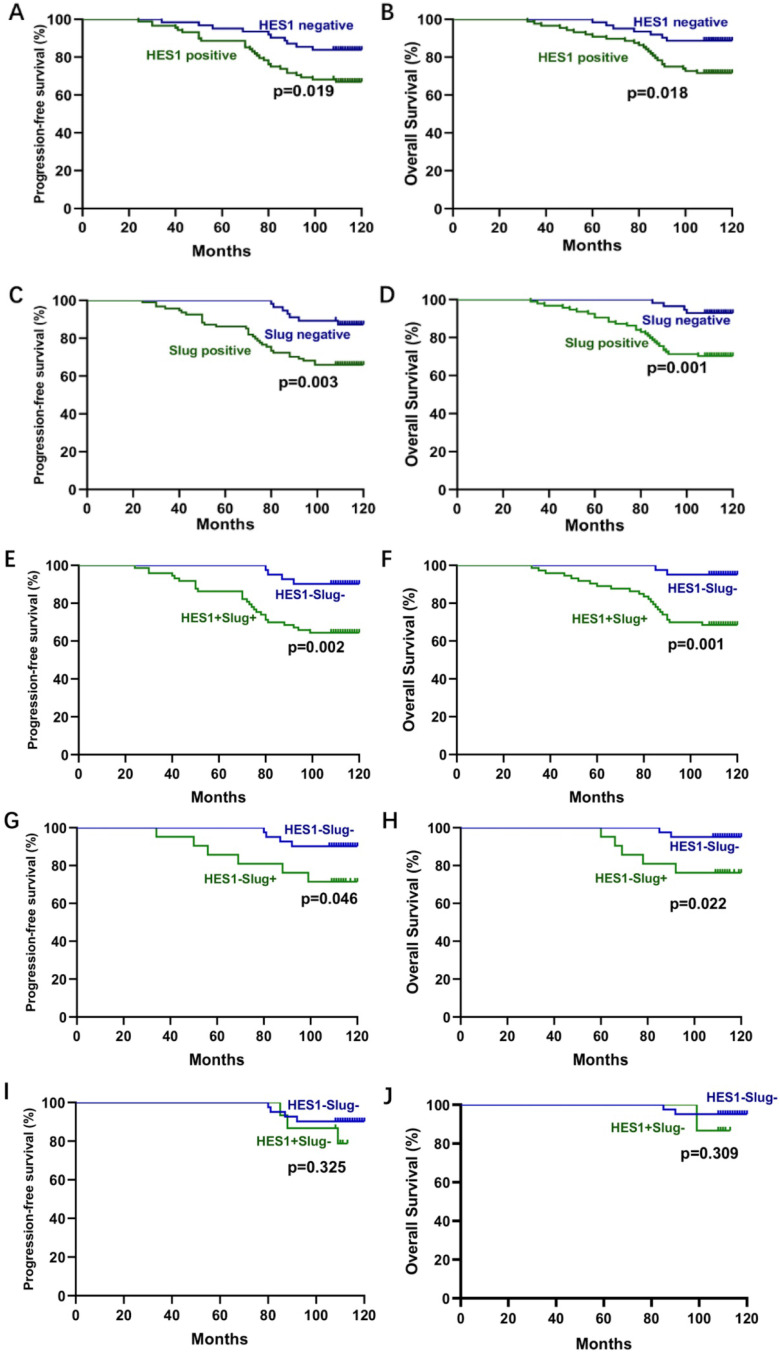
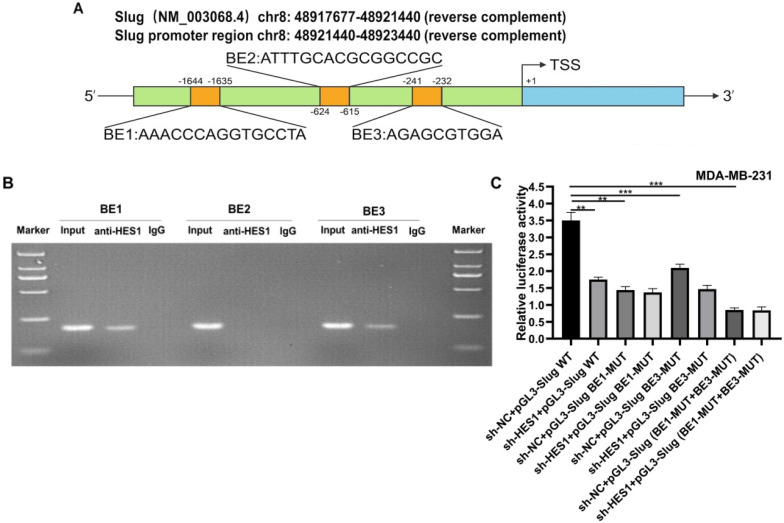
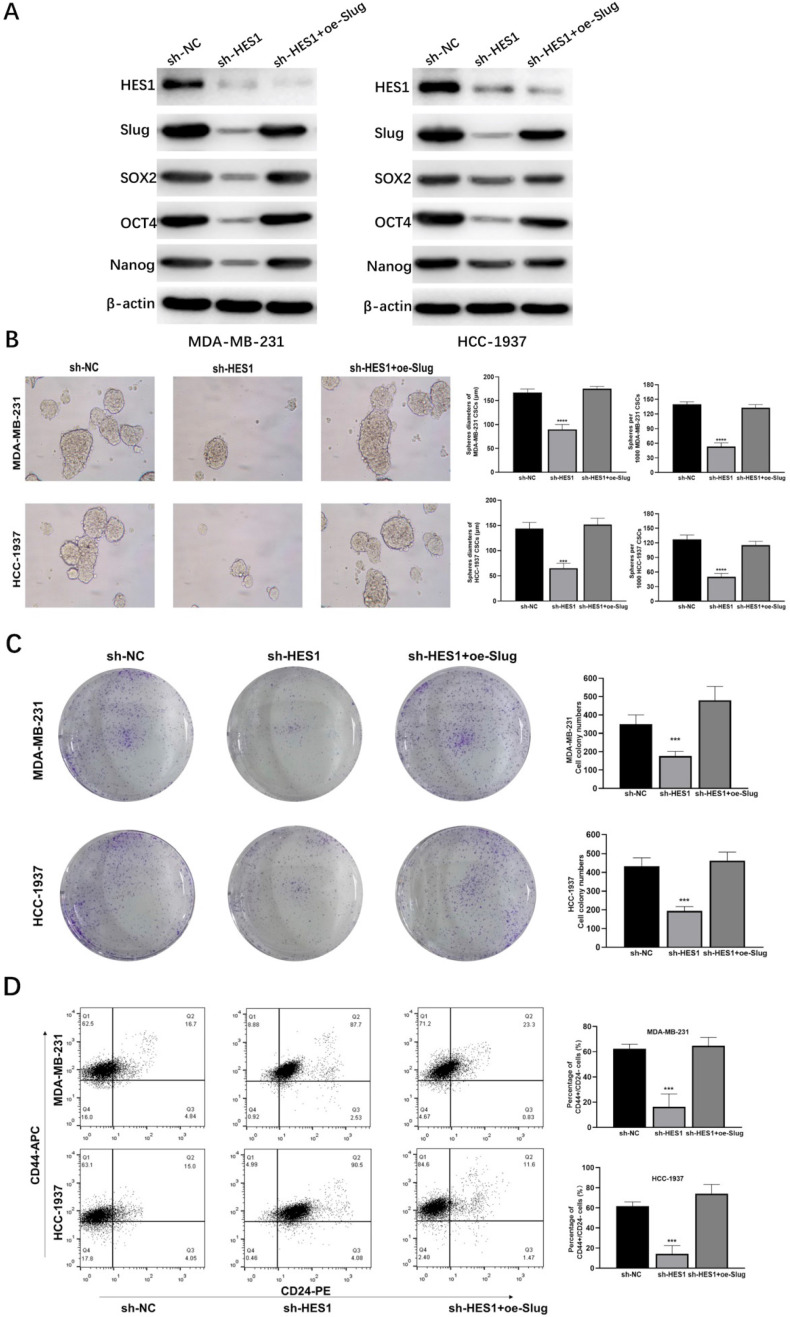
Triple-negative breast cancer (TNBC) is the most aggressive subtype of breast cancer. TNBC is enriched with breast cancer stem cells (BCSCs), which are responsible for cancer initiation, cancer progression and worse prognosis. Our previous study found that HES1 was overexpressed and promoted invasion in TNBC. However, the role of HES1 in modulating BCSC stemness of TNBC remains unclear. Here, we found that HES1 upregulates Slug both in transcriptional level and in protein level. HES1 also has a positive correlation with Slug expression in 150 TNBC patient samples. TNBC patients with high HES1 and Slug levels show worse prognosis in both progression-free survival and overall survival analyses. Survival analyses indicate that the effects of HES1 on survival prognosis may depend on Slug. Furthermore, we reveal that HES1 is a novel transcriptional activator for Slug through acting directly on its promoter. Meanwhile, HES1 knockdown reduces BCSC self-renewal, BCSC population, and cancer cell proliferation in TNBC, whereas overexpression of Slug restores the oncogenic function of HES1, both and , suggesting that HES1 performs its oncogenic role through upregulating Slug. Taken together, HES1 promotes BCSC stemness properties via targeting Slug, highlighting that HES1 might be a novel candidate for BCSC stemness regulation in TNBC and providing new clues for identifying promising prognostic biomarkers and therapeutic targets of TNBC.
三阴性乳腺癌(TNBC)是乳腺癌中侵袭性最强的亚型。TNBC 富含乳腺癌干细胞(BCSCs),这些细胞负责癌症的起始、癌症的进展和更差的预后。我们之前的研究发现 HES1 过表达并促进 TNBC 的侵袭。然而,HES1 在调节 TNBC 中 BCSC 干性的作用尚不清楚。在这里,我们发现 HES1 在转录水平和蛋白水平上均上调 Slug。HES1 还与 150 例 TNBC 患者样本中的 Slug 表达呈正相关。HES1 和 Slug 水平较高的 TNBC 患者在无进展生存期和总生存期分析中预后更差。生存分析表明,HES1 对生存预后的影响可能取决于 Slug。此外,我们揭示 HES1 通过直接作用于 Slug 的启动子成为 Slug 的新型转录激活剂。同时,HES1 敲低减少了 TNBC 中的 BCSC 自我更新、BCSC 群体和癌细胞增殖,而过表达 Slug 则恢复了 HES1 的致癌功能,均 和 ,表明 HES1 通过上调 Slug 发挥其致癌作用。综上所述,HES1 通过靶向 Slug 促进 BCSC 干性特性,这表明 HES1 可能是 TNBC 中 BCSC 干性调节的一个新候选物,并为识别 TNBC 有前途的预后生物标志物和治疗靶点提供了新线索。