Institute of Molecular and Genomic Medicine, National Health Research Institutes, 35 Keyan Road, Zhunan, Miaoli County, 35053, Taiwan.
Research Center for Applied Sciences, Academia Sinica, Taipei, Taiwan.
Mol Cancer. 2019 Mar 18;18(1):42. doi: 10.1186/s12943-019-0988-0.
Triple-negative breast cancer (TNBC) is a poor prognostic breast cancer with the highest mutations and limited therapeutic choices. Cytokine networking between cancer cells and the tumor microenvironment (TME) maintains the self-renewing subpopulation of breast cancer stem cells (BCSCs) that mediate tumor heterogeneity, resistance and recurrence. Immunotherapy of those factors combined with targeted therapy or chemoagents may advantage TNBC treatment.
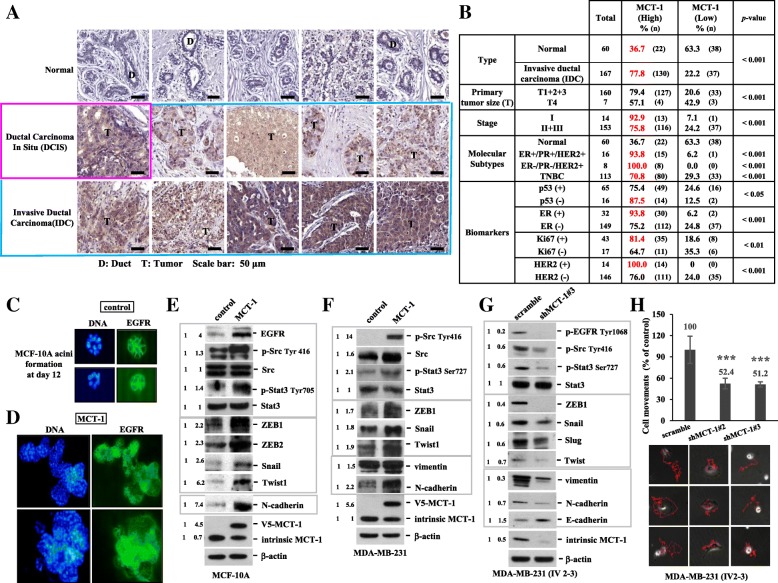
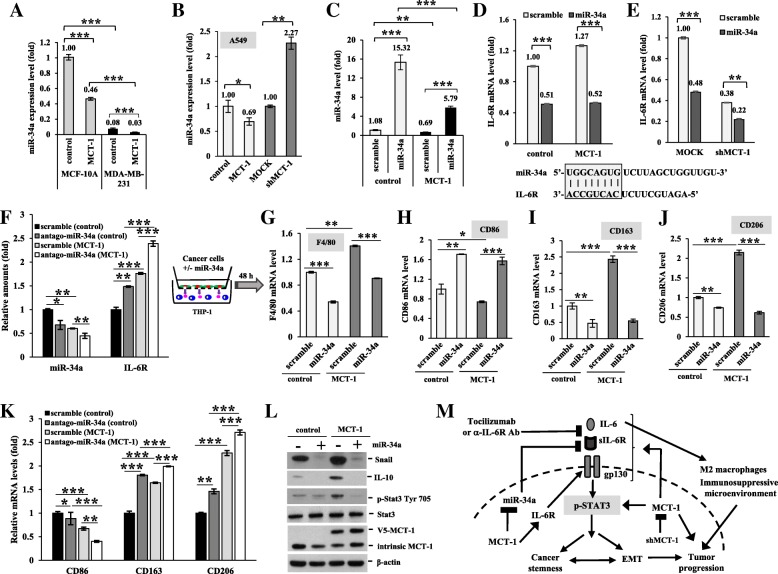
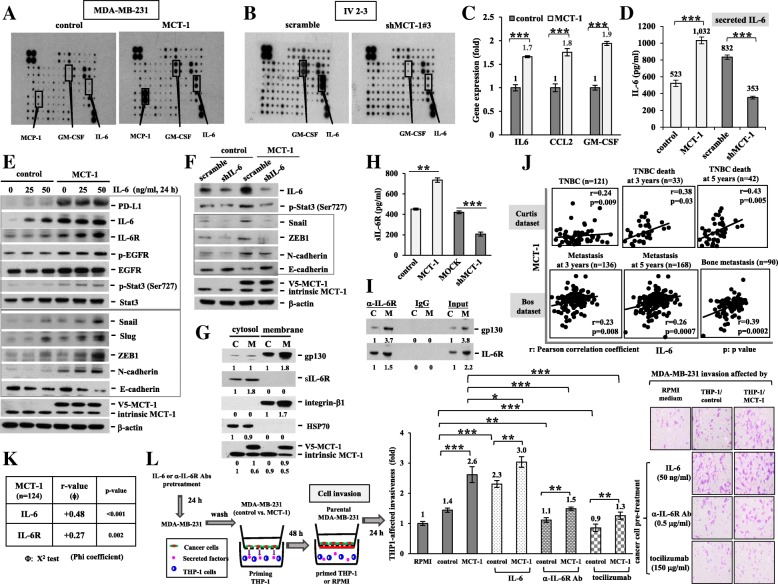
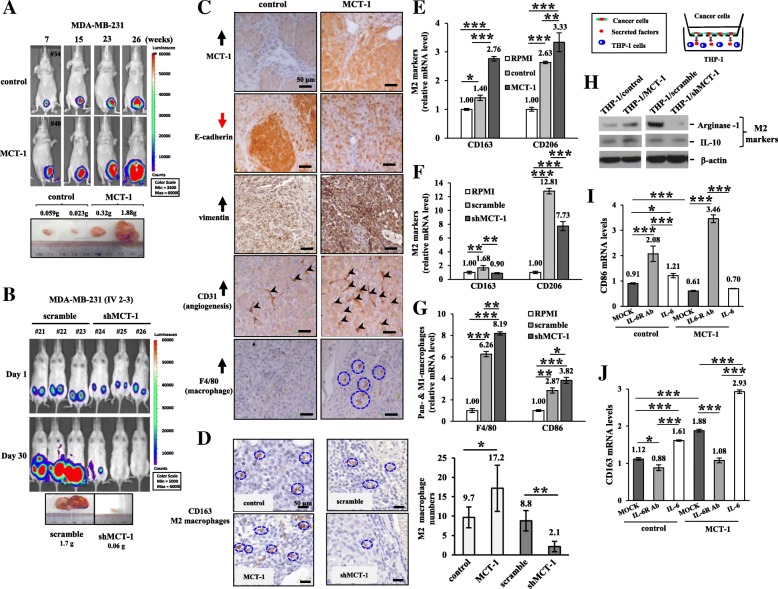
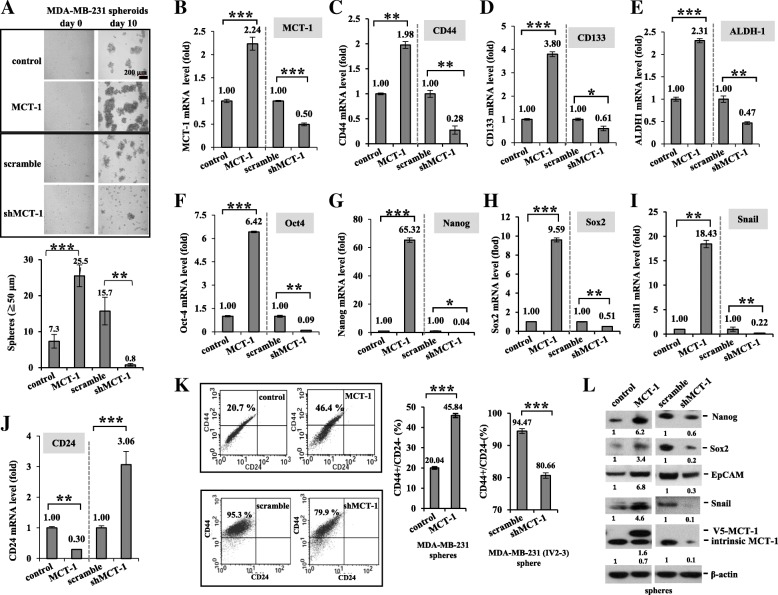
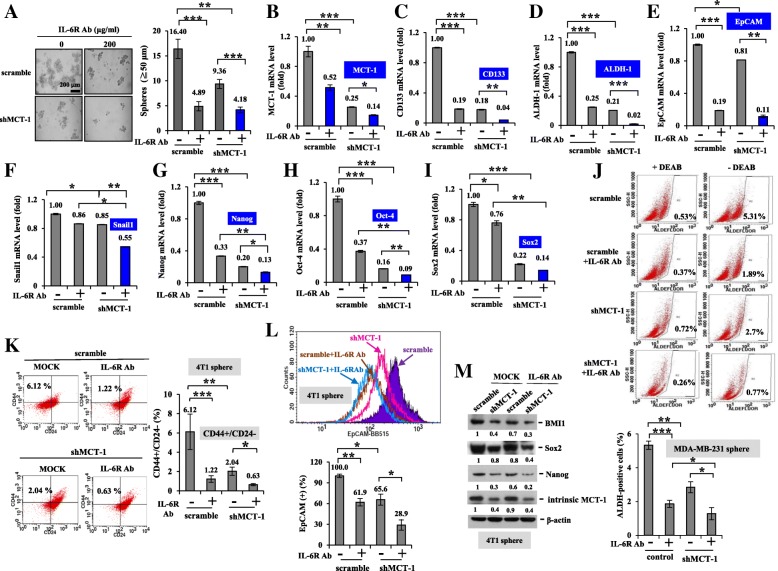
We found that the oncogene Multiple Copies in T-cell Malignancy 1 (MCT-1/MCTS1) expression is a new poor-prognosis marker in patients with aggressive breast cancers. Overexpressing MCT-1 perturbed the oncogenic breast epithelial acini morphogenesis and stimulated epithelial-mesenchymal transition and matrix metalloproteinase activation in invasive TNBC cells, which were repressed after MCT-1 gene silencing. As mammary tumor progression was promoted by oncogenic MCT-1 activation, tumor-promoting M2 macrophages were enriched in TME, whereas M2 macrophages were decreased and tumor-suppressive M1 macrophages were increased as the tumor was repressed via MCT-1 knockdown. MCT-1 stimulated interleukin-6 (IL-6) secretion that promoted monocytic THP-1 polarization into M2-like macrophages to increase TNBC cell invasiveness. In addition, MCT-1 elevated the soluble IL-6 receptor levels, and thus, IL-6R antibodies antagonized the effect of MCT-1 on promoting M2-like polarization and cancer cell invasion. Notably, MCT-1 increased the features of BCSCs, which were further advanced by IL-6 but prevented by tocilizumab, a humanized IL-6R antibody, thus MCT-1 knockdown and tocilizumab synergistically inhibited TNBC stemness. Tumor suppressor miR-34a was induced upon MCT-1 knockdown that inhibited IL-6R expression and activated M1 polarization.
The MCT-1 pathway is a novel and promising therapeutic target for TNBC.
三阴性乳腺癌(TNBC)是一种预后不良的乳腺癌,具有最高的突变率和有限的治疗选择。癌细胞与肿瘤微环境(TME)之间的细胞因子网络维持着乳腺癌干细胞(BCSCs)的自我更新亚群,这些干细胞介导肿瘤异质性、耐药性和复发。将这些因素与靶向治疗或化疗药物联合进行免疫治疗可能有利于 TNBC 的治疗。
我们发现,癌基因多拷贝在 T 细胞恶性肿瘤 1(MCT-1/MCTS1)中的表达是侵袭性乳腺癌患者的一个新的预后不良标志物。过表达 MCT-1 扰乱了致癌性乳腺上皮细胞腺泡形态发生,并刺激了侵袭性 TNBC 细胞中的上皮-间充质转化和基质金属蛋白酶激活,而这些在 MCT-1 基因沉默后被抑制。由于致癌 MCT-1 激活促进了乳腺肿瘤的进展,因此在 TME 中富集了促进肿瘤的 M2 巨噬细胞,而当通过 MCT-1 敲低抑制肿瘤时,M2 巨噬细胞减少,肿瘤抑制性 M1 巨噬细胞增加。MCT-1 刺激白细胞介素 6(IL-6)的分泌,促进单核细胞 THP-1 向 M2 样巨噬细胞极化,从而增加 TNBC 细胞的侵袭性。此外,MCT-1 升高了可溶性 IL-6 受体水平,因此,IL-6R 抗体拮抗了 MCT-1 促进 M2 样极化和癌细胞侵袭的作用。值得注意的是,MCT-1 增加了 BCSCs 的特征,而 IL-6 则进一步促进了这些特征,而托珠单抗(一种人源化的 IL-6R 抗体)则阻止了这些特征,因此 MCT-1 敲低和托珠单抗协同抑制了 TNBC 干性。MCT-1 敲低后诱导肿瘤抑制 miR-34a 的表达,抑制 IL-6R 的表达并激活 M1 极化。
MCT-1 通路是 TNBC 的一个新的有前途的治疗靶点。