Department of Physiological Sciences, College of Veterinary Medicine, Oklahoma State University, Stillwater, OK 74078.
Department of Pathobiology, College of Veterinary Medicine, Oklahoma State University, Stillwater, OK 74078.
Theranostics. 2021 Jan 1;11(2):540-554. doi: 10.7150/thno.49517. eCollection 2021.
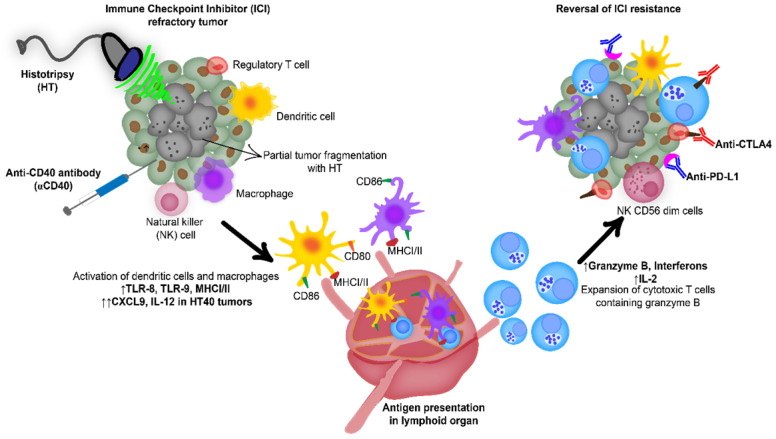
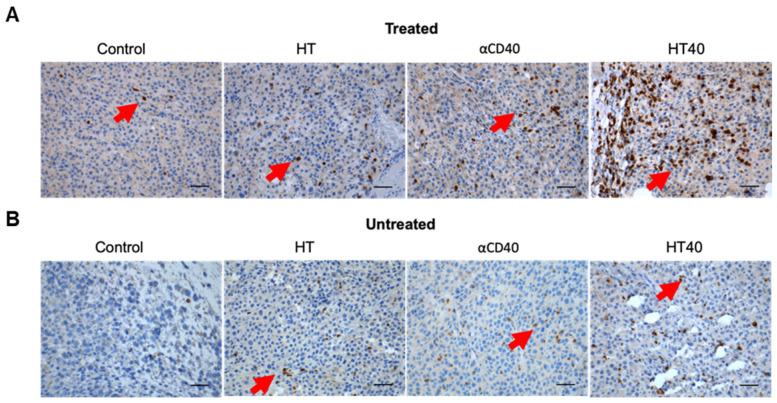
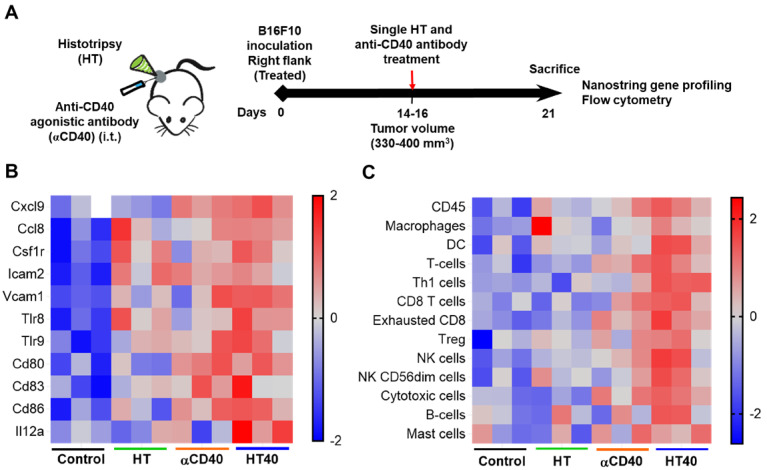
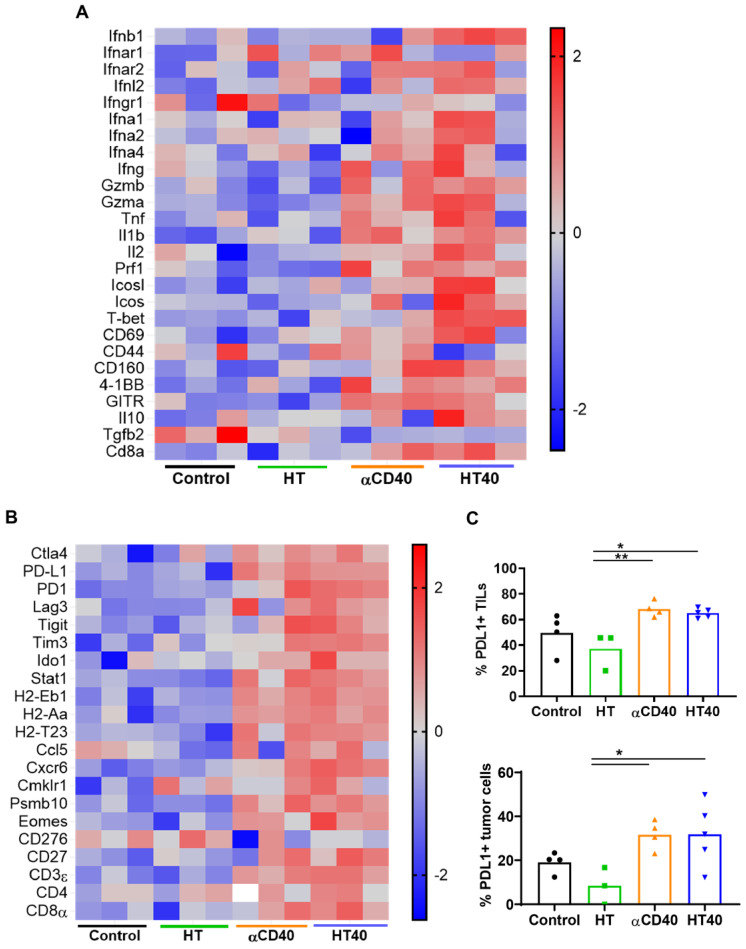
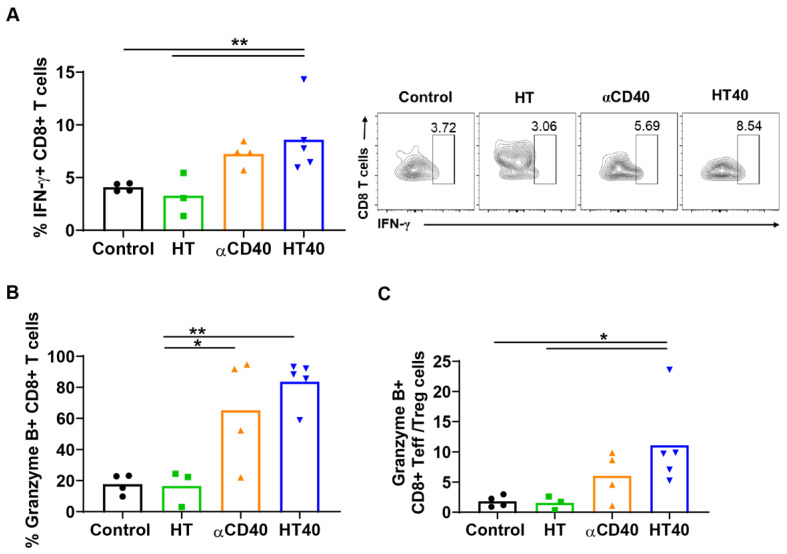
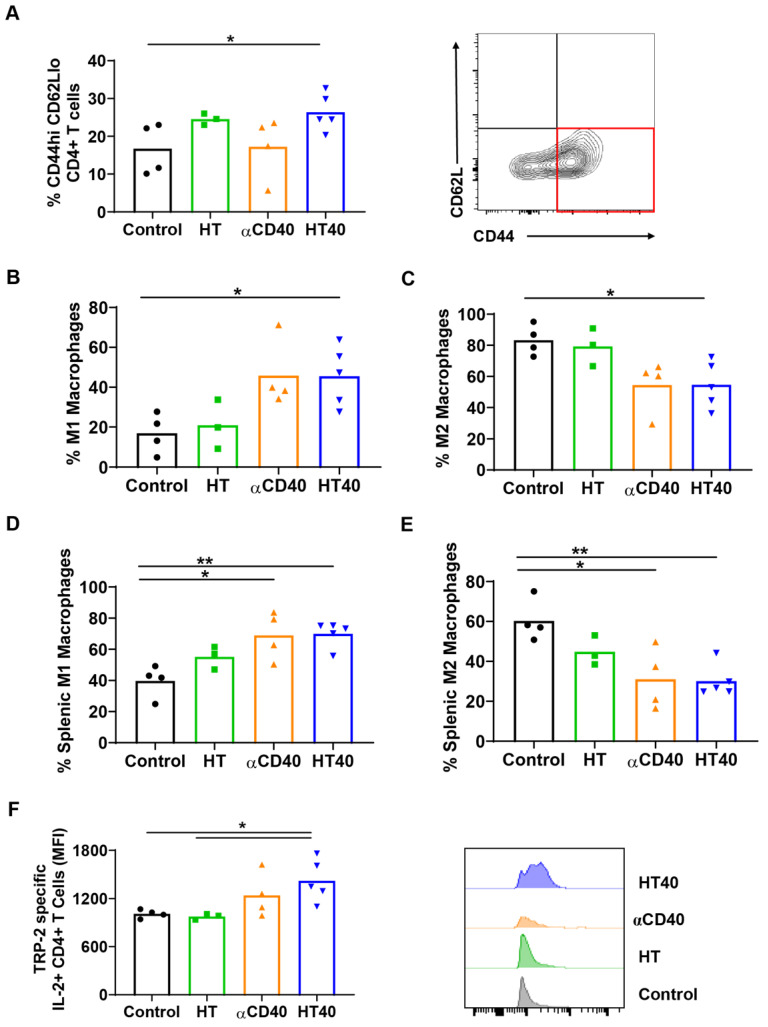
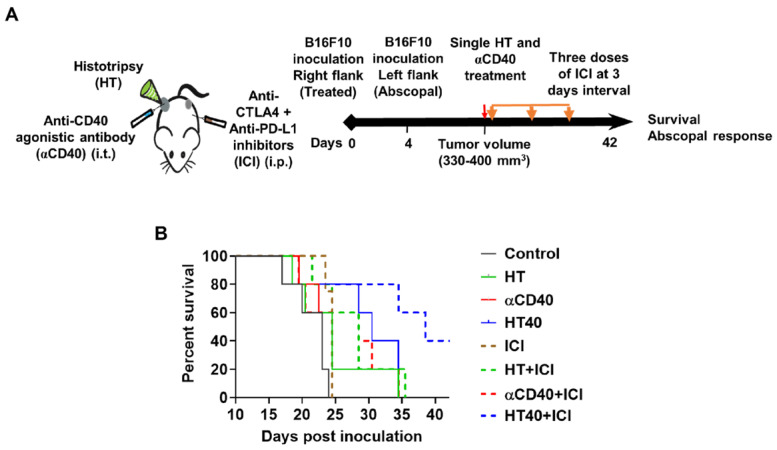
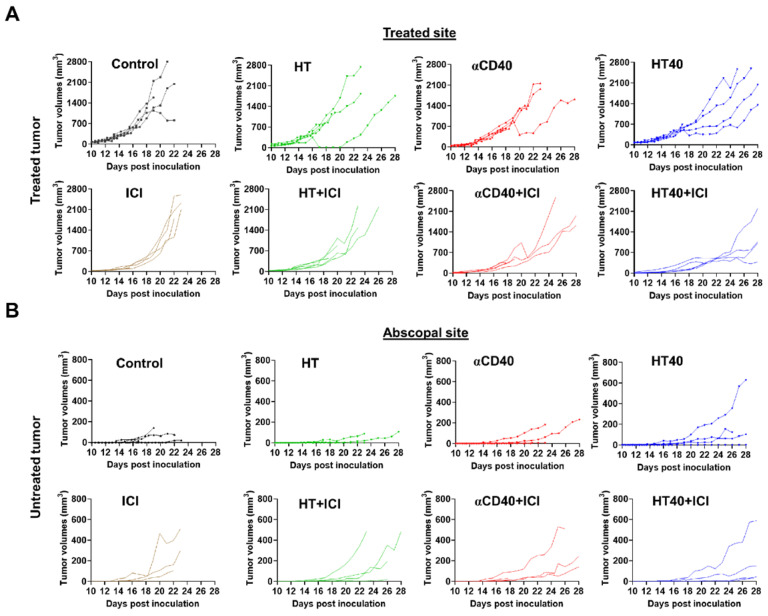
Advanced stage cancers with a suppressive tumor microenvironment (TME) are often refractory to immune checkpoint inhibitor (ICI) therapy. Recent studies have shown that focused ultrasound (FUS) TME-modulation can synergize ICI therapy, but enhancing survival outcomes in poorly immunogenic tumors remains challenging. Here, we investigated the role of focused ultrasound based boiling histotripsy (HT) and in-situ anti-CD40 agonist antibody (αCD40) combinatorial therapy in enhancing therapeutic efficacy against ICI refractory murine melanoma. Unilateral and bilateral large (330-400 mm) poorly immunogenic B16F10 melanoma tumors were established in the flank regions of mice. Tumors were exposed to single local HT followed by an in-situ administration of αCD40 (HT+ αCD40: HT40). Inflammatory signatures post treatment were assessed using pan-cancer immune profiling and flow cytometry. The ability of HT40 ± ICI to enhance local and systemic effects was determined by immunological characterization of the harvested tissues, and by tumor growth delay of local and distant untreated tumors 4-6 weeks post treatment. Immune profiling revealed that HT40 upregulated a variety of inflammatory markers in the tumors. Immunologically, HT40 treated tumors showed an increased population of granzyme B+ expressing functional CD8+ T cells (4-fold) as well as an increased M1 to M2 macrophage ratio (2-3-fold) and CD8+ T: regulatory T cell ratio (5-fold) compared to the untreated control. Systemically, the proliferation rates of the melanoma-specific memory T cell population were significantly enhanced by HT40 treatment. Finally, the combination of HT40 and ICI therapy (anti-CTLA-4 and anti-PD-L1) caused superior inhibition of distant untreated tumors, and prolonged survival rates compared to the control. Data suggest that HT40 reprograms immunologically cold tumors and sensitizes them to ICI therapy. This approach may be clinically useful for treating advanced stage melanoma cancers.
具有抑制性肿瘤微环境(TME)的晚期癌症通常对免疫检查点抑制剂(ICI)治疗具有抗性。最近的研究表明,聚焦超声(FUS)TME 调制可以与 ICI 治疗协同作用,但增强免疫原性差的肿瘤的生存结果仍然具有挑战性。在这里,我们研究了基于聚焦超声的沸腾声动力(HT)和原位抗 CD40 激动剂抗体(αCD40)联合治疗在增强对 ICI 耐药的小鼠黑色素瘤治疗效果中的作用。在小鼠的侧腹区域建立了单侧和双侧大(~330-400mm)免疫原性差的 B16F10 黑色素瘤肿瘤。肿瘤接受单次局部 HT 治疗,然后进行原位 αCD40 给药(HT+αCD40:HT40)。用泛癌症免疫分析和流式细胞术评估治疗后的炎症特征。通过收获组织的免疫学特征,以及治疗后 4-6 周局部和未治疗远处肿瘤的生长延迟,确定 HT40±ICI 增强局部和全身效应的能力。免疫分析显示,HT40 上调了肿瘤中的多种炎症标志物。免疫方面,与未处理的对照组相比,HT40 处理的肿瘤显示出表达功能性 CD8+T 细胞的 granzyme B+细胞群体增加(约 4 倍),M1 到 M2 巨噬细胞比值增加(约 2-3 倍),CD8+T 细胞:调节性 T 细胞比值增加(约 5 倍)。系统地,HT40 处理显著增强了黑色素瘤特异性记忆 T 细胞群体的增殖率。最后,HT40 和 ICI 治疗(抗 CTLA-4 和抗 PD-L1)的组合导致对未处理的远处肿瘤的抑制作用优于对照组,并延长了生存率。数据表明,HT40 重新编程免疫冷肿瘤,并使其对 ICI 治疗敏感。这种方法可能对治疗晚期黑色素瘤癌症具有临床意义。