Department of Otolaryngology-Head and Neck Surgery, Baylor College of Medicine, Houston, TX, USA.
Interdepartmental Program in Translational Biology and Molecular Medicine, Houston, TX, USA.
J Immunother Cancer. 2019 Aug 13;7(1):216. doi: 10.1186/s40425-019-0698-6.
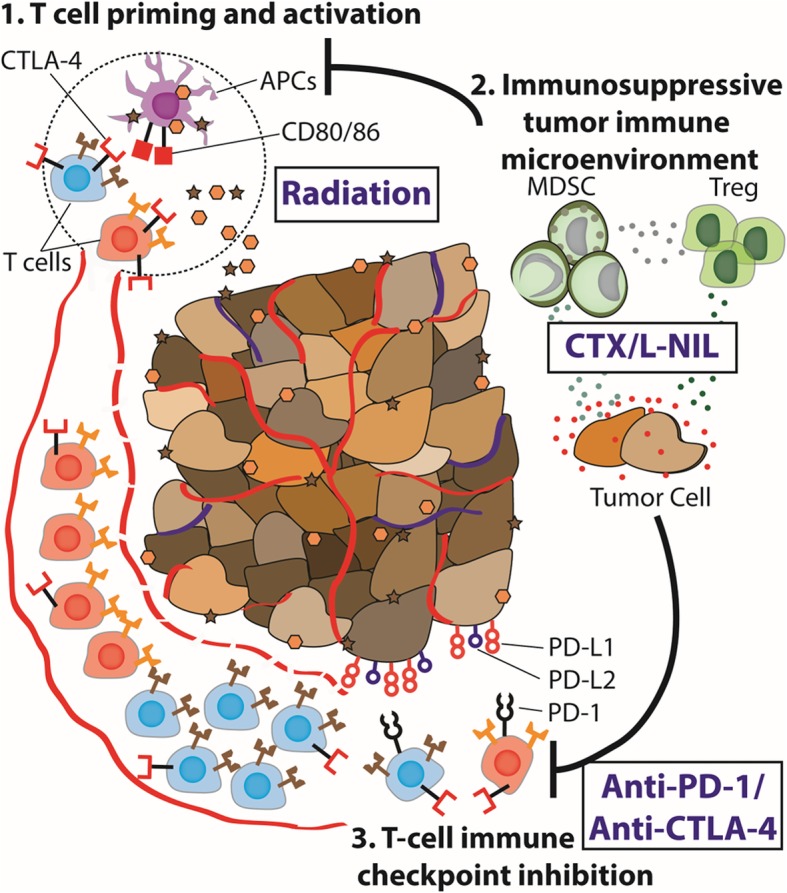
Immune checkpoint inhibitors (ICIs) for solid tumors, including those targeting programmed cell death 1 (PD-1) and cytotoxic T lymphocyte-associated antigen 4 (CTLA-4), have shown impressive clinical efficacy, however, most patients do not achieve durable responses. One major therapeutic obstacle is the immunosuppressive tumor immune microenvironment (TIME). Thus, we hypothesized that a strategy combining tumor-directed radiation with TIME immunomodulation could improve ICI response rates in established solid tumors.
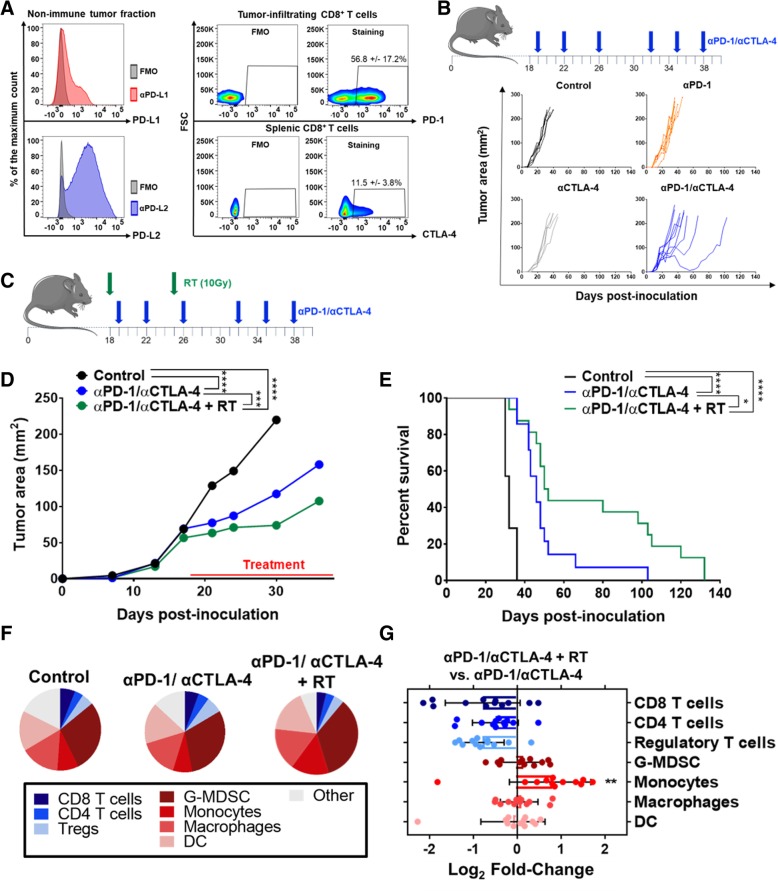
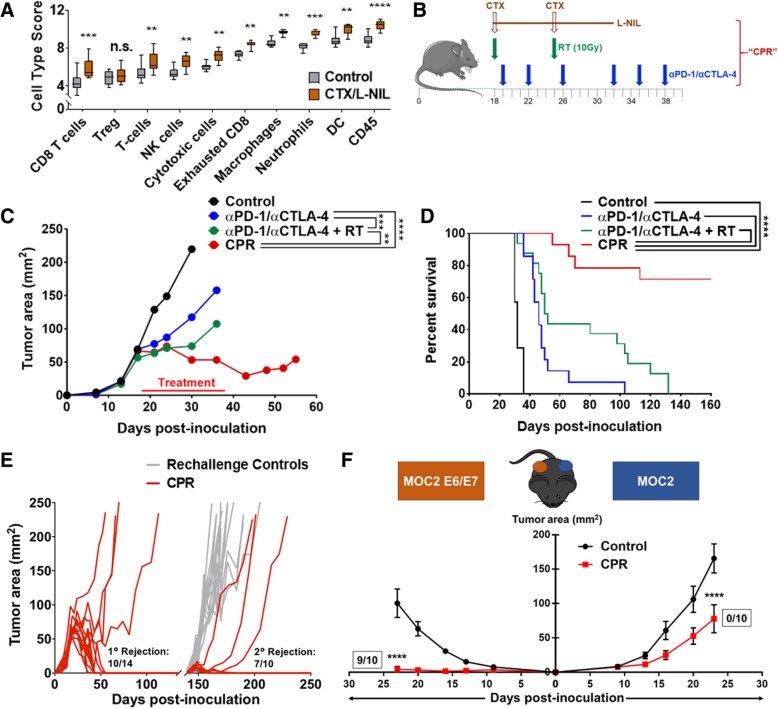
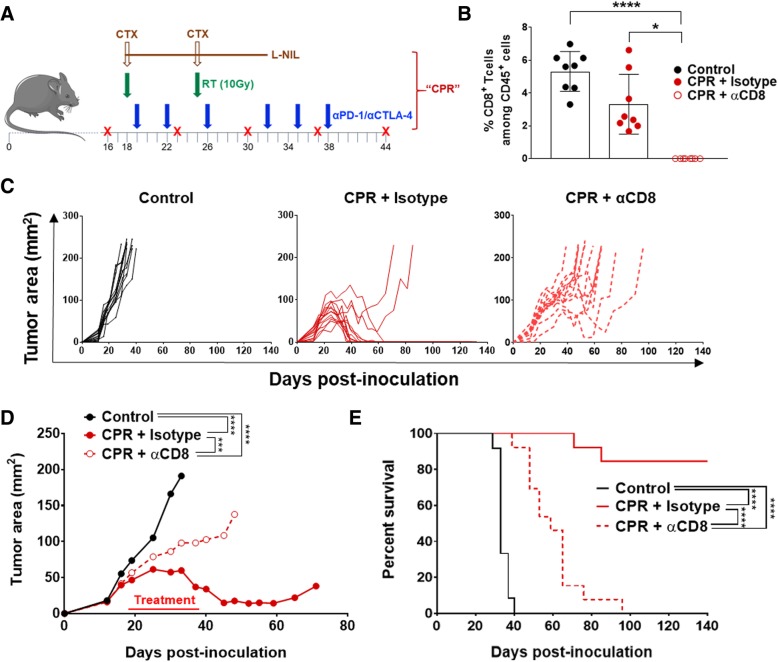
Using a syngeneic mouse model of human papillomavirus (HPV)-associated head and neck cancer, mEER, we developed a maximally effective regimen combining PD-1 and CTLA-4 inhibition, tumor-directed radiation, and two existing immunomodulatory drugs: cyclophosphamide (CTX) and a small-molecule inducible nitric oxide synthase (iNOS) inhibitor, L-n6-(1-iminoethyl)-lysine (L-NIL). We compared the effects of the various combinations of this regimen on tumor growth, overall survival, establishment of immunologic memory, and immunologic changes with flow cytometry and quantitative multiplex immunofluorescence.
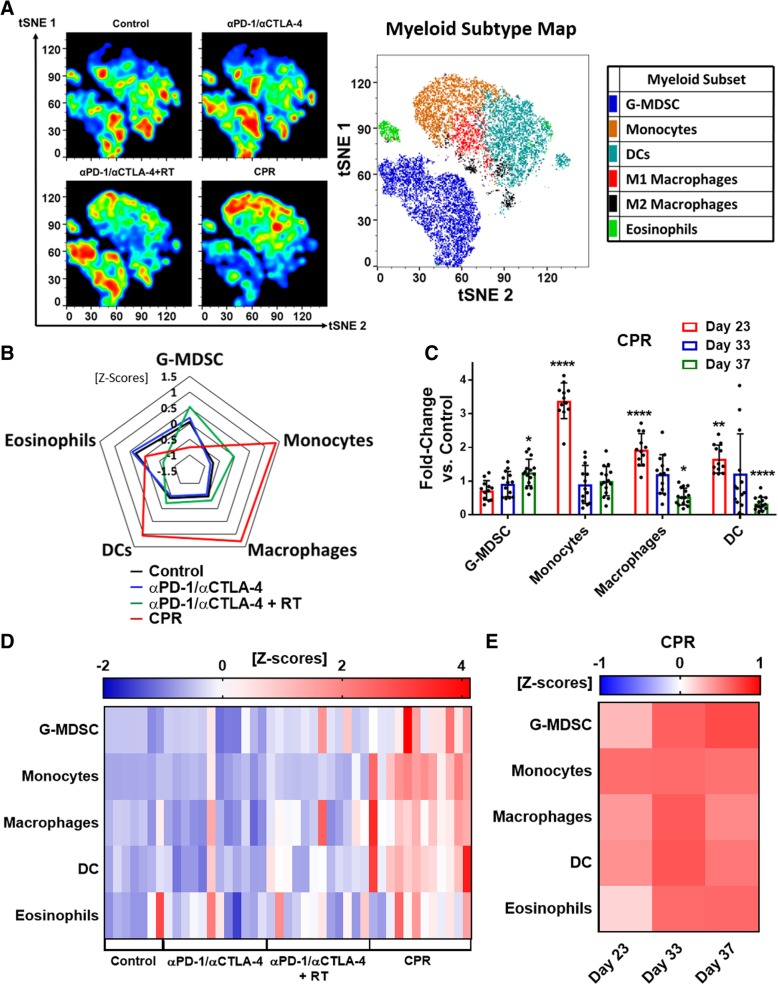
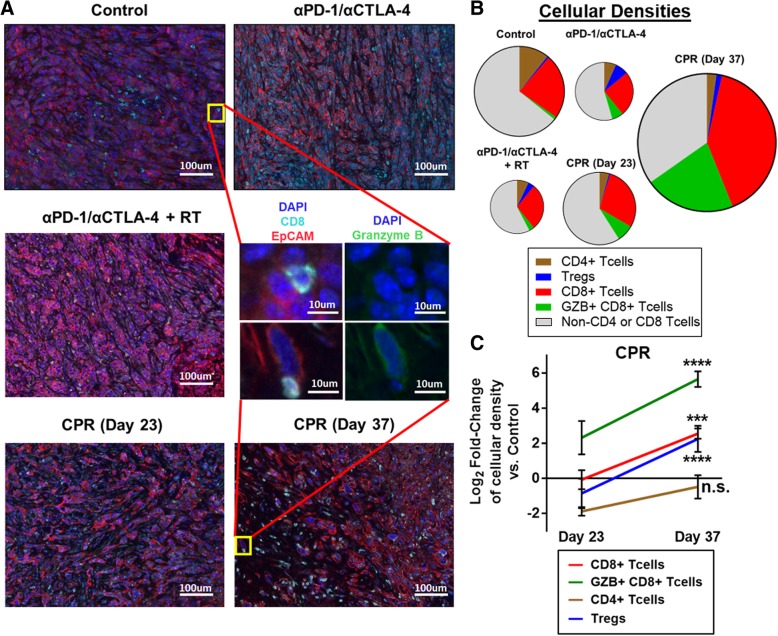
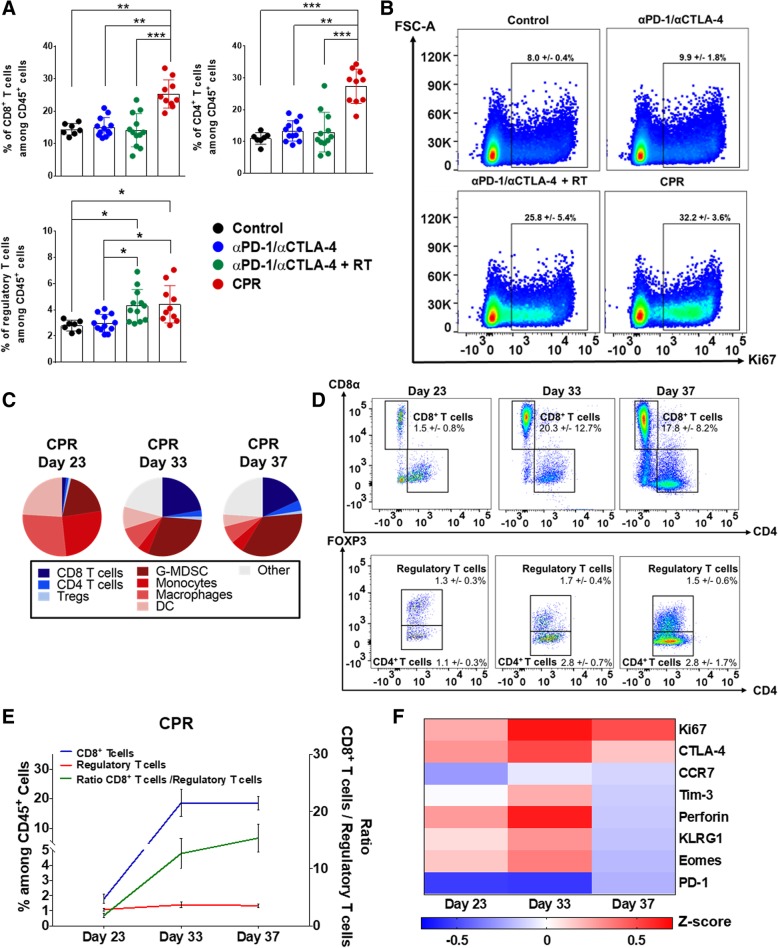
We found PD-1 and CTLA-4 blockade, and radiotherapy alone or in combination, incapable of clearing established tumors or reversing the unfavorable balance of effector to suppressor cells in the TIME. However, modulation of the TIME with cyclophosphamide (CTX) and L-NIL in combination with dual checkpoint inhibition and radiation led to rejection of over 70% of established mEER tumors and doubled median survival in the B16 melanoma model. Anti-tumor activity was CD8 T cell-dependent and led to development of immunologic memory against tumor-associated HPV antigens. Immune profiling revealed that CTX/L-NIL induced remodeling of myeloid cell populations in the TIME and tumor-draining lymph node and drove subsequent activation and intratumoral infiltration of CD8 effector T cells.
Overall, this study demonstrates that modulation of the immunosuppressive TIME is required to unlock the benefits of ICIs and radiotherapy to induce immunologic rejection of treatment-refractory established solid tumors.
针对实体瘤的免疫检查点抑制剂(ICIs),包括针对程序性细胞死亡 1(PD-1)和细胞毒性 T 淋巴细胞相关抗原 4(CTLA-4)的抑制剂,已经显示出令人印象深刻的临床疗效,然而,大多数患者无法获得持久的反应。一个主要的治疗障碍是免疫抑制性肿瘤免疫微环境(TIME)。因此,我们假设将肿瘤靶向放疗与 TIME 免疫调节相结合的策略可以提高已建立的实体瘤对 ICI 的反应率。
我们使用人乳头瘤病毒(HPV)相关头颈部癌的同源小鼠模型 mEER,开发了一种联合 PD-1 和 CTLA-4 抑制、肿瘤靶向放疗以及两种现有免疫调节药物的最有效方案:环磷酰胺(CTX)和一种小分子诱导型一氧化氮合酶(iNOS)抑制剂 L-n6-(1-亚氨基乙基)-赖氨酸(L-NIL)。我们比较了该方案的各种组合对肿瘤生长、总生存期、免疫记忆的建立以及通过流式细胞术和定量多重免疫荧光术进行的免疫变化的影响。
我们发现 PD-1 和 CTLA-4 阻断以及单独或联合使用放疗均无法清除已建立的肿瘤或逆转 TIME 中效应细胞与抑制细胞之间的不利平衡。然而,用环磷酰胺(CTX)和 L-NIL 调节 TIME,与双重检查点抑制和放疗相结合,导致超过 70%的已建立 mEER 肿瘤被排斥,并且在 B16 黑色素瘤模型中中位生存期延长一倍。抗肿瘤活性是 CD8 T 细胞依赖性的,并导致针对肿瘤相关 HPV 抗原的免疫记忆的发展。免疫分析显示,CTX/L-NIL 诱导 TIME 中髓样细胞群和肿瘤引流淋巴结的重塑,并驱动随后 CD8 效应 T 细胞的激活和肿瘤内浸润。
总体而言,这项研究表明,调节免疫抑制性 TIME 是解锁 ICI 和放疗的益处以诱导对治疗抵抗的已建立实体瘤的免疫排斥所必需的。