Tranlational Oncology Group, Center for Tumor Biology and Immunology, Philipps University, Marburg, Germany.
Present address: Hochschule Landshut, 84036 Landshut, Germany.
Theranostics. 2021 Jan 1;11(3):1377-1395. doi: 10.7150/thno.52442. eCollection 2021.
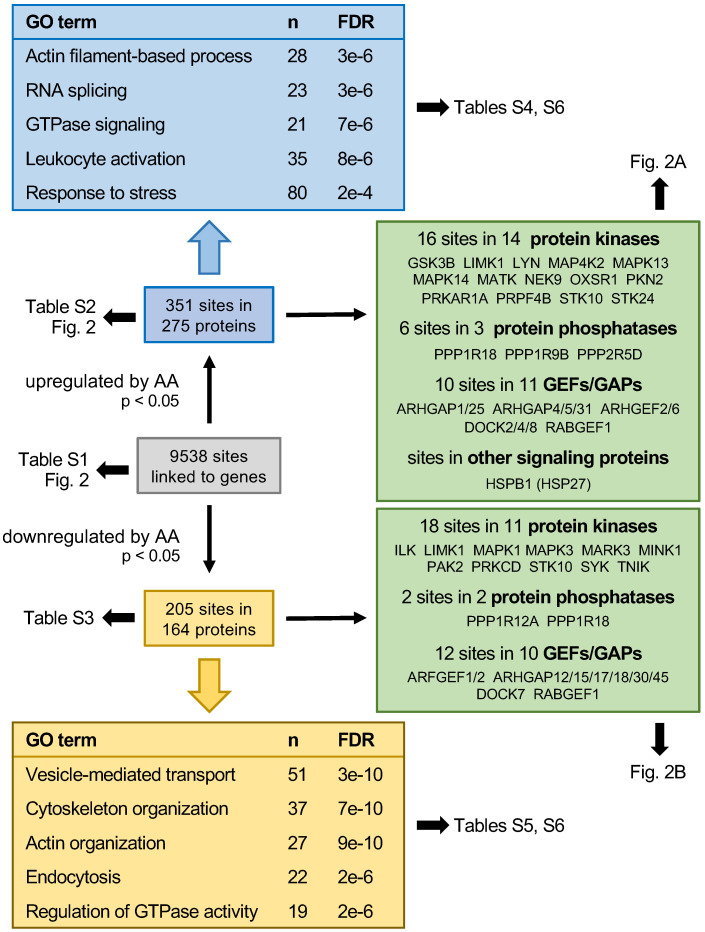
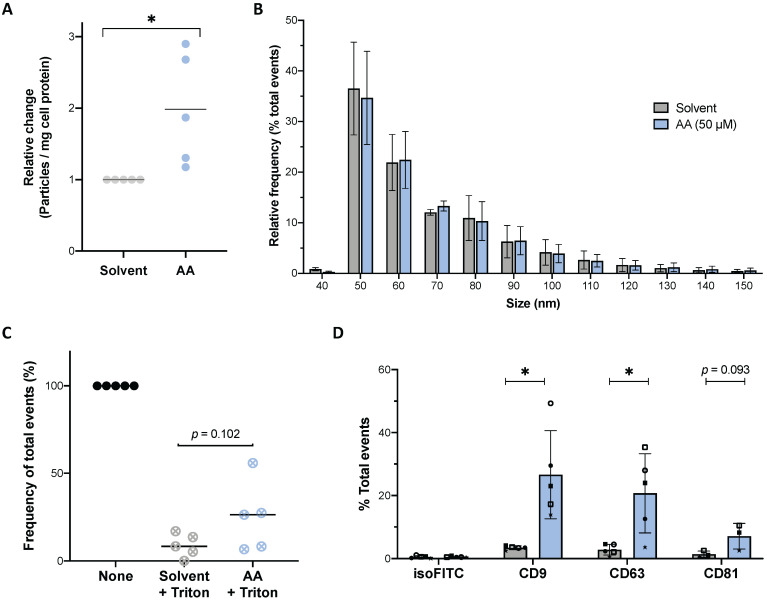
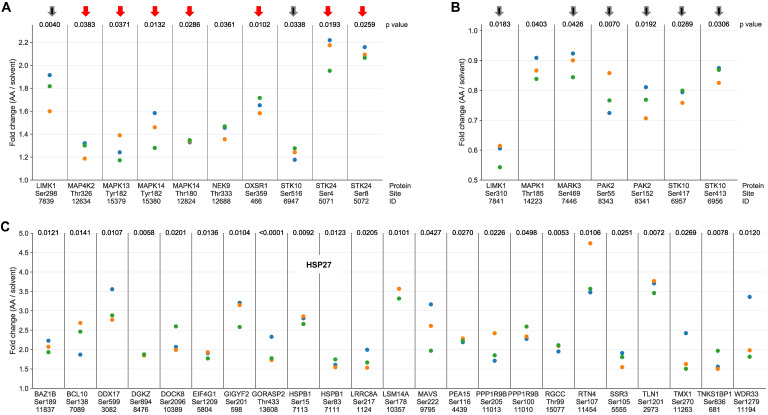
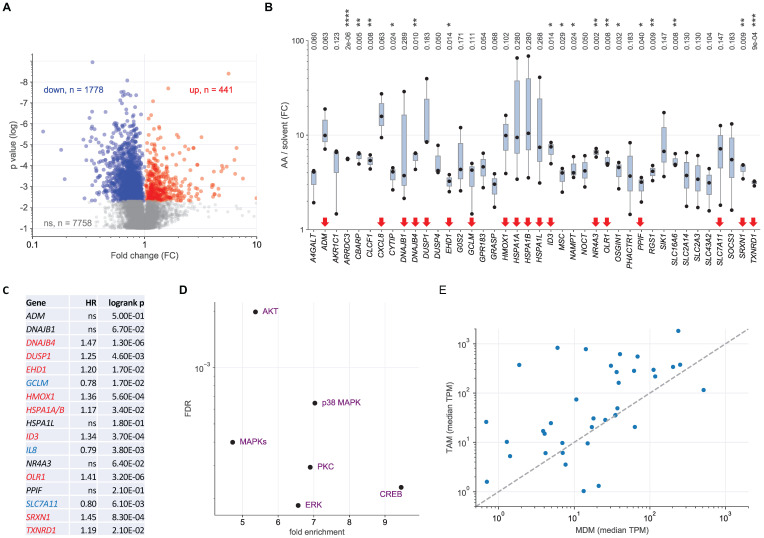
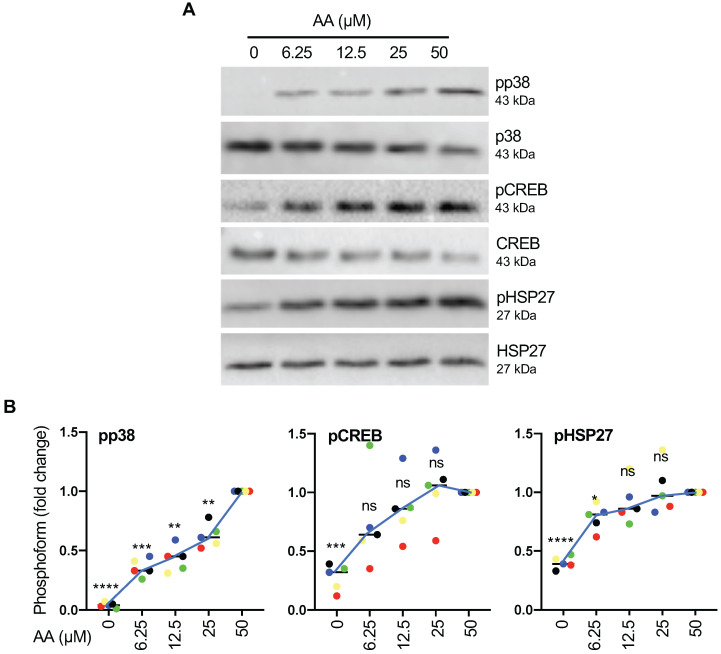
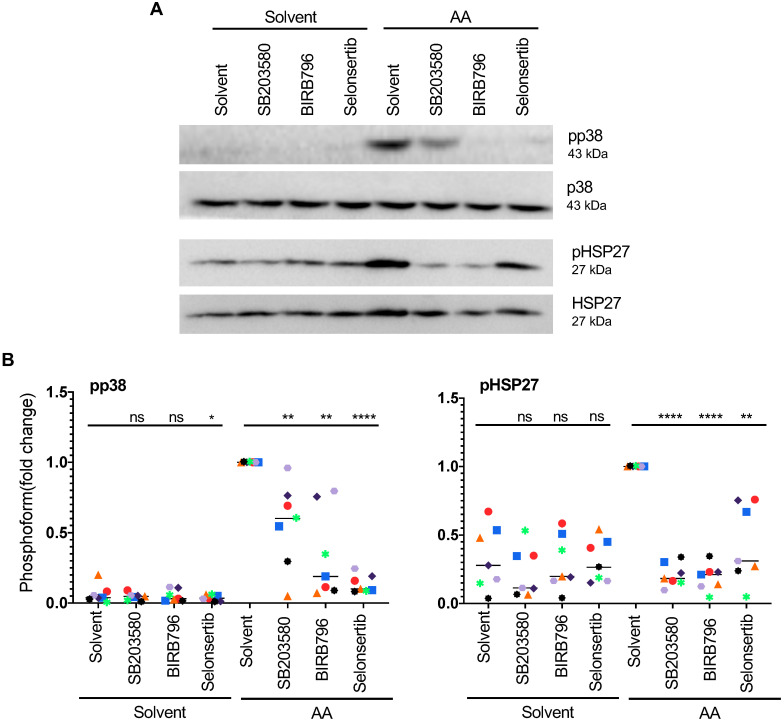
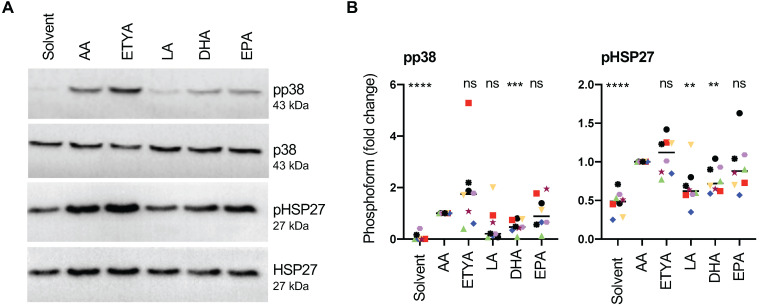
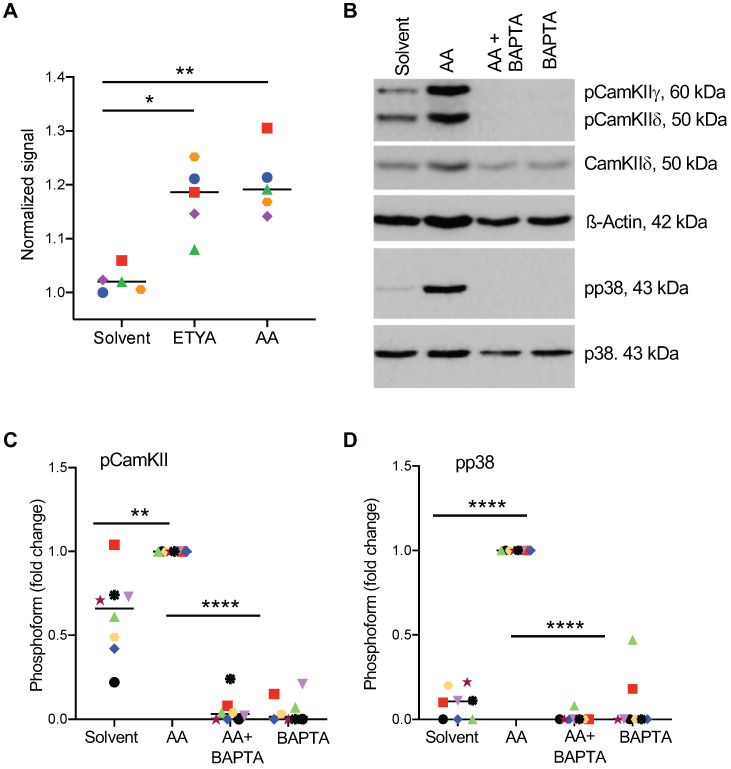
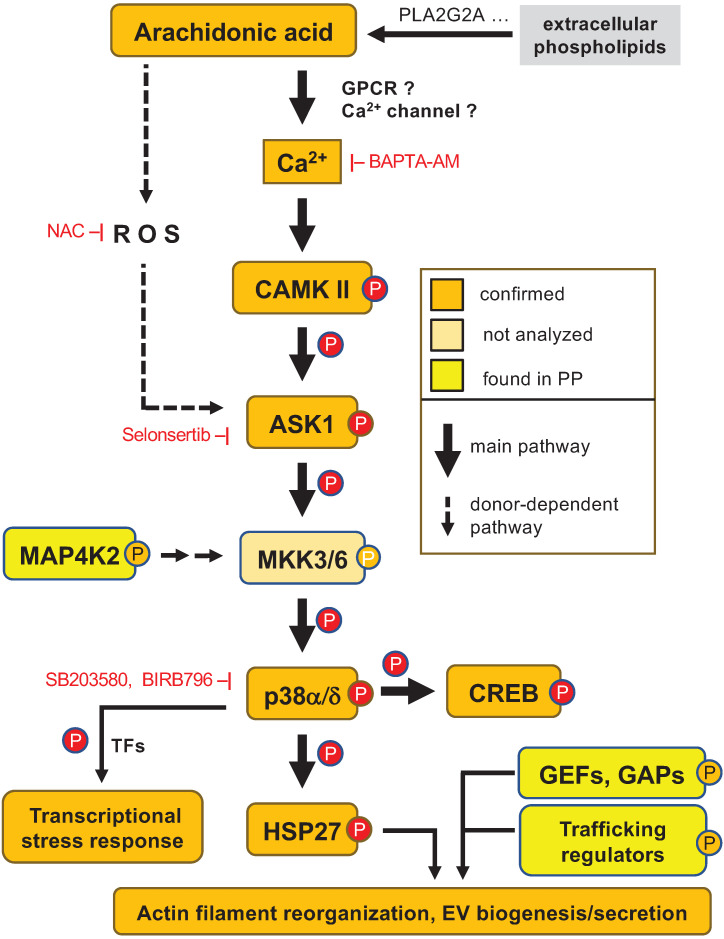
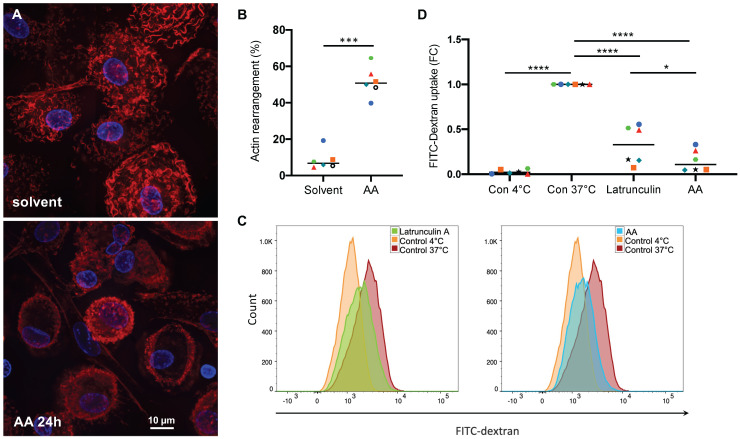
Arachidonic acid (AA) is a polyunsaturated fatty acid present at high concentrations in the ovarian cancer (OC) microenvironment and associated with a poor clinical outcome. In the present study, we have unraveled a potential link between AA and macrophage functions. AA-triggered signal transduction was studied in primary monocyte-derived macrophages (MDMs) by phosphoproteomics, transcriptional profiling, measurement of intracellular Ca accumulation and reactive oxygen species production in conjunction with bioinformatic analyses. Functional effects were investigated by actin filament staining, quantification of macropinocytosis and analysis of extracellular vesicle release. We identified the ASK1 - p38δ/α (MAPK13/14) axis as a central constituent of signal transduction pathways triggered by non-metabolized AA. This pathway was induced by the Ca-triggered activation of calmodulin kinase II, and to a minor extent by ROS generation in a subset of donors. Activated p38 in turn was linked to a transcriptional stress response associated with a poor relapse-free survival. Consistent with the phosphorylation of the p38 substrate HSP27 and the (de)phosphorylation of multiple regulators of Rho family GTPases, AA impaired actin filament organization and inhibited actin-driven macropinocytosis. AA also affected the phosphorylation of proteins regulating vesicle biogenesis, and consistently, AA enhanced the release of tetraspanin-containing exosome-like vesicles. Finally, we identified phospholipase A group 2A (PLA2G2A) as the clinically most relevant enzyme producing extracellular AA, providing further potentially theranostic options. Our results suggest that AA contributes to an unfavorable clinical outcome of OC by impacting the phenotype of tumor-associated macrophages. Besides critical AA-regulated signal transduction proteins identified in the present study, PLA2G2A might represent a potential prognostic tool and therapeutic target to interfere with OC progression.
花生四烯酸(AA)是一种多不饱和脂肪酸,在卵巢癌(OC)微环境中浓度很高,与不良的临床结果相关。在本研究中,我们揭示了 AA 与巨噬细胞功能之间的潜在联系。通过磷酸蛋白质组学、转录谱分析、细胞内 Ca 积累和活性氧(ROS)产生的测量以及生物信息学分析,研究了 AA 触发的初级单核细胞衍生巨噬细胞(MDM)中的信号转导。通过肌动蛋白丝染色、巨胞饮作用的定量和细胞外囊泡(EV)释放分析研究了功能效应。我们确定了 ASK1-p38δ/α(MAPK13/14)轴作为非代谢 AA 触发的信号转导途径的核心组成部分。该途径是由 Ca 触发的钙调蛋白激酶 II 的激活引起的,在一部分供体中,ROS 的产生也起到次要作用。激活的 p38 转而与与无复发生存率差相关的转录应激反应相关联。与 p38 底物 HSP27 的磷酸化以及 Rho 家族 GTPase 多个调节剂的(去)磷酸化一致,AA 破坏了肌动蛋白丝组织并抑制了肌动蛋白驱动的巨胞饮作用。AA 还影响调节囊泡生物发生的蛋白质的磷酸化,并且一致地,AA 增强了包含四跨膜蛋白的外泌体样囊泡的释放。最后,我们确定了磷脂酶 A2 组 2A(PLA2G2A)为产生细胞外 AA 的最相关的临床酶,为进一步的治疗选择提供了依据。我们的研究结果表明,AA 通过影响肿瘤相关巨噬细胞的表型,导致 OC 的临床预后不良。除了本研究中鉴定的关键 AA 调节信号转导蛋白外,PLA2G2A 可能代表一种潜在的预后工具和治疗靶点,以干扰 OC 的进展。