Yuan Yin, Huang Feng, Gao Zhong-Hai, Cai Wen-Chao, Xiao Jia-Xin, Yang Yue-Er, Zhu Peng-Li
Department of Geriatric Medicine, Fujian Provincial Hospital, Fuzhou 350001, Fujian Province, China.
Department of Ophthalmology, Fujian Provincial Hospital, Fuzhou 350001, Fujian Province, China.
World J Clin Cases. 2020 Dec 26;8(24):6487-6498. doi: 10.12998/wjcc.v8.i24.6487.
Acquired prosopagnosia is a rare condition characterized by the loss of familiarity with previously known faces and the inability to recognize new ones. It usually occurs after the onset of brain lesions such as in a stroke. The initial identification of prosopagnosia generally relies on a patient's self-report, which can be challenging if it lacks an associated chief complaint. There were few cases of prosopagnosia presenting purely as eye symptoms in the previous literature confirmed by functional magnetic resonance imaging (MRI).
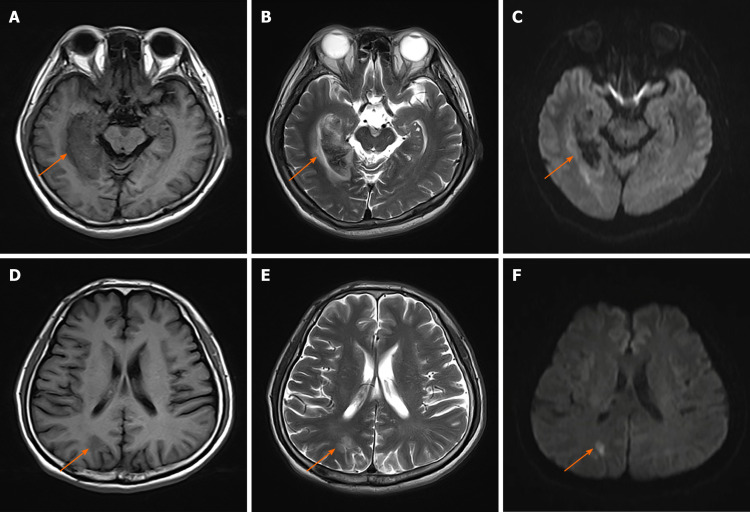
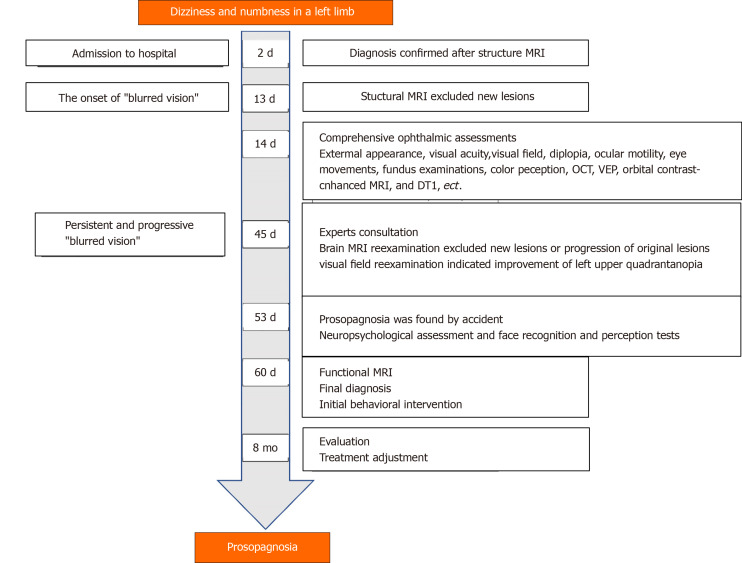
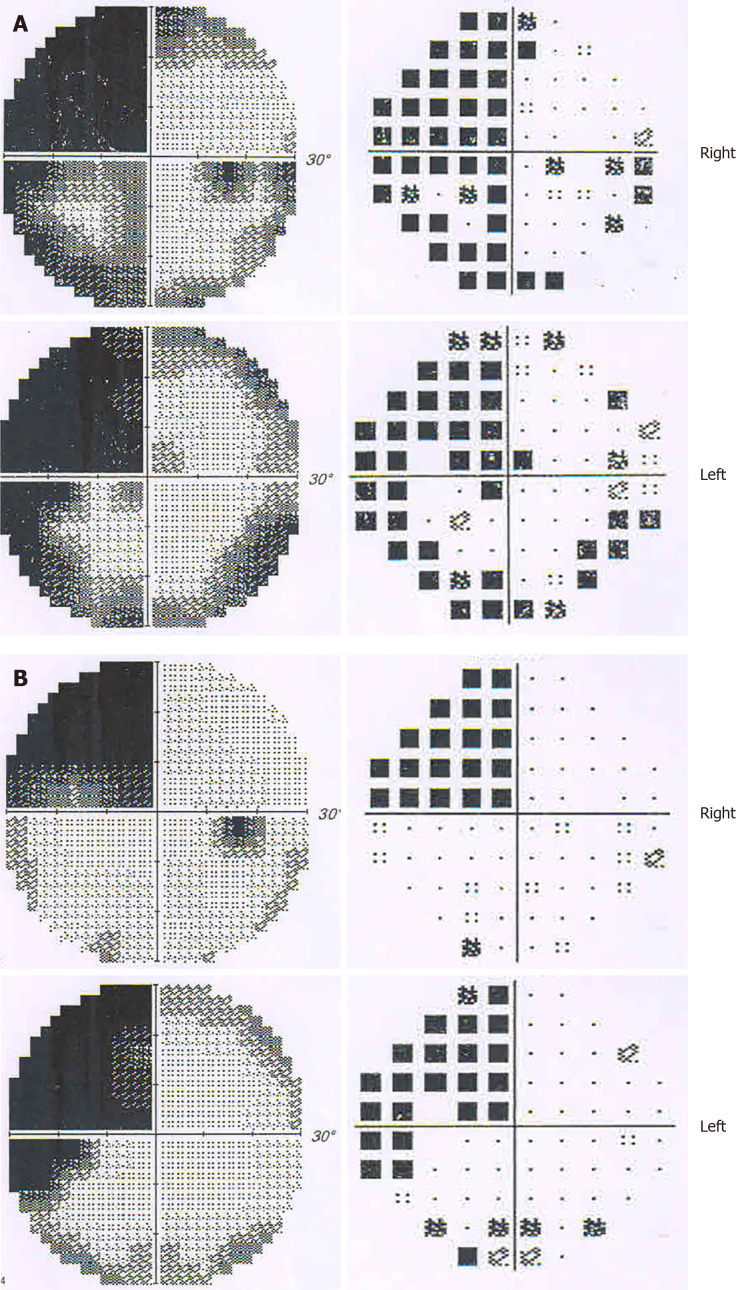
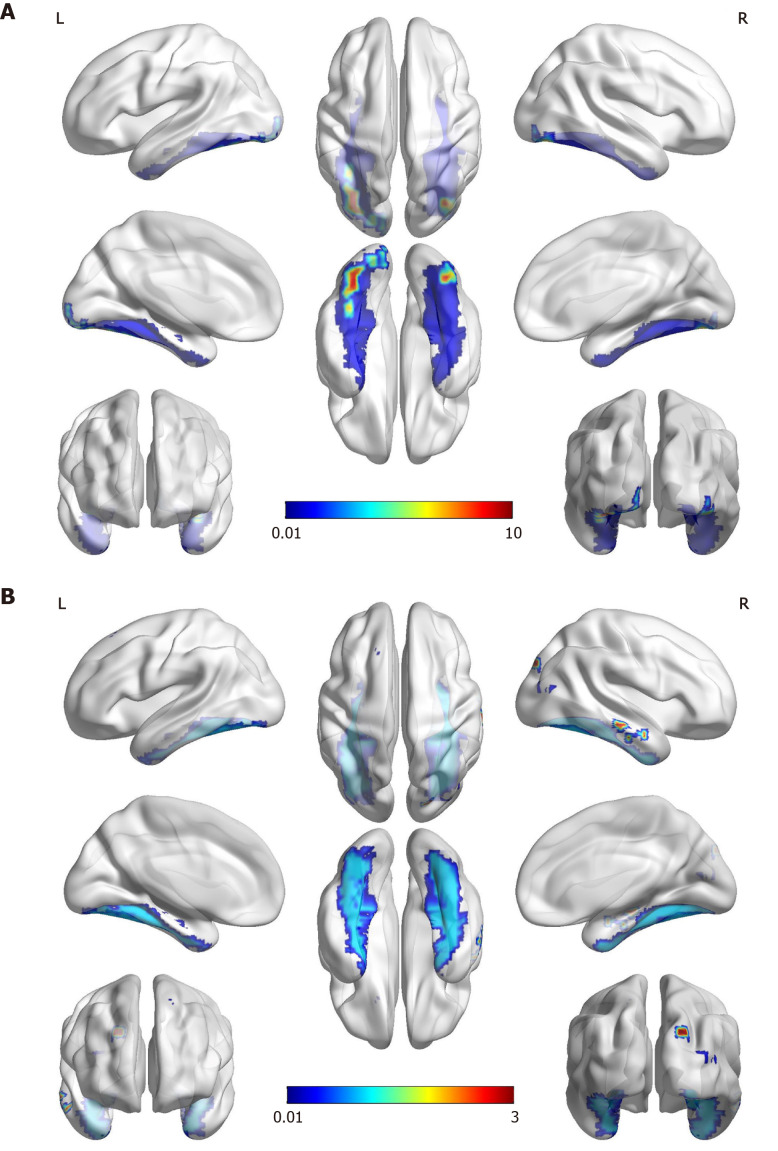
We present a case of delayed diagnosis of prosopagnosia after a right hemisphere stroke in an elderly man whose chief complaint was persistent and progressive "blurred vision" without facial recognition impairment. Ophthalmic tests revealed a homonymous left upper quadrantanopia, with normal visual acuity. He was found by accident to barely recognize familiar faces. The patient showed severe deficit in face recognition and perception tests, and mild memory loss in neuropsychological assessments. Further functional MRI revealed the visual recognition deficits were face-specific. After behavioral intervention, the patient started to rely on other cues to compensate for poor facial recognition. His prosopagnosia showed no obvious improvement eight months after the stroke, which had negative impact on his social network.
Our case demonstrates that the presentation of prosopagnosia can be atypical, and visual difficulties might be a clinical manifestation solely of prosopagnosia, which emphasizes the importance of routinely considering face recognition impairment among elderly patients with brain lesions.
获得性面孔失认症是一种罕见病症,其特征为对先前熟悉的面孔失去熟悉感且无法识别新面孔。它通常在脑损伤(如中风)发作后出现。面孔失认症的初步诊断通常依赖患者的自我报告,如果缺乏相关的主要症状,这可能具有挑战性。以往文献中经功能磁共振成像(MRI)证实的纯粹以眼部症状表现的面孔失认症病例很少。
我们报告一例老年男性患者,在右侧半球中风后出现面孔失认症延迟诊断的情况。其主要症状是持续且进行性的“视力模糊”,无面部识别障碍。眼科检查显示左眼同向性象限盲,视力正常。偶然发现他几乎无法识别熟悉的面孔。患者在面部识别和感知测试中表现出严重缺陷,在神经心理学评估中存在轻度记忆丧失。进一步的功能MRI显示视觉识别缺陷是面部特异性的。经过行为干预后,患者开始依靠其他线索来弥补面部识别能力差的问题。中风八个月后,他的面孔失认症没有明显改善,这对他的社交网络产生了负面影响。
我们的病例表明,面孔失认症的表现可能不典型,视觉困难可能仅是面孔失认症的一种临床表现,这强调了在患有脑损伤的老年患者中常规考虑面部识别障碍的重要性。