Stein Eye Institute, University of California, Los Angeles, United States.
Department of Engineering Mechanics, Dalian University of Technology, Dalian, China.
Invest Ophthalmol Vis Sci. 2021 Jan 4;62(1):1. doi: 10.1167/iovs.62.1.1.
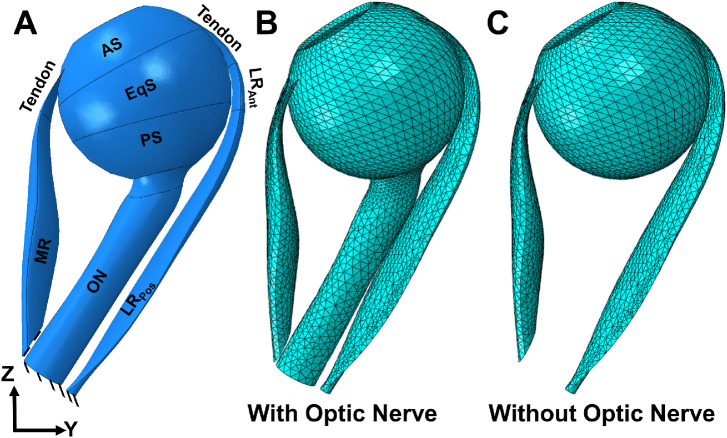
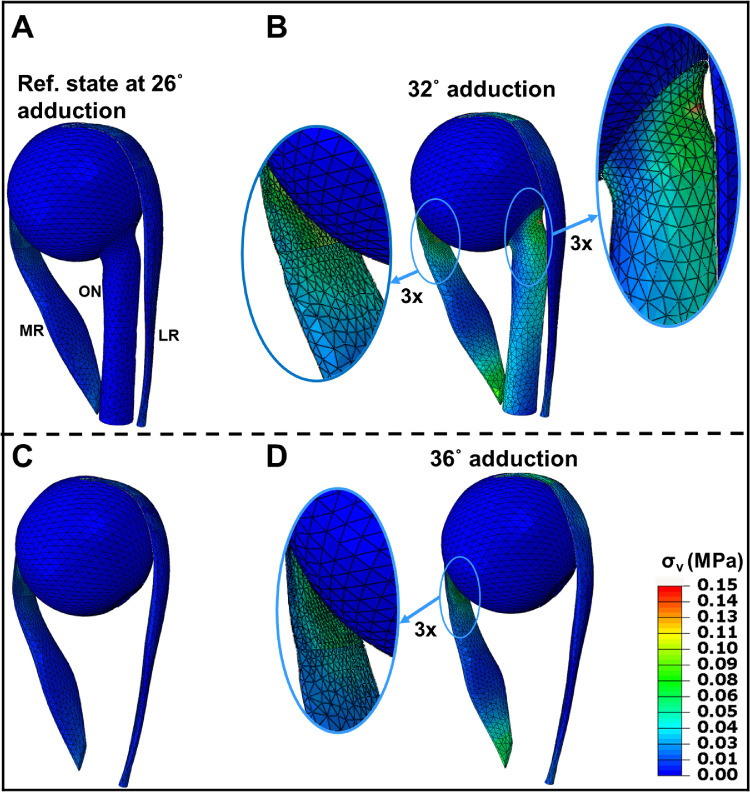
In order to clarify the role of the optic nerve (ON) as a load on ocular rotation, we developed a finite element model (FEM) of incremental adduction induced by active contractility of extraocular muscles (EOMs), with and without tethering by the ON.
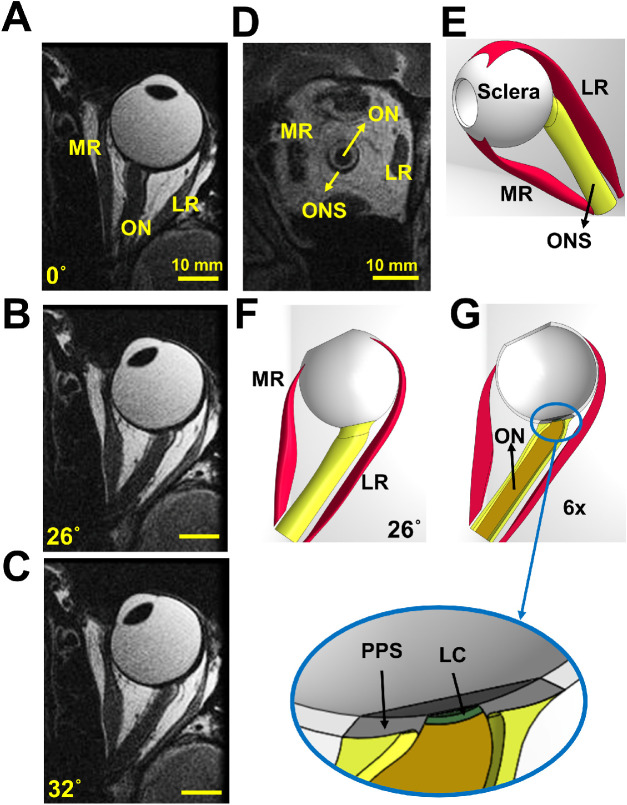
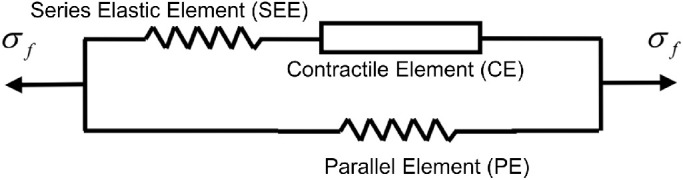
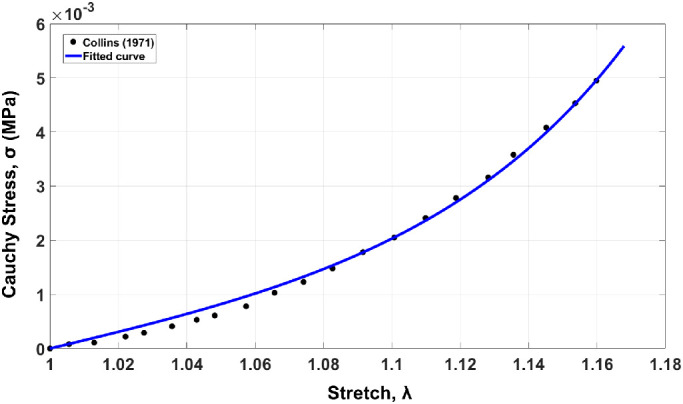
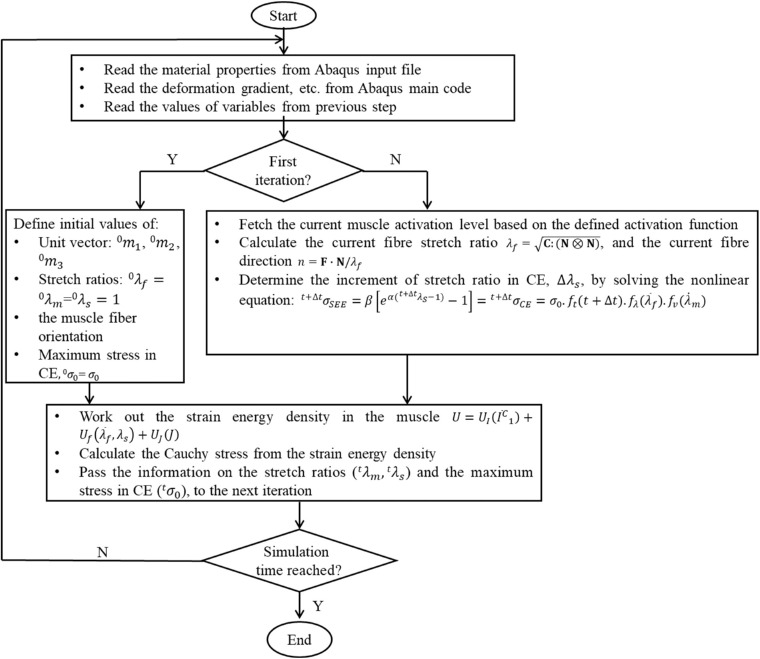
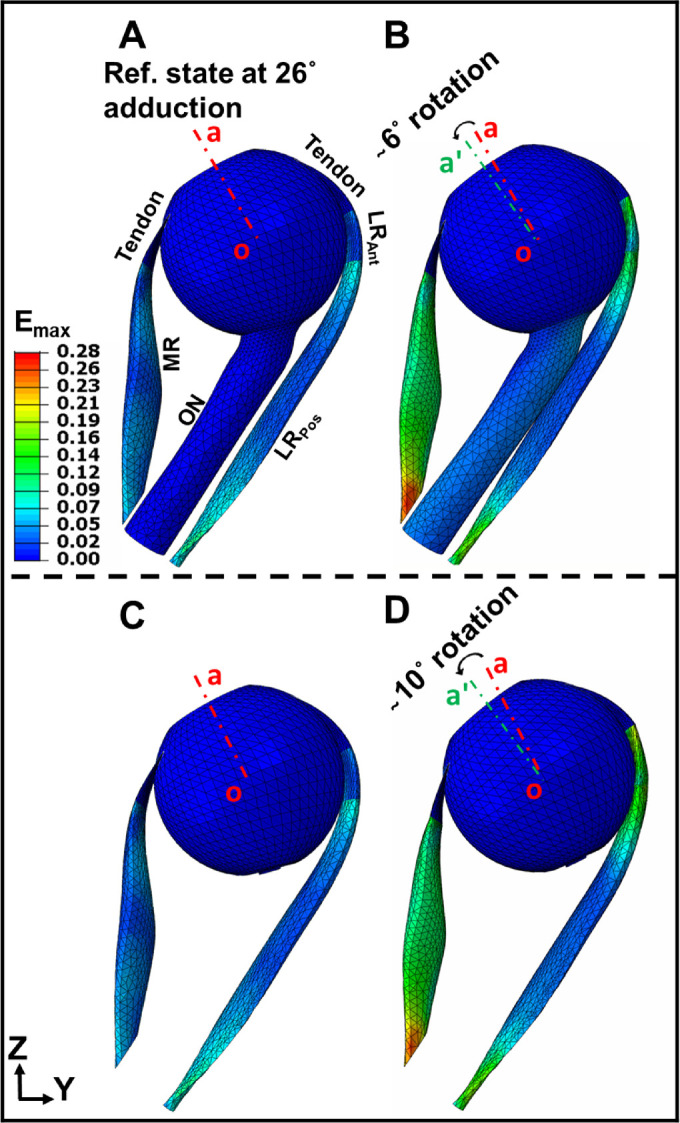
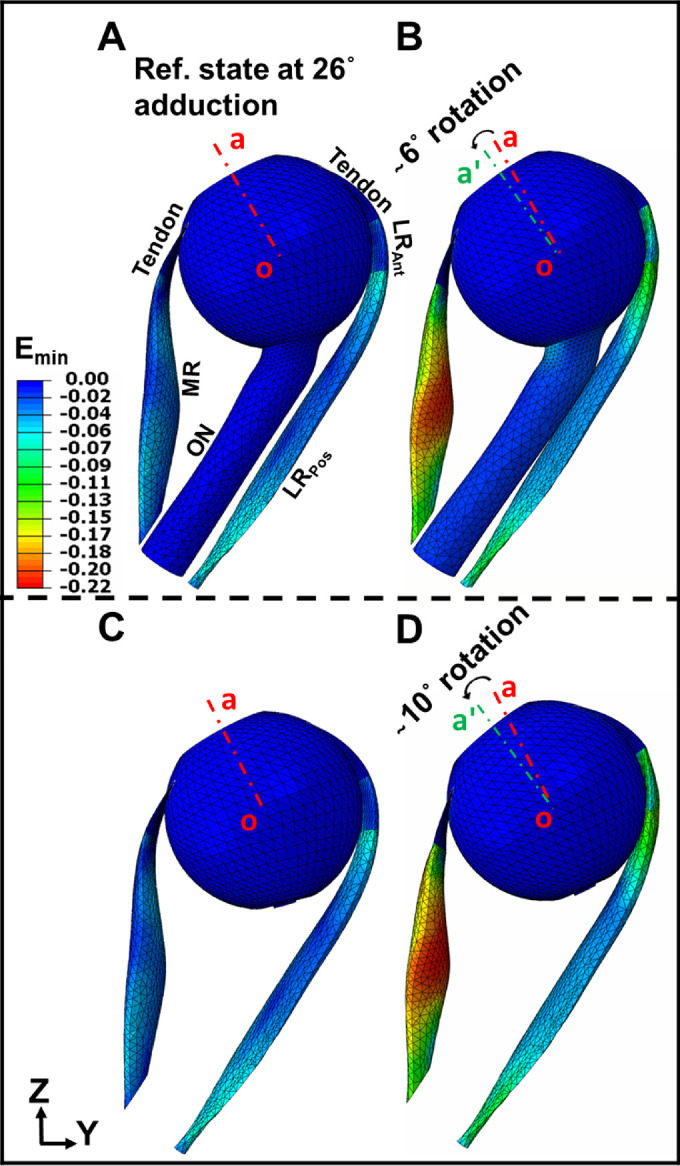
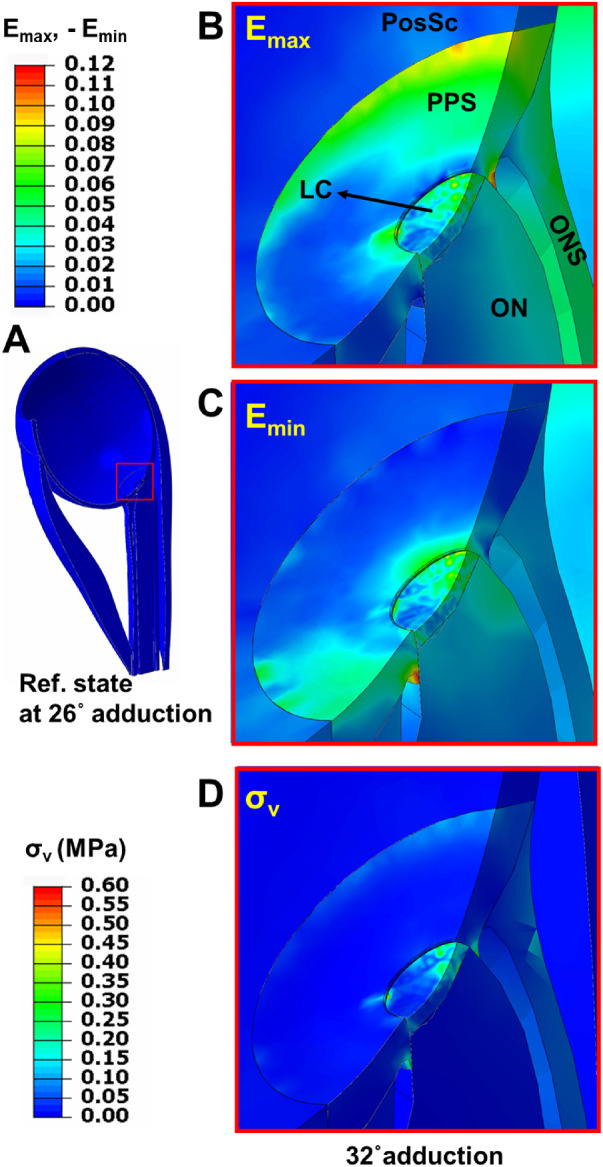
Three-dimensional (3-D) horizontal rectus EOM geometries were obtained from magnetic resonance imaging of five healthy adults, and measured constitutive tissue properties were used. Active and passive strain energies of EOMs were defined using ABAQUS (Dassault Systemes) software. All deformations were assumed to be caused by EOM twitch activation that rotated the eye about a fixed center. The medial rectus (MR) muscle was commanded to additionally contract starting from 26 degrees adducted position, and the lateral rectus (LR) to relax, further adducting the eye either with or without loading by the ON. Tridimensional heat maps were generated to represent the stress and strain distributions.
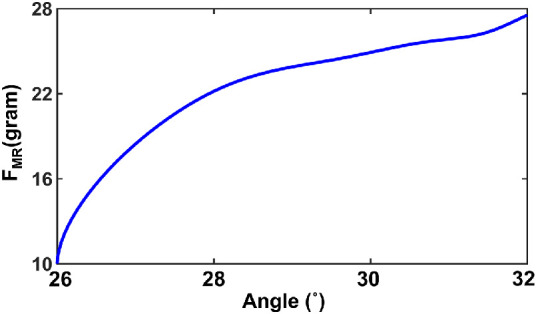
Tensions in the EOMs were physiologically plausible during incremental adduction. Force in the MR increased from 10 gm at 26 degrees adduction to approximately 28 gm at 32 degrees adduction. Under identical MR contraction, adduction with ON loading reached 32 degrees but 36 degrees without it. Maximum and minimum principal strains within the MR were 16% and 22%, respectively, but when ON loading was included, resulting stress and strain were concentrated at the optic disc.
This physiologically plausible method of simulating EOM activation can provide realistic input to model biomechanical behavior of active and passive tissues in the orbit to clarify biomechanical consequences of ON traction during adduction.
为了阐明视神经(ON)作为眼球旋转负荷的作用,我们开发了一种有限元模型(FEM),用于模拟主动收缩眼外肌(EOM)引起的增量内收,同时考虑和不考虑 ON 的束缚。
从 5 位健康成年人的磁共振成像中获取了三维(3-D)水平直肌 EOM 几何形状,并使用了测量得到的组织本构特性。使用 ABAQUS(达索系统)软件定义了 EOM 的主动和被动应变能。所有变形都假定是由 EOM 抽搐激活引起的,该激活使眼睛围绕固定中心旋转。命令内侧直肌(MR)在 26 度内收位置进一步收缩,而外侧直肌(LR)放松,使眼睛进一步内收,同时或不加载 ON。生成三维热图来表示应力和应变分布。
在增量内收过程中,EOM 中的张力在生理上是合理的。MR 中的力从 26 度内收时的 10 克增加到 32 度内收时的约 28 克。在相同的 MR 收缩下,加载 ON 时可以达到 32 度内收,但没有 ON 加载时只能达到 36 度内收。MR 中的最大和最小主应变分别为 16%和 22%,但当包括 ON 加载时,导致的应力和应变集中在视盘处。
这种模拟 EOM 激活的生理上合理的方法可以为模型的轨道中主动和被动组织的生物力学行为提供现实的输入,以阐明内收过程中 ON 牵引的生物力学后果。