Mercader Alexandra, Röttinger Timon, Bigdeli Amir, Lüth Tim C, Röttinger Heinz
Technical University of Munich, Boltzmannstraße 15, 85748, Garching bei München, Germany.
The Munich Center for Arthroplasty, Chirurgisches Klinikum München Süd Am Isarkanal 30, 81379, Munich, Germany.
J Exp Orthop. 2021 Jan 4;8(1):2. doi: 10.1186/s40634-020-00319-6.
Total knee arthroplasty (TKA) is nowadays performed as a standard procedure on a large number of patients suffering from arthrosis. Replacing the knee joint causes changes in the geometry and kinematics of the knee, which are unique to each individual. This research focuses on the method to detect these changes after TKA and on the impact on the knee movement. This approach could reduce complications in patients with post-operative pain and reduce the number of revisions.
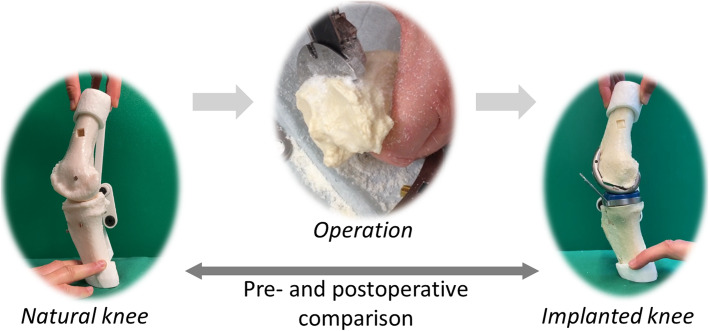
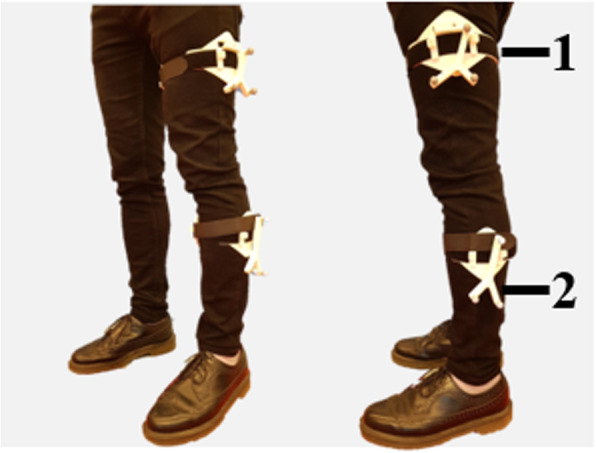
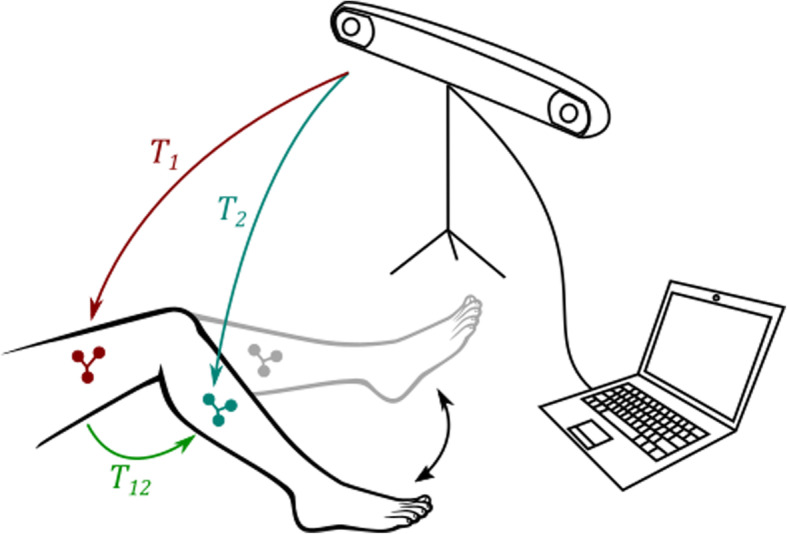
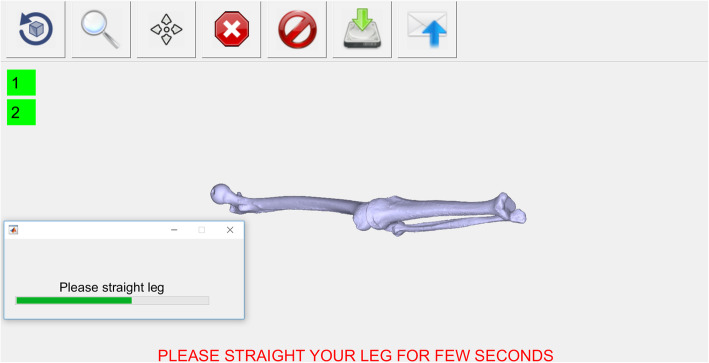
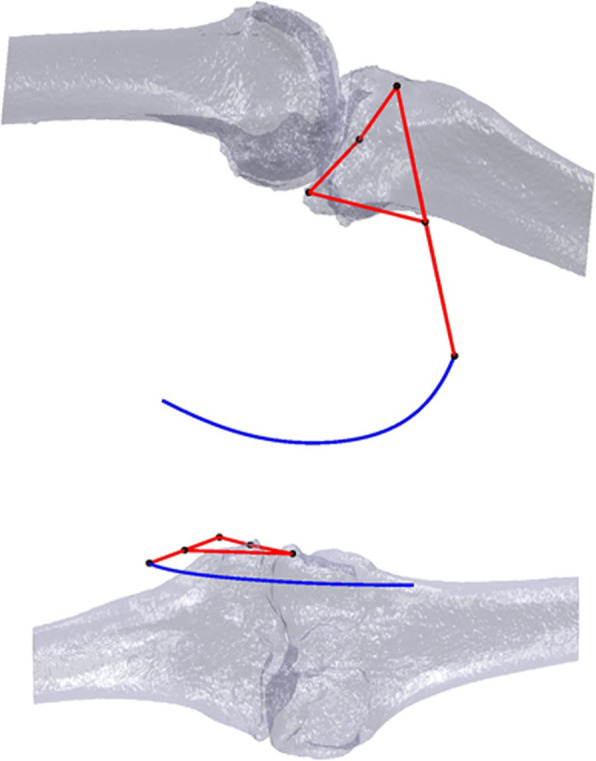
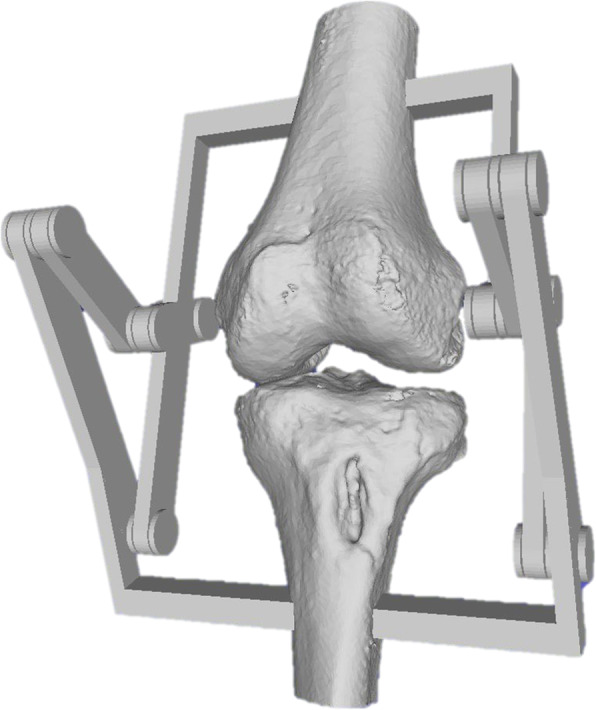
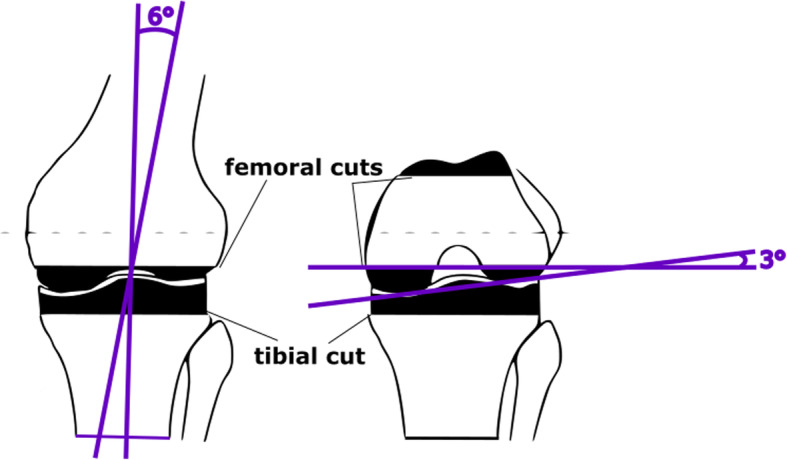
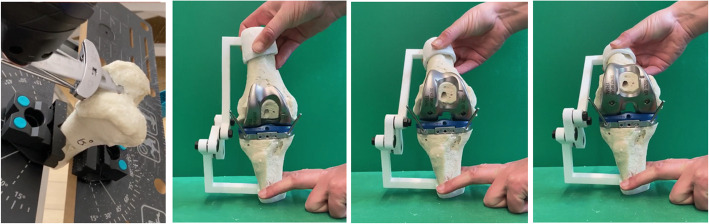
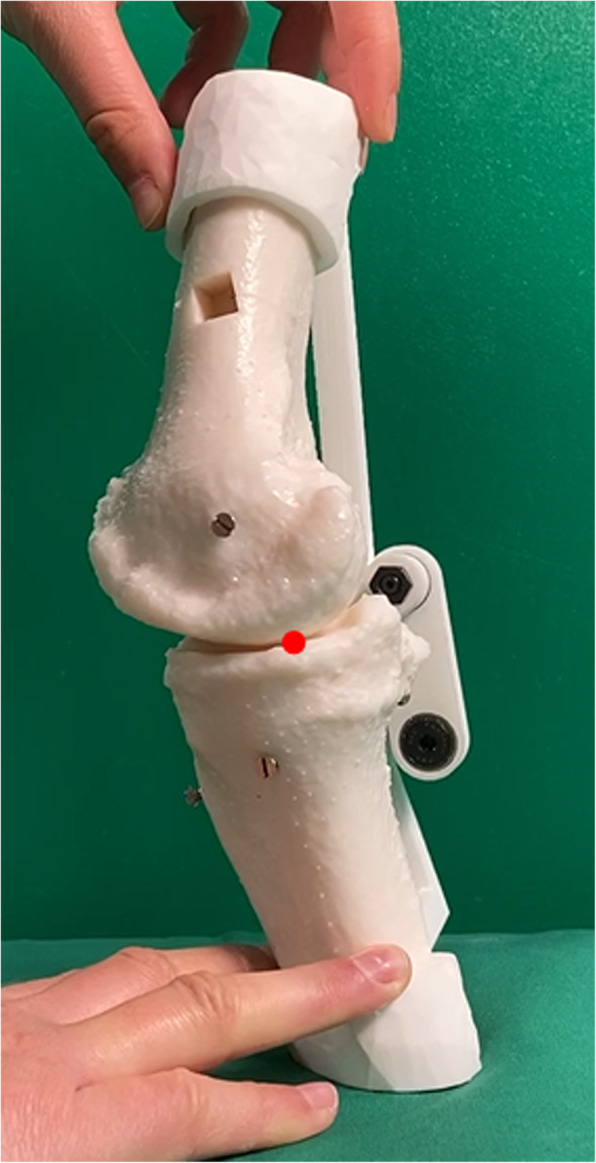
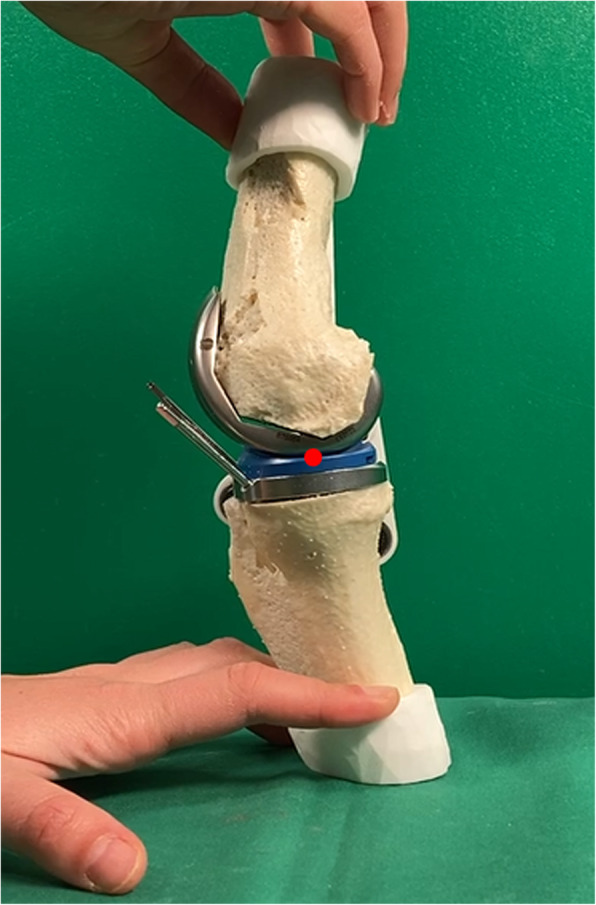
A 3D model of a patient's knee was made by measuring the movement with a medically certified infrared stereo camera. This measurement was combined with the 3D model of the patient's bones, previously segmented from the CT scan. This model is printed in 3D, one part being the mechanism that follows the movement of the patient, and the other part being the 3D copy of the femur and tibia bones. The knee replacement operation is performed directly on the model and the resulting rollback is being measured before and after TKA.
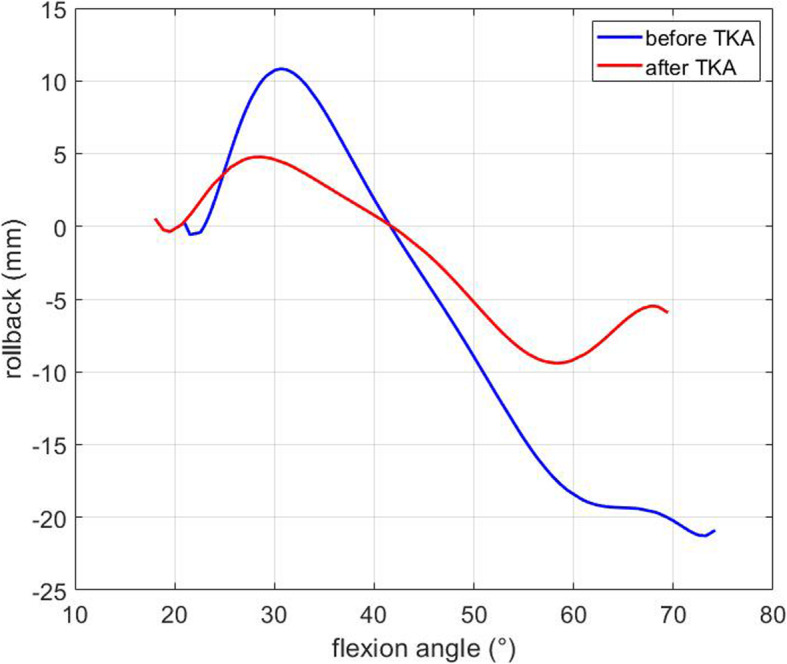
We observe a difference in the rollback before and after TKA on the 3D printed model. The variation in size and shape of the femoral implant compared to the natural femur condyles is one of the reasons for the changes in the rollback effect. The rollback is half as large after the prosthesis insertion, which confirms the fact that the femoral prosthesis geometry influences the knee kinematics.
In this study, a first 3D model combining the patient-specific kinematic and the geometry of his bones has been constructed. This model allows the surgeon to validate the plan of the operation, but also to understand the problems and consequences generated by the prosthesis insertion. The rollback is one of the most important motion of the knee joint and this behavior could be quantified, providing comparative analysis of the knee joint before and after the operation. As a future study, the model could be used to analyse more parameters of the TKA such as the impact of different implantation methods.
全膝关节置换术(TKA)如今已成为大量患有关节炎患者的标准手术。膝关节置换会导致膝关节的几何形状和运动学发生变化,而这些变化因人而异。本研究聚焦于检测全膝关节置换术后这些变化的方法以及对膝关节运动的影响。这种方法可以减少术后疼痛患者的并发症,并减少翻修手术的次数。
通过使用经医学认证的红外立体相机测量运动,制作患者膝关节的三维模型。该测量结果与先前从CT扫描中分割出的患者骨骼三维模型相结合。这个模型以三维方式打印,一部分是跟随患者运动的机构,另一部分是股骨和胫骨骨骼的三维复制品。膝关节置换手术直接在模型上进行,并在全膝关节置换术前和术后测量由此产生的后滚情况。
我们在三维打印模型上观察到全膝关节置换术前和术后后滚情况存在差异。与天然股骨髁相比,股骨植入物的尺寸和形状变化是后滚效果改变的原因之一。假体植入后后滚幅度减半,这证实了股骨假体几何形状会影响膝关节运动学这一事实。
在本研究中,构建了首个结合患者特定运动学和骨骼几何形状的三维模型。该模型不仅能让外科医生验证手术方案,还能帮助理解假体植入所产生的问题和后果。后滚是膝关节最重要的运动之一,这种行为可以量化,从而对手术前后的膝关节进行对比分析。作为未来的研究方向,该模型可用于分析全膝关节置换术的更多参数,比如不同植入方法的影响。