Department of Psychiatry and Behavioral Neuroscience, University of Chicago, Chicago (King, Vena, deWit); Department of Epidemiology, Mailman School of Public Health, and Department of Psychiatry, College of Physicians and Surgeons, Columbia University, New York (Hasin); Department of Psychiatry, Indiana University School of Medicine, Indianapolis, and Department of Biomedical Engineering, Purdue University, West Lafayette, Ind. (O'Connor); Department of Ophthalmology and Visual Sciences, University of Illinois at Chicago, Chicago (Cao).
Am J Psychiatry. 2021 Jun;178(6):560-571. doi: 10.1176/appi.ajp.2020.20030247. Epub 2021 Jan 5.
Alcohol use disorder (AUD) remains an urgent public health problem. Longitudinal data are needed to clarify the role of acute subjective responses to alcohol in the development and maintenance of excessive drinking and AUD. The authors report on 10 years of repeated examination of acute alcohol responses in the Chicago Social Drinking Project.
Young adult drinkers (N=190) participated in an initial alcohol challenge (0.8 g/kg of alcohol compared with placebo) that was repeated 5 and 10 years later. They were also assessed on drinking behavior and AUD symptoms at numerous intervals across the decade. Retention was high, as 184 of the 185 (99%) nondeceased active participants completed the 10-year follow-up, and 91% (163 of 179) of those eligible for alcohol consumption engaged in repeated laboratory testing during this interval.
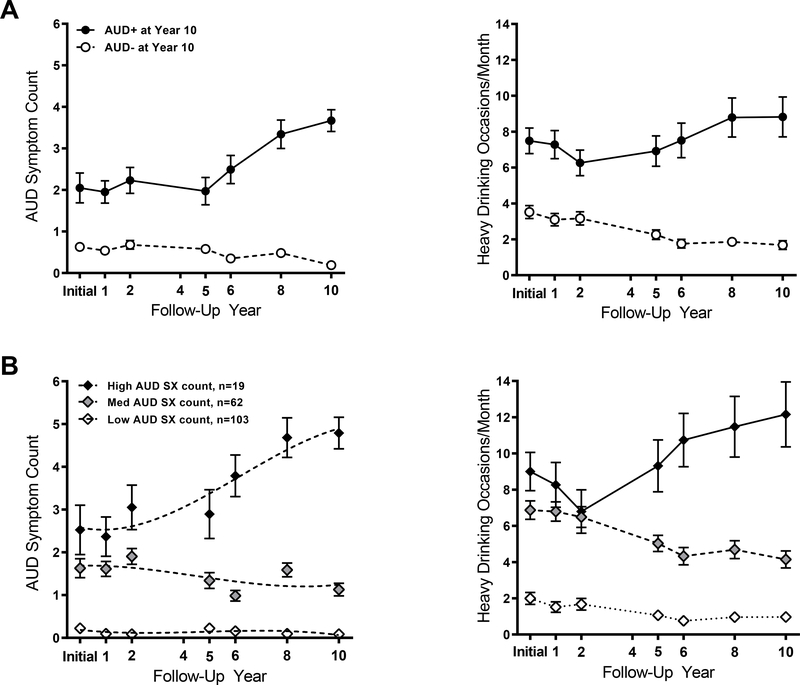
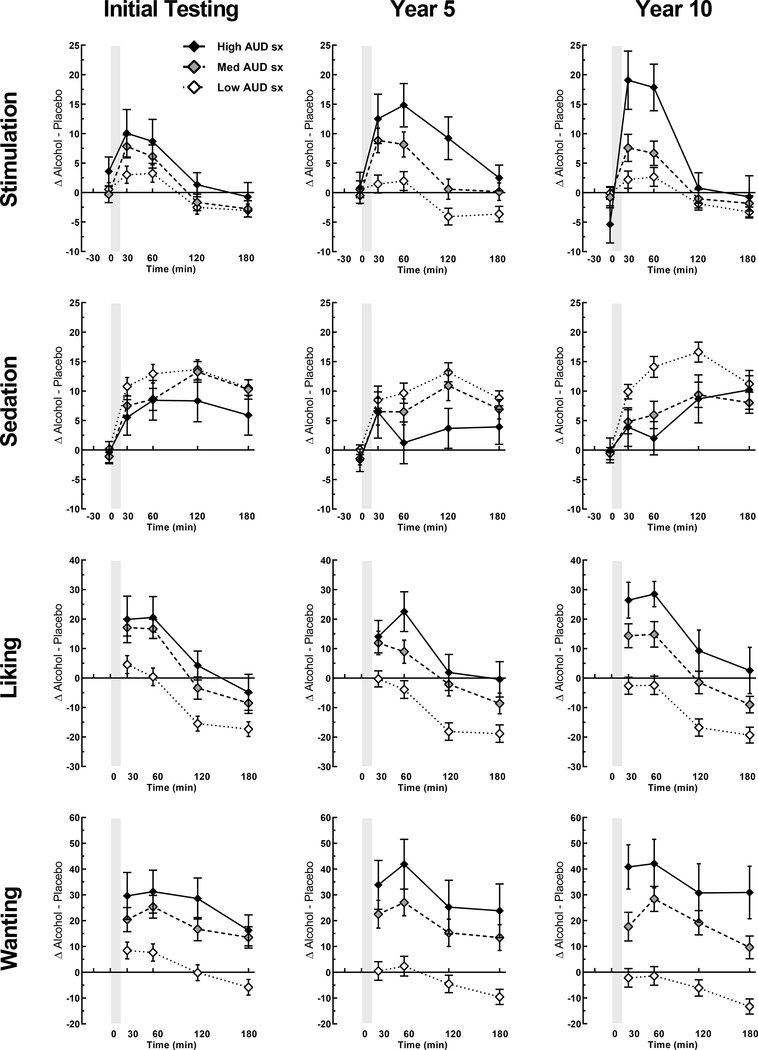
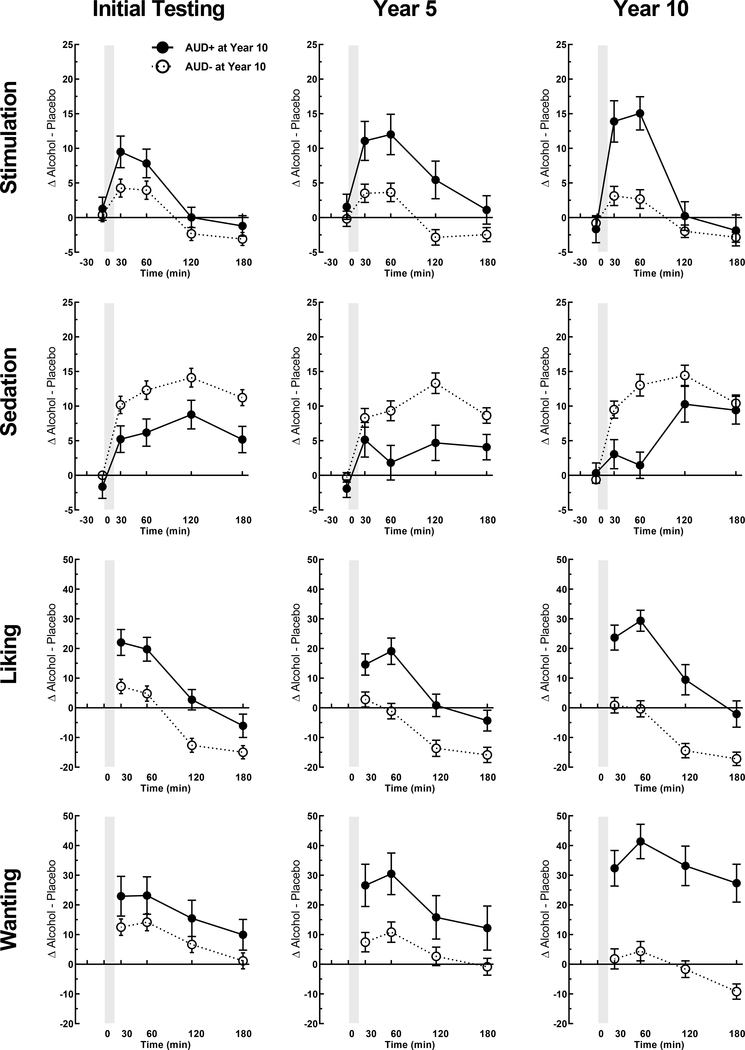
At the end of the decade, 21% of participants met criteria for past-year AUD. Individuals who reported the greatest alcohol stimulation, liking, and wanting at the initial alcohol challenge were most likely to have developed AUD 10 years later. Further, alcohol-induced stimulation and wanting increased in reexamination testing among those with the highest AUD symptoms as the decade progressed.
Initial stimulant and rewarding effects of alcohol predicted heavy alcohol use, and the magnitude of these positive subjective effects increased over a 10-year period in those who developed AUD compared with those who did not develop the disorder. The findings demonstrate systematic changes in subjective responses to alcohol over time, providing an empirical basis for prevention, early intervention, and treatment strategies.
酒精使用障碍(AUD)仍然是一个紧迫的公共卫生问题。需要纵向数据来阐明急性酒精反应在过度饮酒和 AUD 的发展和维持中的作用。作者报告了芝加哥社交饮酒计划中 10 年重复的急性酒精反应研究结果。
年轻成年饮酒者(N=190)参与了初始酒精挑战(与安慰剂相比,0.8 g/kg 酒精),5 年后和 10 年后再次重复。他们还在 10 年内的多个时间点评估了饮酒行为和 AUD 症状。保留率很高,因为 185 名非死亡的活跃参与者中的 184 名(99%)完成了 10 年的随访,而符合饮酒条件的 91%(163 名)在这段时间内进行了重复的实验室测试。
在研究结束时,21%的参与者符合过去一年 AUD 的标准。在初始酒精挑战中报告最大酒精刺激、喜欢和渴望的个体最有可能在 10 年后发展为 AUD。此外,在过去的十年中,随着 AUD 症状最高的个体在重新检查测试中,酒精诱导的刺激和渴望感增加。
最初的酒精刺激和奖赏作用预测了大量饮酒,并且在那些发展为 AUD 的个体中,与未发展为该障碍的个体相比,这些积极的主观效应在 10 年内逐渐增加。这些发现表明,随着时间的推移,个体对酒精的主观反应发生了系统变化,为预防、早期干预和治疗策略提供了实证依据。