School of the Environment, Yale University, 195 Prospect Street, New Haven, CT, 06511, USA.
BK21PLUS Program in 'Embodiment: Health -Society Interaction', Department of Public Health Science, Graduate School, Korea University, Seoul, Republic of Korea.
BMC Med Res Methodol. 2021 Jan 4;21(1):2. doi: 10.1186/s12874-020-01199-1.
Time-series analysis with case-only data is a prominent method for the effect of environmental determinants on disease events in environmental epidemiology. In this analysis, adjustment for seasonality and long-term time-trend is crucial to obtain valid findings. When applying this analysis for long-term exposure (e.g., months, years) of which effects are usually studied via survival analysis with individual-level longitudinal data, unlike its application for short-term exposure (e.g., days, weeks), a standard adjustment method for seasonality and long-term time-trend can extremely inflate standard error of coefficient estimates of the effects. Given that individual-level longitudinal data are difficult to construct and often available to limited populations, if this inflation of standard error can be solved, rich case-only data over regions and countries would be very useful to test a variety of research hypotheses considering unique local contexts.
We discuss adjustment methods for seasonality and time-trend used in time-series analysis in environmental epidemiology and explain why standard errors can be inflated. We suggest alternative methods to solve this problem. We conduct simulation analyses based on real data for Seoul, South Korea, 2002-2013, and time-series analysis using real data for seven major South Korean cities, 2006-2013 to identify whether the association between long-term exposure and health outcomes can be estimated via time-series analysis with alternative adjustment methods.
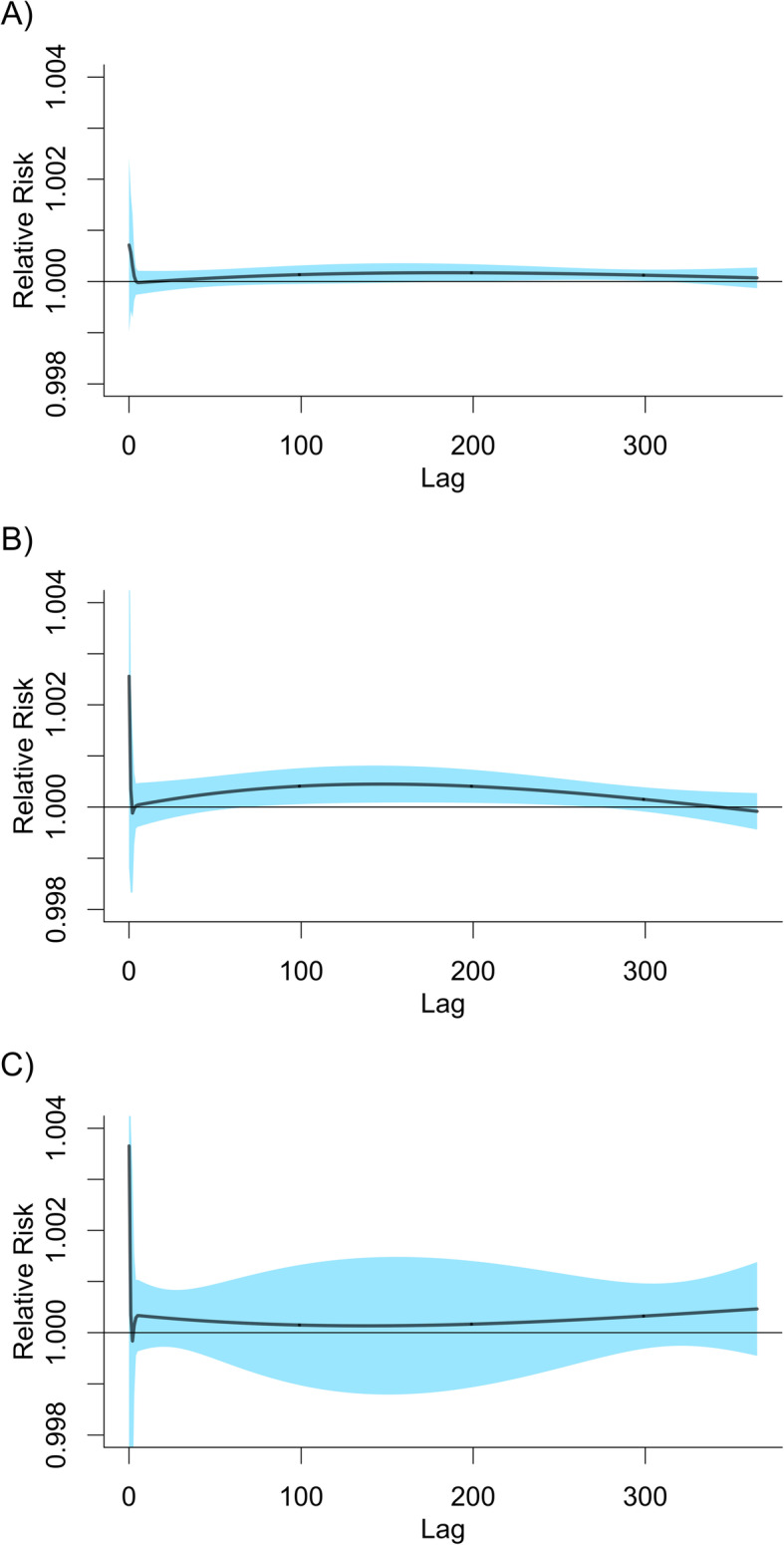
Simulation analyses and real-data analysis confirmed that frequently used adjustment methods such as a spline function of a variable representing time extremely inflate standard errors of estimates for associations between long-term exposure and health outcomes. Instead, alternative methods such as a combination of functions of variables representing time can make sufficient adjustment with efficiency.
Our findings suggest that time-series analysis with case-only data can be applied for estimating long-term exposure effects. Rich case-only data such as death certificates and hospitalization records combined with repeated measurements of environmental determinants across countries would have high potentials for investigating the effects of long-term exposure on health outcomes allowing for unique contexts of local populations.
时间序列分析仅使用病例数据是环境流行病学中研究环境决定因素对疾病事件影响的一种重要方法。在这种分析中,调整季节性和长期时间趋势对于获得有效结果至关重要。当将这种分析应用于长期暴露(例如,数月、数年)时,由于其通常通过个体水平的纵向数据进行生存分析来研究其影响,与短期暴露(例如,数天、数周)不同,季节性和长期时间趋势的标准调整方法可能会极大地夸大效应系数估计值的标准误差。鉴于个体水平的纵向数据难以构建且通常仅适用于有限的人群,如果能够解决这种标准误差的膨胀问题,那么来自不同地区和国家的丰富病例仅数据将非常有用,可以用于检验考虑到当地独特情况的各种研究假设。
我们讨论了环境流行病学中时间序列分析中使用的季节性和时间趋势调整方法,并解释了为什么标准误差可能会膨胀。我们提出了替代方法来解决此问题。我们基于韩国首尔 2002-2013 年的真实数据进行了模拟分析,并使用韩国七个主要城市 2006-2013 年的真实数据进行了时间序列分析,以确定是否可以通过替代调整方法的时间序列分析来估计长期暴露与健康结果之间的关联。
模拟分析和真实数据分析均证实,经常使用的调整方法,例如代表时间的变量的样条函数,会极大地夸大长期暴露与健康结果之间关联的估计标准误差。相反,代表时间的变量的函数组合等替代方法可以有效地进行充分调整。
我们的研究结果表明,仅使用病例数据的时间序列分析可用于估计长期暴露效应。结合来自不同国家的环境决定因素的重复测量,丰富的病例仅数据(例如死亡证明和住院记录)具有很高的潜力,可以用于研究长期暴露对健康结果的影响,同时考虑到当地人群的独特背景。