Center for Gut Microbiota Research, The Chinese University of Hong Kong, Hong Kong, China.
Department of Medicine and Therapeutics, Institute of Digestive Disease, State Key Laboratory of Digestive Diseases, LKS Institute of Health Sciences, The Chinese University of Hong Kong, Hong Kong, China.
Nat Commun. 2021 Jan 4;12(1):65. doi: 10.1038/s41467-020-20240-x.
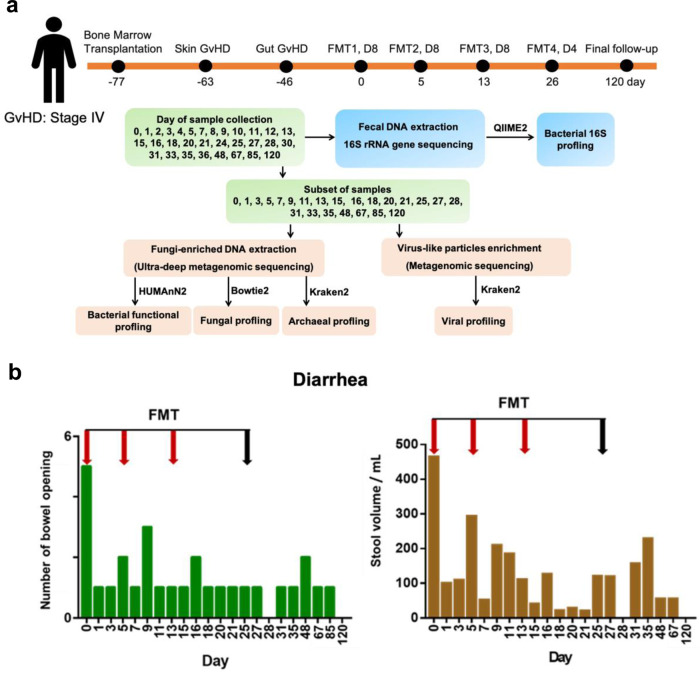
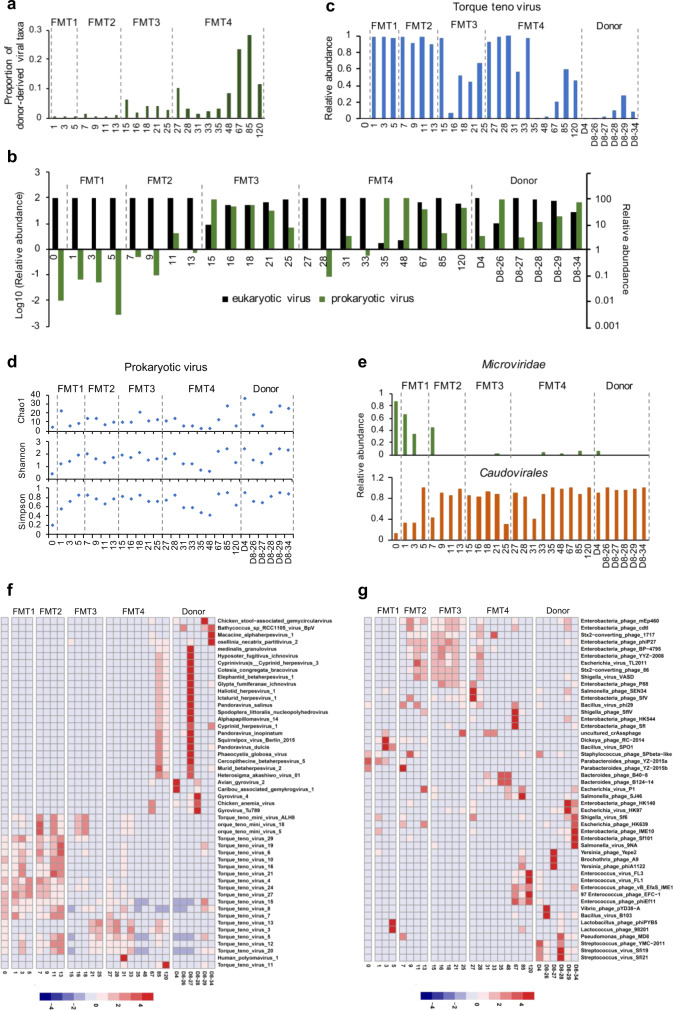
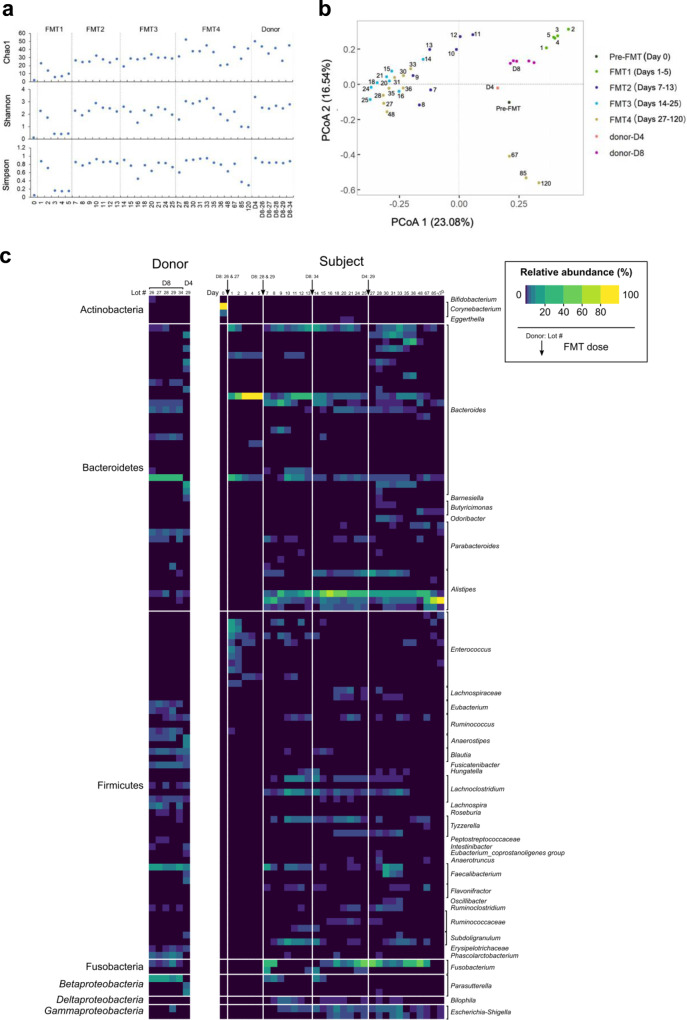
Fecal microbiota transplant (FMT) has emerged as a potential treatment for severe colitis associated with graft-versus-host disease (GvHD) following hematopoietic stem cell transplant. Bacterial engraftment from FMT donor to recipient has been reported, however the fate of fungi and viruses after FMT remains unclear. Here we report longitudinal dynamics of the gut bacteriome, mycobiome and virome in a teenager with GvHD after receiving four doses of FMT at weekly interval. After serial FMTs, the gut bacteriome, mycobiome and virome of the patient differ from compositions before FMT with variable temporal dynamics. Diversity of the gut bacterial community increases after each FMT. Gut fungal community initially shows expansion of several species followed by a decrease in diversity after multiple FMTs. In contrast, gut virome community varies substantially over time with a stable rise in diversity. The bacterium, Corynebacterium jeikeium, and Torque teno viruses, decrease after FMTs in parallel with an increase in the relative abundance of Caudovirales bacteriophages. Collectively, FMT may simultaneously impact on the various components of the gut microbiome with distinct effects.
粪便微生物群移植(FMT)已成为造血干细胞移植后与移植物抗宿主病(GvHD)相关的严重结肠炎的一种潜在治疗方法。据报道,FMT 供体到受者的细菌定植已经发生,但是 FMT 后真菌和病毒的命运仍然不清楚。在这里,我们报告了一名青少年在每周接受 4 次 FMT 后,GvHD 患者的肠道细菌组、真菌组和病毒组的纵向动态。在多次 FMT 后,患者的肠道细菌组、真菌组和病毒组与 FMT 前的组成不同,具有不同的时间动态。肠道细菌群落的多样性在每次 FMT 后增加。肠道真菌群落最初表现出几种物种的扩张,然后在多次 FMT 后多样性下降。相比之下,肠道病毒组群落随时间变化很大,多样性稳定上升。细菌 Corynebacterium jeikeium 和 Torque teno 病毒在 FMT 后减少,同时,Caudovirales 噬菌体的相对丰度增加。总的来说,FMT 可能同时对肠道微生物组的各个组成部分产生影响,具有不同的作用。