Faisal Syed M, Mendez Flor M, Nunez Fernando, Castro Maria G, Lowenstein Pedro R
Department of Neurosurgery, University of Michigan Medical School, Ann Arbor, MI 48109, USA.
Department of Cell and Developmental Biology, University of Michigan Medical School, Ann Arbor, MI 48109, USA.
Oncotarget. 2020 Dec 15;11(50):4607-4612. doi: 10.18632/oncotarget.27834.
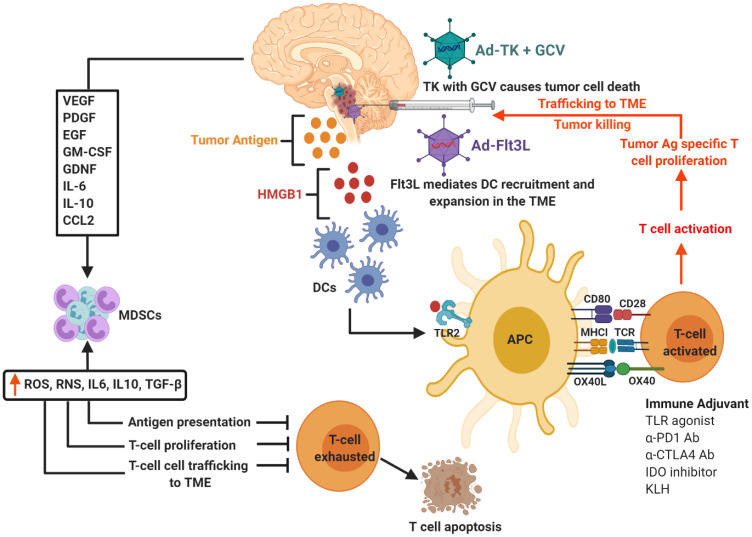
Diffuse intrinsic pontine glioma (DIPG) is a rare brainstem tumor which carries a dismal prognosis. To date. there are no effective treatments for DIPG. Transcriptomic studies have shown that DIPGs have a distinct profile compared to hemispheric high-grade pediatric gliomas. These specific genomic features coupled with the younger median age group suggest that DIPG is of developmental origin. There is a major unmet need for novel effective therapeutic approaches for DIPG. Clinical and preclinical studies have expanded our understanding of the molecular pathways in this deadly disease. We have developed a genetically engineered brainstem glioma model harboring the recurrent DIPG mutation, activin A receptor type I (ACVR1)-G328V (mACVR1) using the sleeping beauty transposon system. DIPG neurospheres isolated from the genetically engineered mouse model were implanted into the pons of immune-competent mice to assess the therapeutic efficacy and toxicity of immunostimulatory gene therapy using adenoviruses expressing thymidine kinase (TK) and fms-like tyrosine kinase 3 ligand (Flt3L). Immunostimulatory adenoviral-mediated delivery of TK/Flt3L in mice bearing brainstem gliomas resulted in antitumor immunity, recruitment of antitumor-specific T cells, and improved median survival by stimulating the host antitumor immune response. Therapeutic efficacy of the immunostimulatory gene therapy strategy will be tested in the clinical arena in a Phase I clinical trial. We also discuss immunotherapeutic interventions currently being implemented in DIPG patients and discuss the profound therapeutic implications of immunotherapy for this patient populations.
弥漫性脑桥内在型胶质瘤(DIPG)是一种罕见的脑干肿瘤,预后很差。迄今为止,DIPG尚无有效的治疗方法。转录组学研究表明,与半球型儿童高级别胶质瘤相比,DIPG具有独特的特征。这些特定的基因组特征,再加上年龄中位数较小的患者群体,表明DIPG起源于发育过程。对于DIPG,迫切需要新的有效治疗方法。临床和临床前研究扩展了我们对这种致命疾病分子途径的理解。我们利用睡美人转座子系统,构建了一种携带复发性DIPG突变——激活素A受体I型(ACVR1)-G328V(mACVR1)的基因工程脑干胶质瘤模型。从基因工程小鼠模型中分离出的DIPG神经球被植入具有免疫活性的小鼠脑桥中,以评估使用表达胸苷激酶(TK)和fms样酪氨酸激酶3配体(Flt3L)的腺病毒进行免疫刺激基因治疗的疗效和毒性。在患有脑干胶质瘤的小鼠中,免疫刺激腺病毒介导的TK/Flt3L递送通过刺激宿主抗肿瘤免疫反应,产生了抗肿瘤免疫力,招募了抗肿瘤特异性T细胞,并提高了中位生存期。这种免疫刺激基因治疗策略的疗效将在一项I期临床试验中进行临床验证。我们还讨论了目前在DIPG患者中实施的免疫治疗干预措施,并探讨了免疫治疗对该患者群体的深远治疗意义。