Lepkes Louisa, Kayali Mohamad, Blümcke Britta, Weber Jonas, Suszynska Malwina, Schmidt Sandra, Borde Julika, Klonowska Katarzyna, Wappenschmidt Barbara, Hauke Jan, Kozlowski Piotr, Schmutzler Rita K, Hahnen Eric, Ernst Corinna
Center for Familial Breast and Ovarian Cancer, Center for Integrated Oncology (CIO), Medical Faculty, University Hospital Cologne, 50931 Cologne, Germany.
Institute of Bioorganic Chemistry, Polish Academy of Sciences, 61-704 Poznan, Poland.
Cancers (Basel). 2021 Jan 1;13(1):118. doi: 10.3390/cancers13010118.
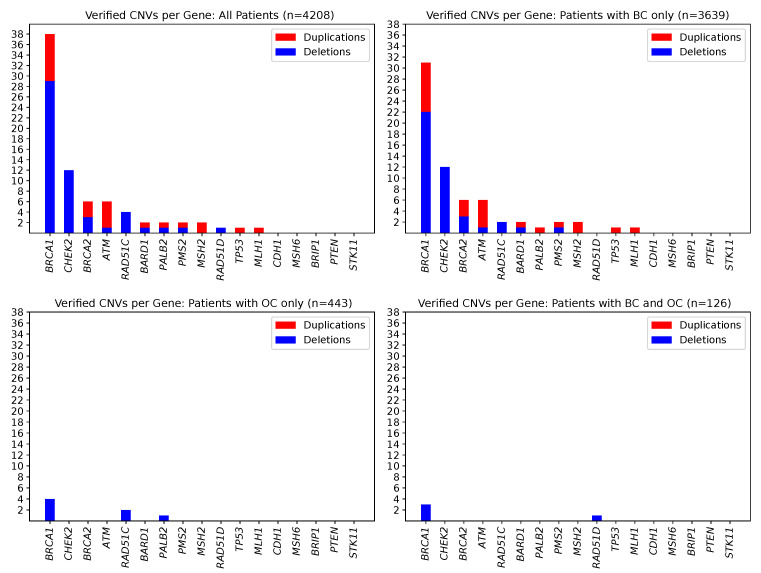
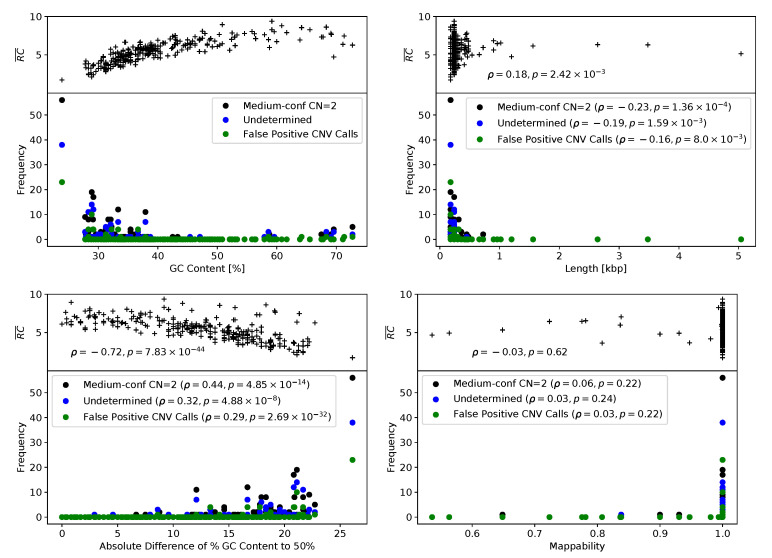
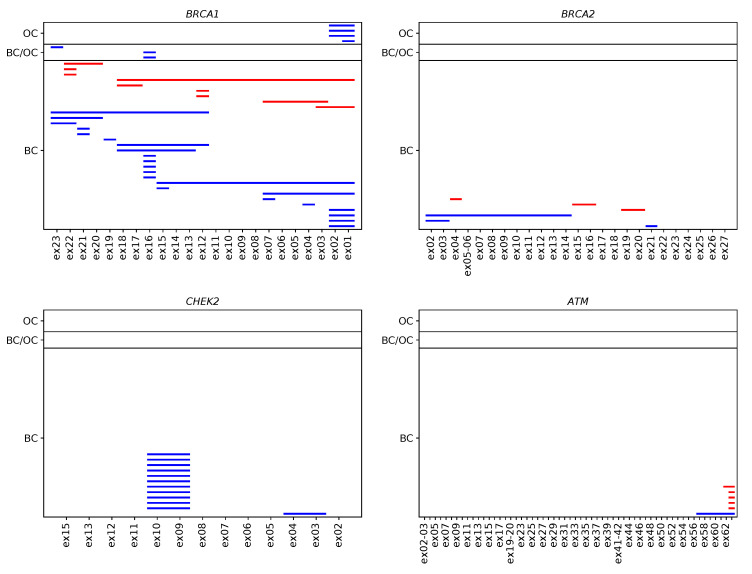
The identification of germline copy number variants (CNVs) by targeted next-generation sequencing (NGS) frequently relies on in silico CNV prediction tools with unknown sensitivities. We investigated the performances of four in silico CNV prediction tools, including one commercial (Sophia Genetics DDM) and three non-commercial tools (ExomeDepth, GATK gCNV, panelcn.MOPS) in 17 cancer predisposition genes in 4208 female index patients with familial breast and/or ovarian cancer (BC/OC). CNV predictions were verified via multiplex ligation-dependent probe amplification. We identified 77 CNVs in 76 out of 4208 patients (1.81%); 33 CNVs were identified in genes other than , mostly in , , and and less frequently in , , , , , , and . The Sophia Genetics DDM software showed the highest sensitivity; six CNVs were missed by at least one of the non-commercial tools. The positive predictive values ranged from 5.9% (74/1249) for panelcn.MOPS to 79.1% (72/91) for ExomeDepth. Verification of in silico predicted CNVs is required due to high frequencies of false positive predictions, particularly affecting target regions at the extremes of the GC content or target length distributions. CNV detection should not be restricted to due to the relevant proportion of CNVs in further BC/OC predisposition genes.
通过靶向新一代测序(NGS)鉴定种系拷贝数变异(CNV)通常依赖于灵敏度未知的计算机模拟CNV预测工具。我们调查了四种计算机模拟CNV预测工具的性能,包括一种商业工具(Sophia Genetics DDM)和三种非商业工具(ExomeDepth、GATK gCNV、panelcn.MOPS),用于检测4208例患有家族性乳腺癌和/或卵巢癌(BC/OC)的女性索引患者中17个癌症易感基因的情况。通过多重连接依赖探针扩增验证CNV预测结果。我们在4208例患者中的76例(1.81%)中鉴定出77个CNV;在除特定基因外的其他基因中鉴定出33个CNV,主要在某些基因中,较少在其他一些基因中。Sophia Genetics DDM软件显示出最高的灵敏度;至少有一个非商业工具遗漏了6个CNV。阳性预测值范围从panelcn.MOPS的5.9%(74/1249)到ExomeDepth的79.1%(72/91)。由于假阳性预测频率较高,特别是影响GC含量或靶标长度分布极端的靶标区域,因此需要对计算机模拟预测的CNV进行验证。由于在其他BC/OC易感基因中CNV的比例较高,CNV检测不应局限于特定基因。