Matsumura Koichiro, Iwasaka Toshiji, Mizuno Satoshi, Mizuno Ikuko, Hayanami Hikaru, Sawada Kiyoshi, Iwasaka Junji, Takeuchi Kotaro, Suga Toshimitsu, Sugiura Tetsuro, Shiojima Ichiro
Department of Medicine II, Kansai Medical University, Osaka 5708507, Japan.
Department of Internal Medicine, Tsurumi Ryokuchi Hospital, Osaka 5700044, Japan.
Geriatrics (Basel). 2021 Jan 1;6(1):3. doi: 10.3390/geriatrics6010003.
This study evaluated the effect of exercise training on body temperature and clarified the relationship between body temperature and body composition in the elderly.
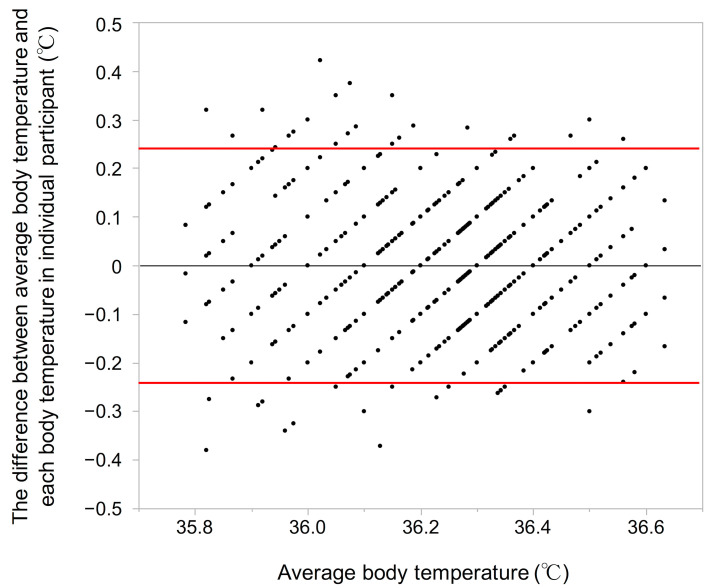
In this retrospective cohort study, a total of 91 elderly participants performed aerobic and anaerobic exercise training twice a week for 2 years. Non-contact infrared thermometer and bioelectrical impedance analysis were performed at baseline and at 2 years.
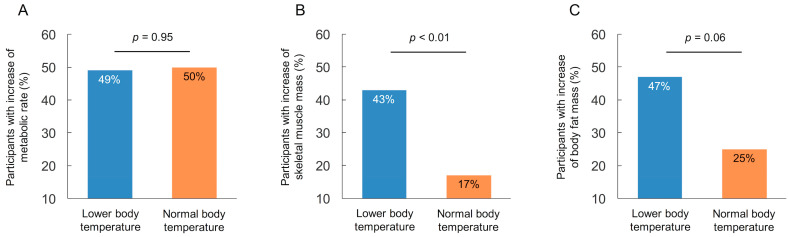
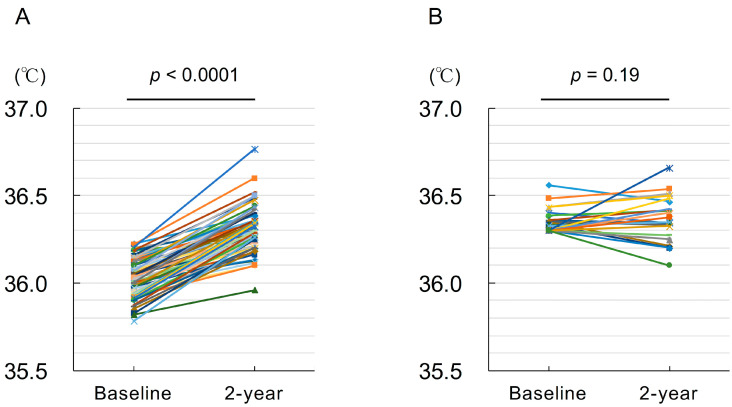
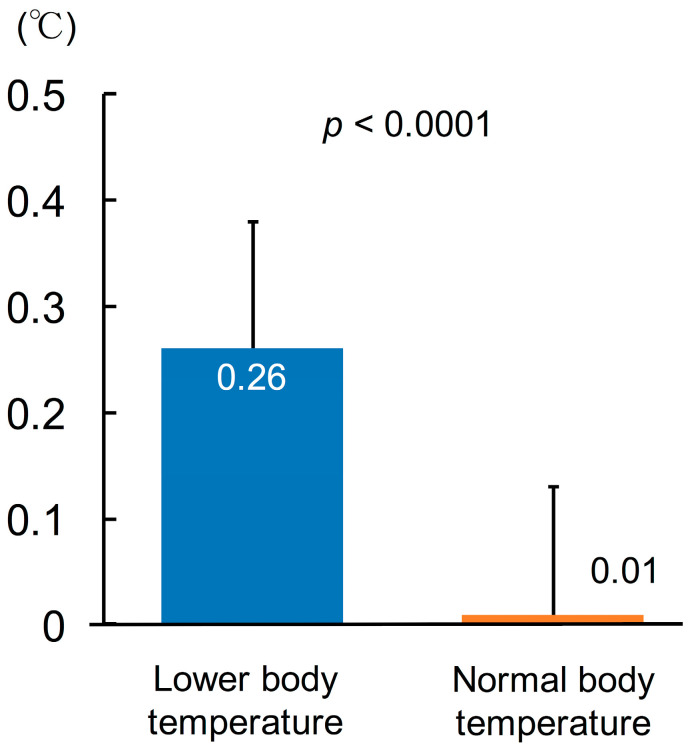
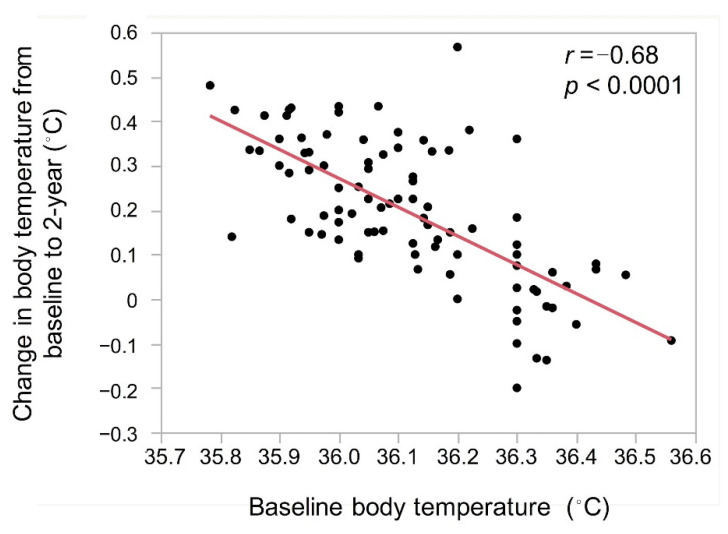
Mean age of study participants was 81.0 years. The participants were divided into two groups by baseline body temperature of 36.3 °C; lower body temperature group (n = 67) and normal body temperature group (n = 24). Body temperature rose significantly after exercise training in the lower body temperature group (36.04 ± 0.11 °C to 36.30 ± 0.13 °C, < 0.0001), whereas there was no significant difference in the normal body temperature group (36.35 ± 0.07 °C to 36.36 ± 0.13 °C, = 0.39). A positive correlation was observed between the amount of change in body temperature and baseline body temperature (r = -0.68, < 0.0001). Increase in skeletal muscle mass was an independent variable related to the rise in body temperature by the multivariate logistic regression analysis (odds ratio: 4.77, 95% confidence interval: 1.29-17.70, = 0.02).
Exercise training raised body temperature in the elderly, especially those with lower baseline body temperature.
本研究评估了运动训练对体温的影响,并阐明了老年人体温与身体成分之间的关系。
在这项回顾性队列研究中,共有91名老年参与者每周进行两次有氧和无氧运动训练,持续2年。在基线和2年时进行非接触式红外体温计测量和生物电阻抗分析。
研究参与者的平均年龄为81.0岁。根据基线体温36.3°C将参与者分为两组;低体温组(n = 67)和正常体温组(n = 24)。低体温组运动训练后体温显著升高(从36.04±0.11°C升至36.30±0.13°C,<0.0001),而正常体温组无显著差异(从36.35±0.07°C升至36.36±0.13°C,=0.39)。观察到体温变化量与基线体温之间呈正相关(r = -0.68,<0.0001)。通过多因素逻辑回归分析,骨骼肌质量增加是与体温升高相关的独立变量(优势比:4.77,95%置信区间:1.29 - 17.70,=0.02)。
运动训练可提高老年人的体温,尤其是基线体温较低的老年人。