School of Clinical Medicine, University of Cambridge School of Clinical Medicine, Cambridge, UK.
Nuffield Department of Medicine, Medawar Building for Pathogen Research, University of Oxford, Oxford, UK.
BMJ Glob Health. 2021 Jan;6(1). doi: 10.1136/bmjgh-2020-004275.
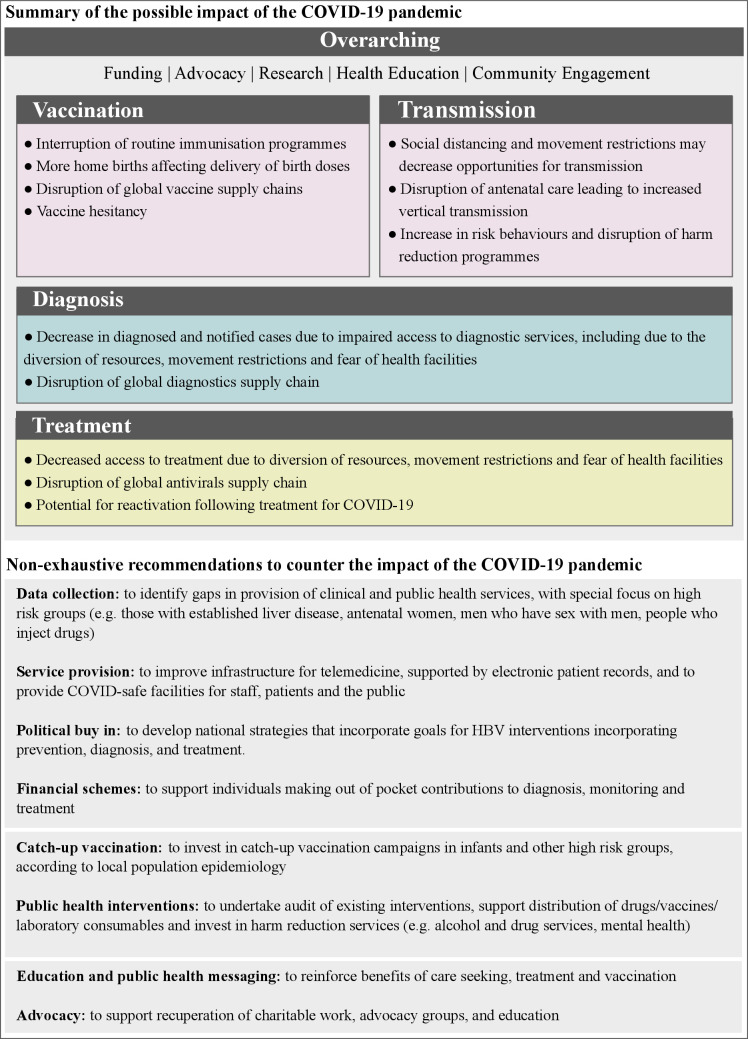
The COVID-19 pandemic caused by the SARS-CoV-2 virus has resulted in a myriad of interventions with the urgent aim of reducing the public health impact of this virus. However, a wealth of evidence both from high-income and low-income countries is accruing on the broader consequences of such interventions on economic and public health inequalities, as well as on pre-existing programmes targeting endemic pathogens. We provide an overview of the impact of the ongoing COVID-19 pandemic on hepatitis B virus (HBV) programmes globally, focusing on the possible consequences for prevention, diagnosis and treatment. Ongoing disruptions to infrastructure, supply chains, services and interventions for HBV are likely to contribute disproportionately to the short-term incidence of chronic hepatitis B, providing a long-term source of onward transmission to future generations that threatens progress towards the 2030 elimination goals.
由 SARS-CoV-2 病毒引起的 COVID-19 大流行导致了众多干预措施的出现,其紧急目标是降低该病毒对公共卫生的影响。然而,越来越多的证据不仅来自高收入和低收入国家,还包括这些干预措施对经济和公共卫生不平等以及针对地方病病原体的现有方案的更广泛影响。我们概述了正在进行的 COVID-19 大流行对全球乙型肝炎病毒 (HBV) 计划的影响,重点关注预防、诊断和治疗方面可能产生的后果。HBV 的基础设施、供应链、服务和干预措施的持续中断可能会不成比例地导致慢性乙型肝炎的短期发病率增加,为未来几代人提供长期的传播源,威胁到 2030 年消除目标的进展。