Zhao Hua, Xi Cong, Tian Mei, Lu Xue, Cai Tian-Jing, Li Shuang, Tian Xue-Lei, Gao Ling, Liu Hai-Xiang, Liu Ke-Hui, Liu Qing-Jie
China CDC Key Laboratory of Radiological Protection and Nuclear Emergency, National Institute for Radiological Protection, Chinese Center for Disease Control and Prevention, Beijing, People's Republic of China.
State Key Laboratory of Membrane Biology, Institute of Zoology, Chinese Academy of Sciences, Beijing, People's Republic of China.
Dose Response. 2020 Dec 15;18(4):1559325820979570. doi: 10.1177/1559325820979570. eCollection 2020 Oct-Dec.
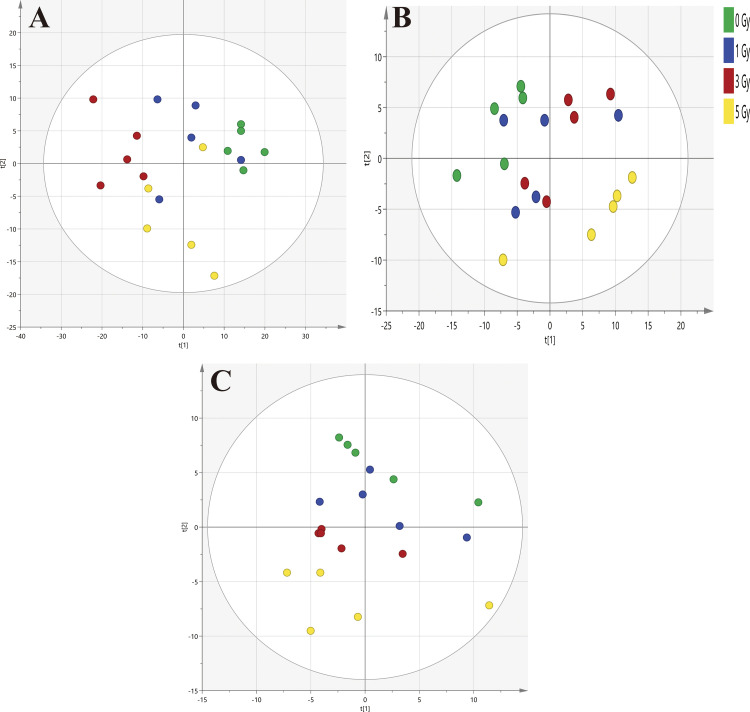
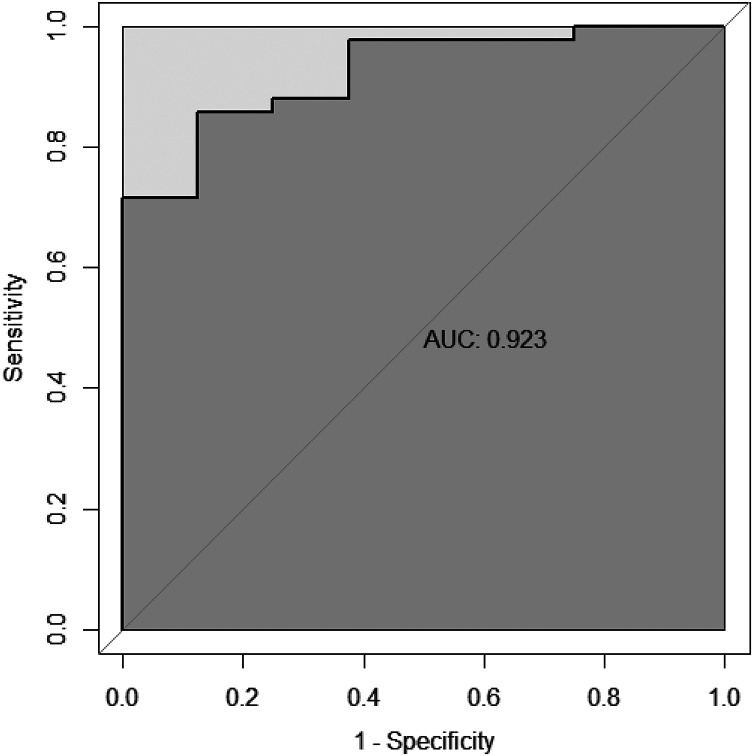
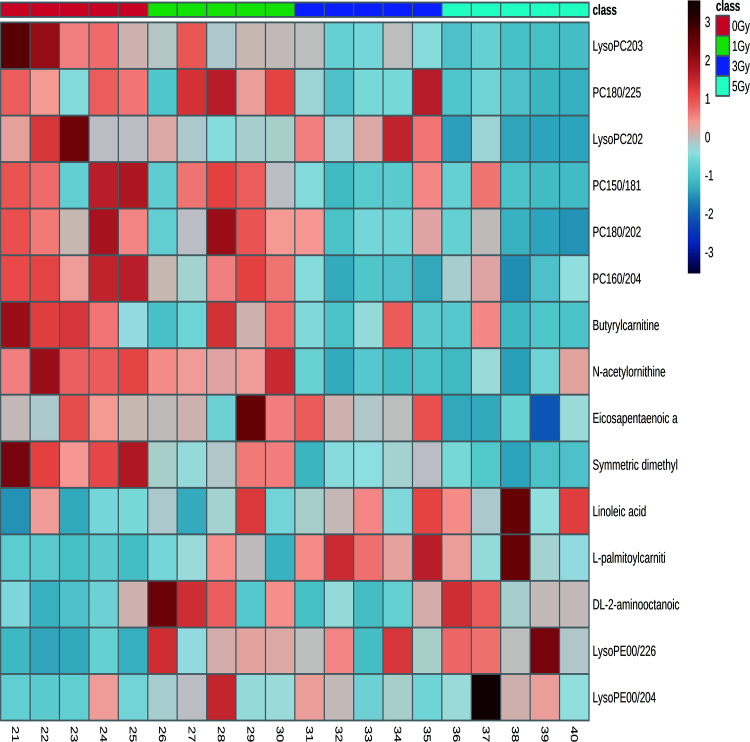
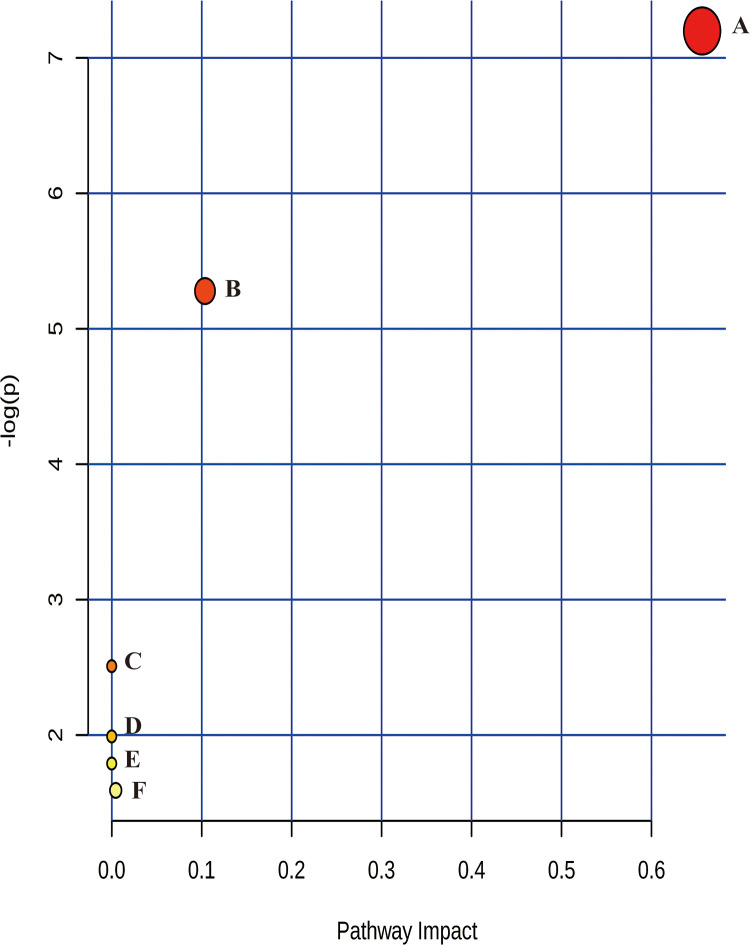
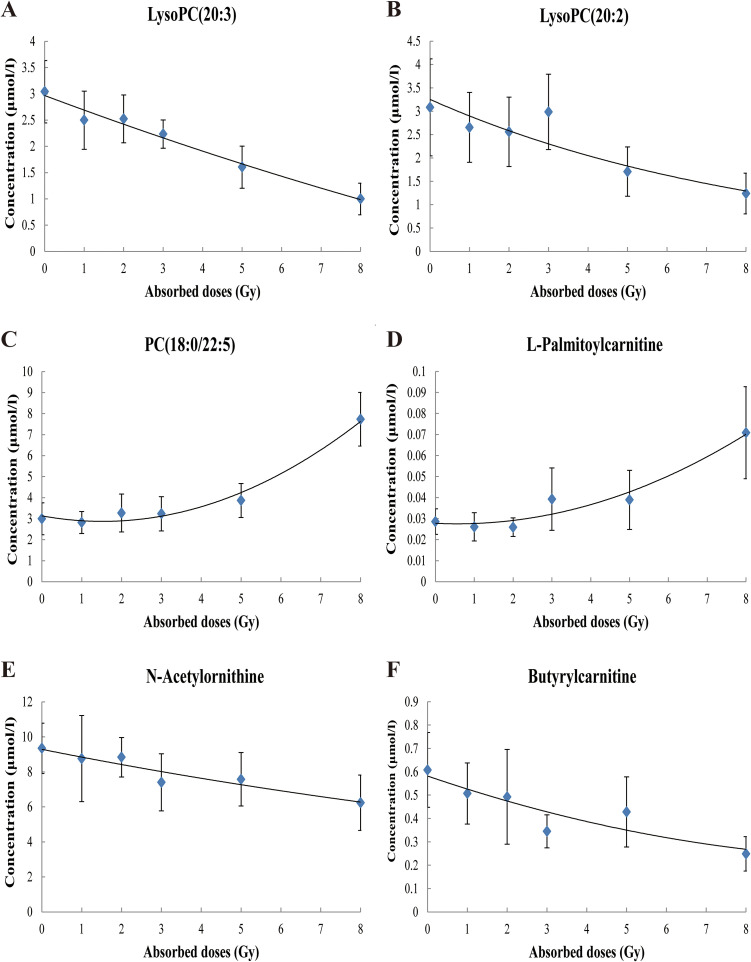
Metabolomics has great potential to process accessible biofluids through high-throughput and quantitative analysis for radiation biomarker screening. This study focused on the potential radiation responsive metabolites in rat plasma and the dose-response relationships. In the discovery stage, 20 male Sprague-Dawley rats were exposed to 0, 1, 3 and 5 Gy of cobalt-60 gamma rays at a dose rate of 1 Gy/min. Plasma samples were collected at 72 h after exposure and analyzed using liquid chromatography mass spectrometry based on non-targeted metabolomics. In the verification stage, 50 additional rats were exposed to 0, 1, 2, 3, 5 and 8 Gy of gamma rays. The concentrations of candidate metabolites were then analyzed using targeted metabolomics methods. Fifteen candidate radiation responsive metabolites were identified as potential radiation metabolite biomarkers. Metabolic pathways, such as linoleic acid metabolism and glycerophospholipid metabolism pathways, were changed after irradiation. Six radiation responsive metabolites, including LysoPC(20:2), LysoPC(20:3), PC(18:0/22:5), L-palmitoylcarnitine, N-acetylornithine and butyrylcarnitine, had good dose-response relationships ( > 0.80). The area under the curve of the panel of the 6 radiation responsive metabolites was 0.923. The radiation exposure metabolomics biomarkers and dose-response curves may have potential for rapid dose assessment and triage in nuclear and radiation accidents.
代谢组学在通过高通量和定量分析来处理可获取的生物流体以进行辐射生物标志物筛选方面具有巨大潜力。本研究聚焦于大鼠血浆中潜在的辐射反应性代谢物及其剂量反应关系。在发现阶段,20只雄性Sprague-Dawley大鼠以1 Gy/min的剂量率暴露于0、1、3和5 Gy的钴-60伽马射线。在暴露后72小时采集血浆样本,并基于非靶向代谢组学使用液相色谱质谱法进行分析。在验证阶段,另外50只大鼠暴露于0、1、2、3、5和8 Gy的伽马射线。然后使用靶向代谢组学方法分析候选代谢物的浓度。鉴定出15种候选辐射反应性代谢物作为潜在的辐射代谢生物标志物。辐照后,亚油酸代谢和甘油磷脂代谢等代谢途径发生了变化。六种辐射反应性代谢物,包括溶血磷脂酰胆碱(20:2)、溶血磷脂酰胆碱(20:3)、磷脂酰胆碱(18:0/22:5)、L-棕榈酰肉碱、N-乙酰鸟氨酸和丁酰肉碱,具有良好的剂量反应关系(>0.80)。这6种辐射反应性代谢物的组合曲线下面积为0.923。辐射暴露代谢组学生物标志物和剂量反应曲线在核与辐射事故的快速剂量评估和伤员分类方面可能具有潜力。