MIVEGEC (Maladies Infectieuses et Vecteurs: Ecologie, Génétique, Evolution et Contrôle), Centre National de la Recherche Scientifique (CNRS), Institut pour la Recherche et le Développement (IRD), Université de Montpellier (UM), Montpellier, France.
CREES (Centre de Recherche en Écologie et Évolution de la Santé), Montpellier, France.
PLoS Negl Trop Dis. 2021 Jan 6;15(1):e0009008. doi: 10.1371/journal.pntd.0009008. eCollection 2021 Jan.
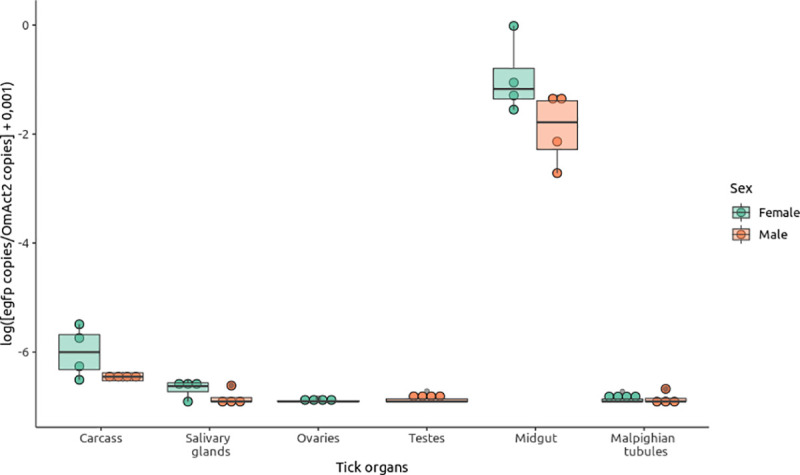
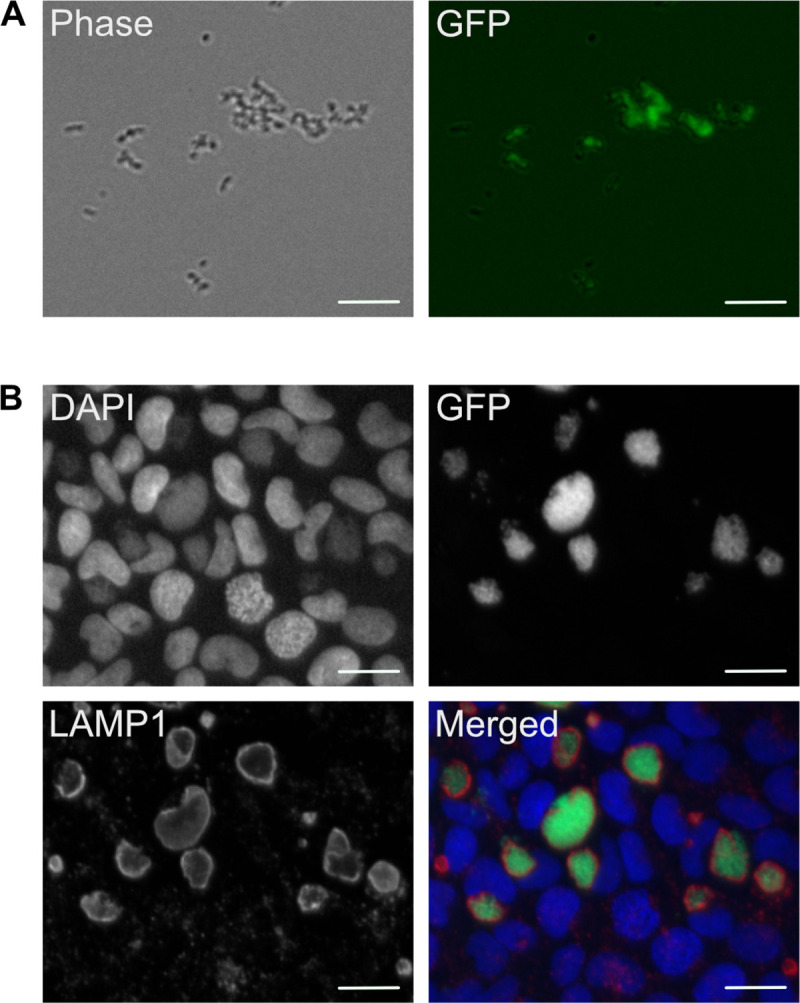
Q fever is a widespread zoonotic disease caused by the intracellular bacterium Coxiella burnetii. While transmission is primarily but not exclusively airborne, ticks are usually thought to act as vectors on the basis of early microscopy studies. However, recent observations revealed that endosymbionts of ticks have been commonly misidentified as C. burnetii, calling the importance of tick-borne transmission into question. In this study, we re-evaluated the vector competence of the African soft tick Ornithodoros moubata for an avirulent strain of C. burnetii. To this end, we used an artificial feeding system to initiate infection of ticks, specific molecular tools to monitor further infections, and culture assays in axenic and cell media to check for the viability of C. burnetii excreted by ticks. We observed typical traits associated with vector competence: The exposure to an infected blood meal resulted in viable and persistent infections in ticks, trans-stadial transmissions of infection from nymphs to adults and the ability of adult ticks to transmit infectious C. burnetii. However, in contrast to early studies, we found that infection differed substantially between tick organs. In addition, while adult female ticks were infected, we did not observe C. burnetii in eggs, suggesting that transovarial transmission is not effective. Finally, we detected only a sporadic presence of C. burnetii DNA in tick faeces, but no living bacterium was further isolated in culture assays, suggesting that excretion in faeces is not a common mode of transmission in O. moubata.
Q 热是一种广泛存在的人畜共患病,由细胞内细菌贝纳柯克斯体引起。虽然传播主要是空气传播,但基于早期的显微镜研究,通常认为蜱虫是传播媒介。然而,最近的观察结果表明,蜱虫的内共生体通常被错误地鉴定为贝纳柯克斯体,这使得蜱虫传播的重要性受到质疑。在这项研究中,我们重新评估了非洲软蜱 Ornithodoros moubata 对一种无毒性的贝纳柯克斯体菌株的媒介能力。为此,我们使用人工喂养系统来启动蜱虫感染,使用特定的分子工具来监测进一步的感染,并在无菌和细胞培养基中进行培养实验,以检查蜱虫排出的贝纳柯克斯体的活力。我们观察到与媒介能力相关的典型特征:暴露于感染的血餐会导致蜱虫中存活和持续感染,从若虫到成虫的跨代感染传播,以及成年蜱虫传播感染性贝纳柯克斯体的能力。然而,与早期的研究相比,我们发现感染在蜱虫的不同器官之间存在很大差异。此外,虽然成年雌性蜱虫被感染,但我们在卵中没有观察到贝纳柯克斯体,这表明经卵传播是无效的。最后,我们在蜱虫粪便中仅检测到贝纳柯克斯体 DNA 的零星存在,但在培养实验中没有进一步分离出活细菌,这表明粪便排泄不是 O. moubata 中常见的传播方式。